Arne O. Holm says Who to Trust? Danish or Norwegian Intelligence?
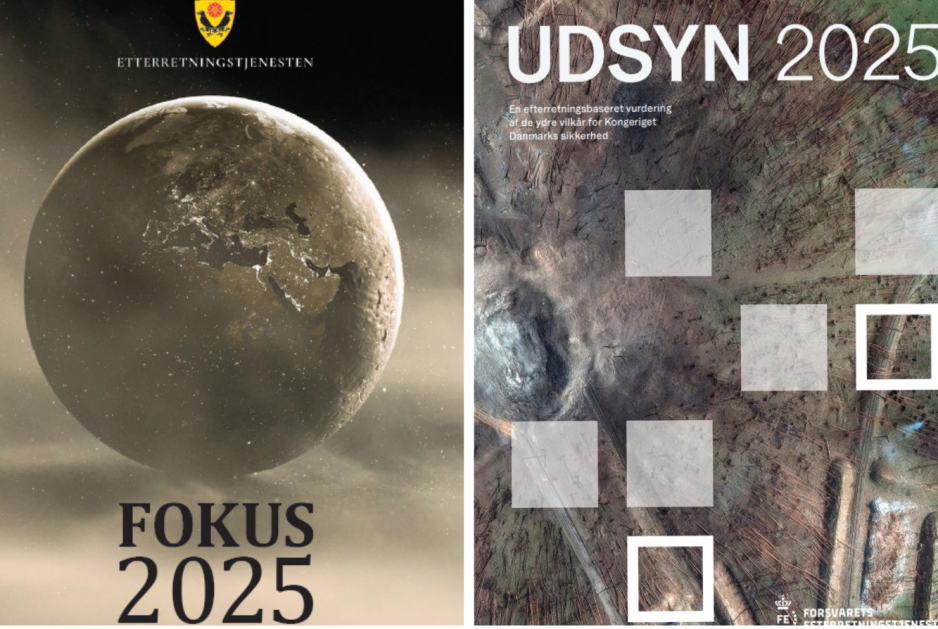
Side by side, the Danish Utsyn 2025 and the Norwegian Fokus 2025 report on developments in the High North over the past year.
Comment: We are about to close on a turbulent year, to put it mildly. It might have been the most turbulent any of us can remember. So let us hope that next year offers something different, such as the Arctic remaining a region without armed conflict.


This is a comment written by a member of the editorial staff. All views expressed are the writer's own.
We are bombarded almost daily by analyses of the Arctic situation. These are busy times for politicians, the Armed Forces, and a handful of experts. And so are we, who are tasked with following and communicate the analyses to our readers.
Central actors in relaying the threats faced by the High North are the intelligence services is the Norwegian and Danish Defence Intelligence Services. Their reports, respectively named Fokus (Norwegian intelligence) and Utsyn (Danish intelligence), describe these threats.
Or more accurately, the threats the Armed Forces believe should be readily available.
The view of USA
I previously wrote a comment on the Danish report. Now, both countries' reports lie on my desk. Both countries control central, strategic areas in the North. Denmark has Greenland, and Norway has Northern Norway and Svalbard.
In addition, Denmark and Norway also have a close intelligence cooperation, including through NATO. In other words, they hold the same information when assessing the threat landscape.
Denmark has Greenland, we have Svalbard.
Yet, the difference in the two documents is striking.
The most significant difference is the view of the USA, which Danish intelligence describes as a threat to Danish interests and other allies. This is particularly rooted in the conflict about Greenland. The Norwegian report holds few signs of scepticism toward the US.
But the analyses also highlight differences in terms of the Arctic.
Separate chapter on the Arctic
The Danish Defence Intelligence Service refers to the "strengthened great power rivalry in the Arctic" in the preface, followed by an entire chapter devoted to the Arctic.
The Norwegian intelligence report chose a different approach. It states that "Russian Arctic policy is set," while also referring to Svalbard's "military strategic value for Moscow."
Increasing risk of military confrontation.
The Arctic and the High North are mentioned several times, but there is no separate chapter addressing the situation in the North, as in the Danish report.
But what then are the Danes concerned with?
As already mentioned, the great power rivalry, which refers to the US, Russia, and China. They all want to play a bigger role in our areas.
Russia will increasingly assert its interests with confrontational behavior both politically and militarily, writes the Danes.
Has spread
The overall conclusion is that the security policy tension has spread to the Arctic. Militarization is increasing, both on the Western and the Russian side, with an increasing risk of military confrontation.
Perhaps the Armed Forces will include a chapter on the Arctic?
Russia's increasing dependence on China will eventually provide the country with greater access, both civilian and military, to the Arctic.
We have covered the Danish Armed Forces' analysis of the Arctic in a separate article.
The question is: why do the Danish and Norwegian intelligence services portray the situation in the Arctic so differently?
The obvious explanation is the timing of the two reports.
The Norwegian Fokus 2025 was presented in February, while the Danish Outlook 2025 concluded its work in December. Therefore, the two reports can be read as a description of how the situation in the High North has changed over the past year.
I would be very surprised if next year's report from the Norwegian side did not emphasize the situation in the North very differently when it is presented in February 2026. Perhaps it also includes a separate chapter on the Arctic.
I started this year's final comment with the hope that next year would be less turbulent than the year we are soon leaving behind. If Norwegian intelligence draws the same conclusions as the Danes, hope might be all we have.
But hope is still hope.