The Arctic Report Card 2025: Record Low Winter Sea Ice and Orange Rivers
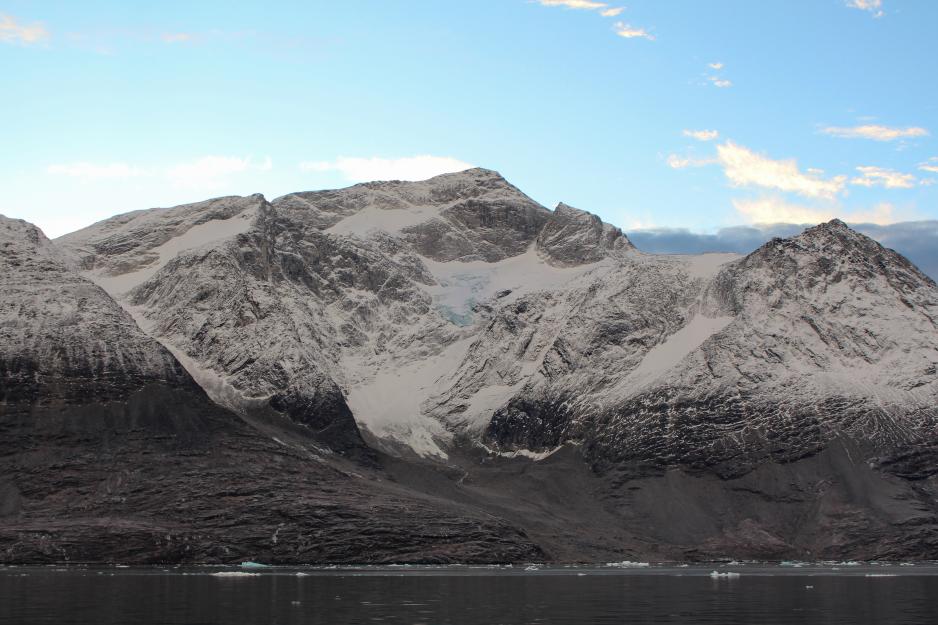
Ice in the Nuuk Fjord in November 2025. (Photo: Birgitte Annie Hansen/High North News)
The Arctic Report Card 2025 highlights the continued alarming developments in the Arctic and how climate change is disproportionately affecting the region.

The Arctic Report Card is published annually by the National Oceanic and Atmospheric Administration and highlights significant developments in Arctic climate over the past year.
This year marks the 20th anniversary of the Report Card, which strives to make climate science available to everyone.
The 2025 Report Card shows a still-worrying situation for the Arctic climate, including the loss of sea ice and warmer temperatures.
In the air
Warm temperatures were observed across the Arctic this past year. Surface air temperatures from October 2024 through September 2025 were the warmest recorded since 1900.
The Arctic fall was especially warm, with the second-warmest temperatures on record, while the 2024 fall was the warmest.
Overall, the past ten years have been the ten warmest on record in the Arctic. Since 2006, Arctic annual temperature has increased at more than twice the global rate, underscoring how climate change is disproportionately affecting the Arctic.
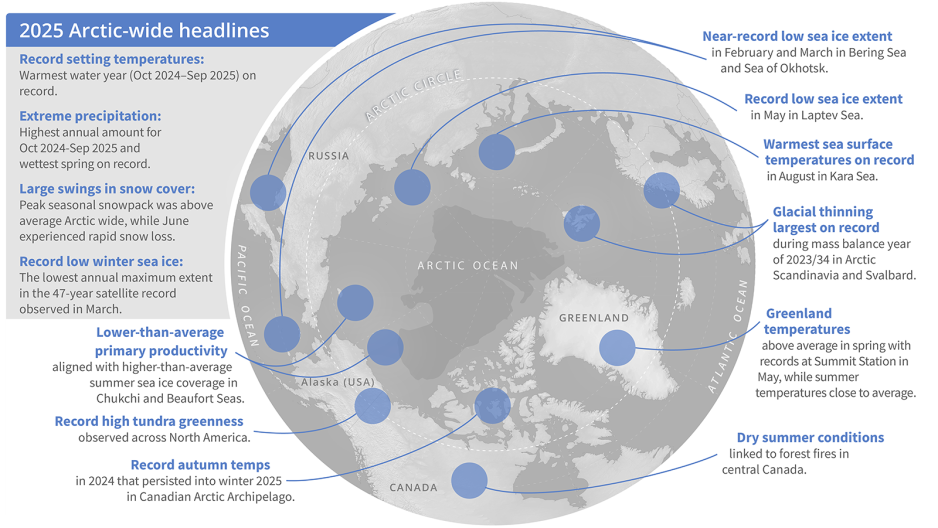
The headlines from the Arctic Report Card 2025. (Illustration: NOAA)
On land
For developments on land, the loss of sea ice is the most prominent.
Glaciers in Arctic Scandinavia and Svalbard saw the largest annual net loss of sea ice on record between 2023 and 2024.
The Greenland Ice Sheet lost about 129 billion tons of ice in 2025, which is less than the average of 219 billion tons between 2003 and 2024, but it does continue the long-term trend of net loss.
In addition, Alaskan glaciers have lost an average of 38 meters of ice since the mid-20th century, which contributed to the steadily rising global sea levels.
Rising sea levels are threatening Arctic communities' water supplies, driving destructive floods and increasing landslide and tsunami hazards.
In Alaska, the thawing permafrost has turned rivers and streams orange over the past decades. The thaw releases watersheds, iron, and other elements into the rivers.
These "rusting rivers" have increased acidity and elevated levels of toxic metals, which degrade water quality and compromise aquatic habitat and erode biodiversity.
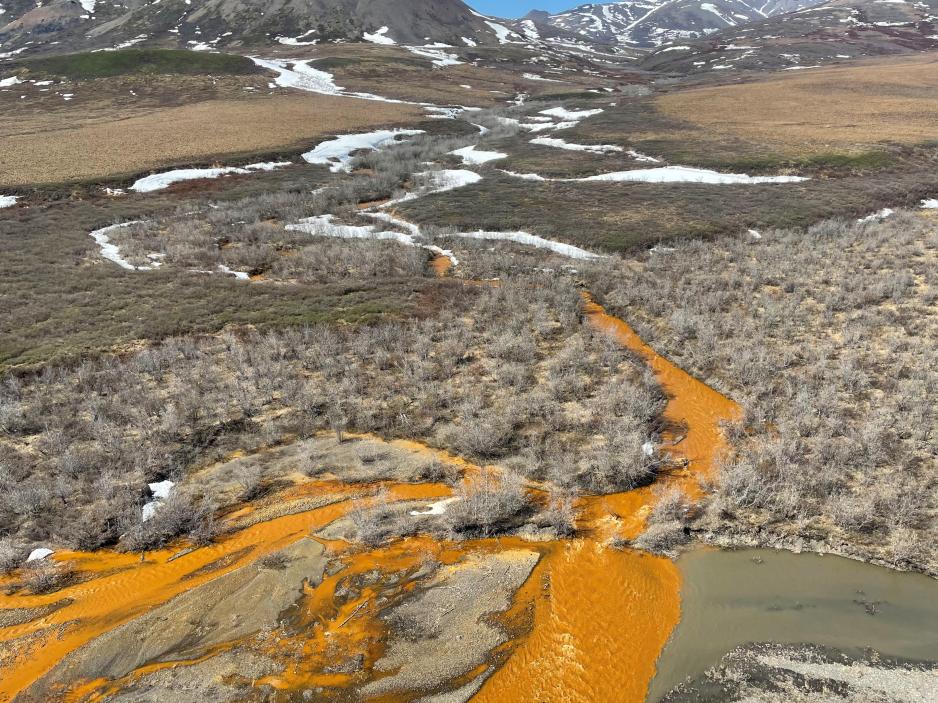
The water quality of streams and rivers in the Arctic is sensitive to climate change. In Alaska, rivers are turning orange as thawing permafrost releases iron and other metals into the water. (Photo: Josh Koch, U.S. Geological Survey)
In the ocean
In March 2025, Arctic winter sea ice reached the lowest annual maximum extent in the 47-year satellite record.
In September, the Arctic experienced the 10th lowest minimum sea ice extent. All of the 19 lowest September minimum ice extents have occurred in the last 19 years.
The oldest, thickest Arctic sea ice (more than four years old) has declined by more than 95 percent since the 1980s. Multi-year sea ice is now primarily confined to the area north of Greenland and the Canadian Archipelago.
In addition, the Arctic Ocean regions that are ice-free in August have warmed by 2.3°F.
Atlantification, the increasing influence of Atlantic water in the Arctic, has reached the central Arctic Ocean, hundreds of miles from the former edge of the Atlantic. Atlantification makes the Arctic Ocean warmer and saltier, which in turn melts sea ice.
All in all, the Arctic Report Card of 2025 underscores how the Arctic system is rapidly changing and how its elements are closely connected.