The Arctic Scientist Profiles: Willy (84) Has Researched Current Arctic Challenges Through a Historical Lens
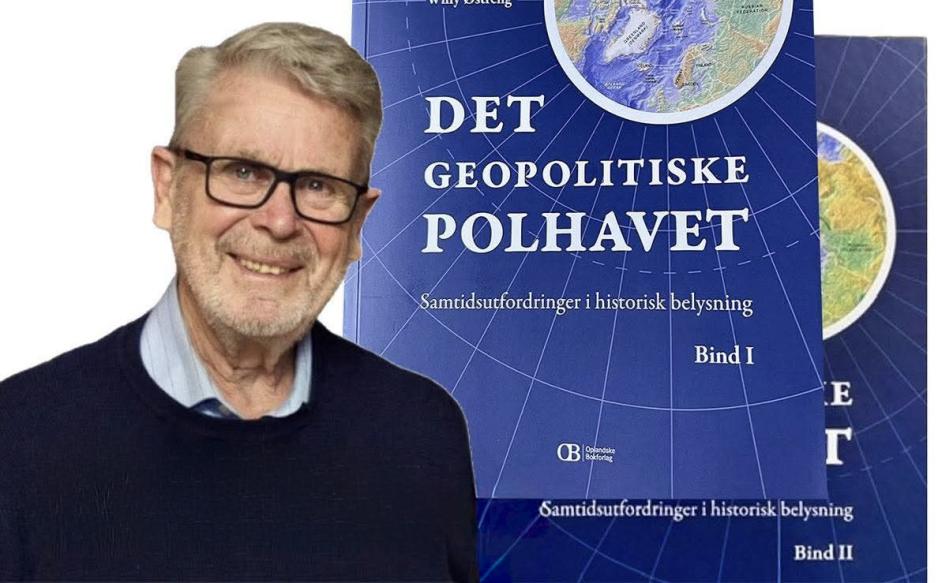
The book The Geopolitical Arctic Ocean is written by Willy Østreng and was published this fall. The books are not available in English.
Willy Østreng (84) has spent five years on his new book, The Geopolitical Arctic Ocean. Through two volumes, he examines the current challenges in the Arctic Ocean through a historical lens. He wishes to place his own research into a greater context.

Pure coincidences led Norwegian Willy Østreng, as a young man, to the Arctic. While looking for a topic for his thesis at UiO, the political scientist stumbled across a research question regarding why Norway gained sovereignty of Svalbard.
Østreng had no personal interest in the Arctic and the High North at this point, but the question awakened a curiosity in him. Svalbard and the North have since been a common thread throughout his career.
Now, the researcher has gathered his experiences and knowledge in the book The Geopolitical Arctic Ocean (Det geopolitiske Polhavet).
"I wanted to place my own research into a greater context," says the researcher in an interview with High North News.
The gateway Svalbard
While Svalbard first awakened an interest in Østreng, the interest later grew to include the entire Arctic and now also the connection between the development in the Arctic and the rest of the world.
"It started with a small archipelago," says the researcher, adding that his thesis led to a research position at the Fridtjof Nansen Institute, of which he later became the director for 26 years.
"We were transitioning from a foundation to a research institute with clear programs and projects," says Østreng. And that took time, he adds.
"When I left that job, I became the leader of The Centre for Advanced Study at the Norwegian Academy of Science and Letters for six years. I was also the co-founder of the Norwegian Scientific Academy for Polar Research in 2008, while also holding a Professor II position at the University of Trondheim. And then I reached retirement age," says Østreng.
Svalbard research with practical significance
But let's rewind. I want to know whether there has been an era in the researcher's career that has been particularly challenging or rewarding.
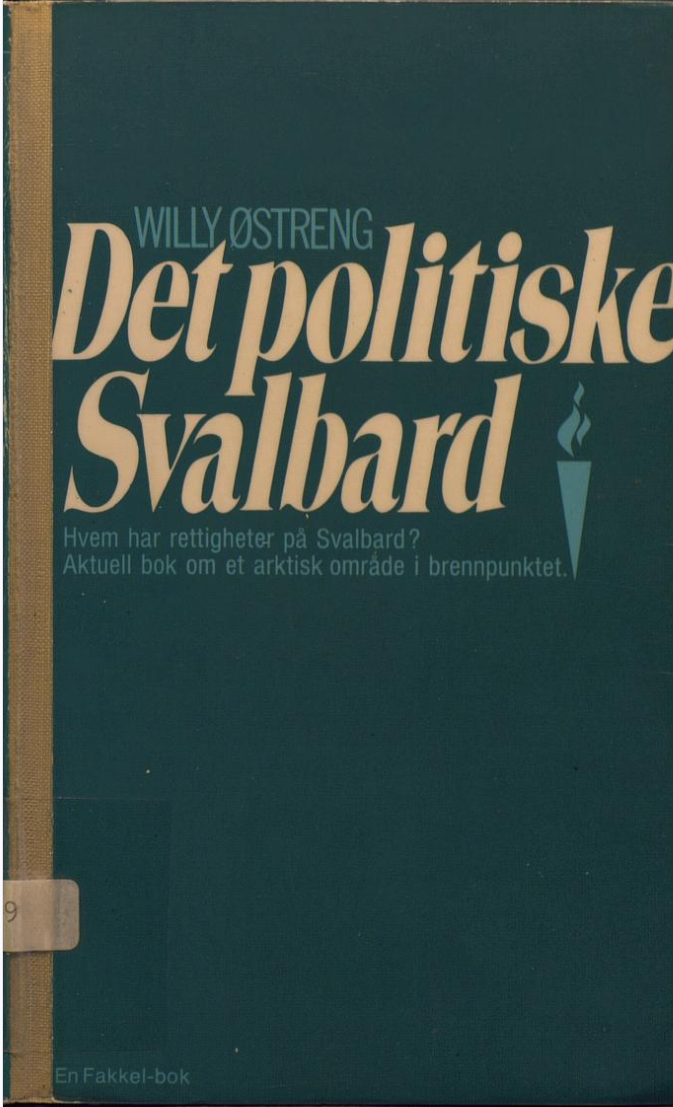
The researcher reveals that the Svalbard research has been some of the most rewarding. The book The Political Svalbard was a sequel to his thesis and focused on how Norwegian law and jurisdiction over Svalbard had been applied up until 1975.
"I found that the Norwegian jurisdiction over Svalbard was characterized by austerity policies and not a desire to demonstrate Norwegian sovereignty to any particular extent, such as over the Soviet mining towns," says Østreng and continues:
"That book became central in a political process that triggered in the Norwegian public. The question was about changing the content of Norwegian politics, from letting the Russians handle their own internal affairs in the Russian mining towns to giving Norwegian sovereignty a foothold there as well."
Østreng says it was very rewarding to see how his research project could help enlighten something that was considered a major problem by the sovereignty holder, Norway.
"It was interesting to document this and for it to provide substance to a change in Norwegian politics."
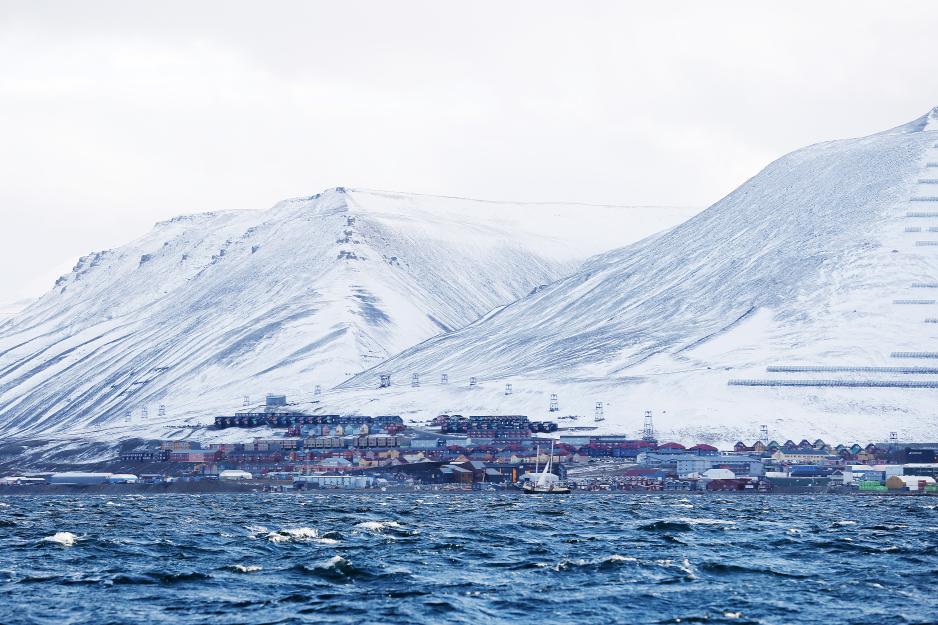
Svalbard has been a common thread in Willy Østreng's research since his master's thesis at the University of Oslo. (Archive photo of Longyearbyen in 2022: the Norwegian Armed Forces)
Østreng adds that working on his newest book has also been rewarding, but that time is taking its toll on him.
"It has been quite demanding work. I started when I was 79-80, and it took four years. I'm not as strong as I was at 20, so it is perhaps some of the most demanding work I've done, both intellectually and physically," he says.
Svalbard also plays a central role due to its strategic significance and is included in at least 10 of 17 chapters.
"A number of states with interests in the Arctic are not part of the Arctic Council, such as China and India, but are signatories to the Svalbard Treaty. Therefore, they have the right to access and stay in the archipelago regardless of purpose," Østreng explains about why Svalbard's position in the Arctic is unique.
Comprehensive perspective
The researcher embarked on the book project because he saw a lack of comprehensive perspectives on the Arctic Ocean. He wanted to place his own research on the Arctic and the Arctic Ocean in a greater context.
"I had to expand my own political science approach to include all scientific disciplines, including natural sciences, law and history. Together they can illuminate the whole, and the whole is greater than the individual components," says Østreng, and adds:
"I wanted to explore the development in a bigger circumpolar context, but also how the development in the Arctic Ocean and the Arctic interacts with the developments in international politics."
"A comprehensive and interdisciplinary perspective was missing. One must be interdisciplinary in order to highlight new aspects of the development in the Arctic Ocean."
The aim of research must be to clarify, not obscure.
Geopolitics in negative terms
Through his work on the newly published book, Østreng explored geopolitical theories and discovered a trend in geopolitical research that first emerged in the 1960s and continued into the 1970s and 1980s.
"There was a prevailing idea that imperialism is the mother of geopolitics and that the only tool of geopolitics is violence," says Østreng.
In the archives, he discovered a moral outrage over geopolitics and its historical results, as well as a consequent distance from geopolitical research.
"Many researchers in the Western world boycotted geopolitics because it was thought of as morally deplorable. As a result, the subject suffered in many ways. One cannot distance oneself from this topic if one wants to understand the geopolitical component in international politics," says Østreng and continues:
"A feeling festered that geopolitics is only violence and that geopolitics does not know international law or cooperation. That is simply not true."
Geopolitics has, of course, sought power through violence and oppression in countless cases, but Østreng wants to showcase that geopolitical measures are surprisingly varied and complex.
He refers to the Convention on the Law of the Sea, the Svalbard Treaty, and the demilitarization of the Åland Islands as examples of how geopolitical cooperation has benefited international law.
"Geopolitics is most benefited by international cooperation. After all, war is the most expensive way to secure national interests," Østreng notes.
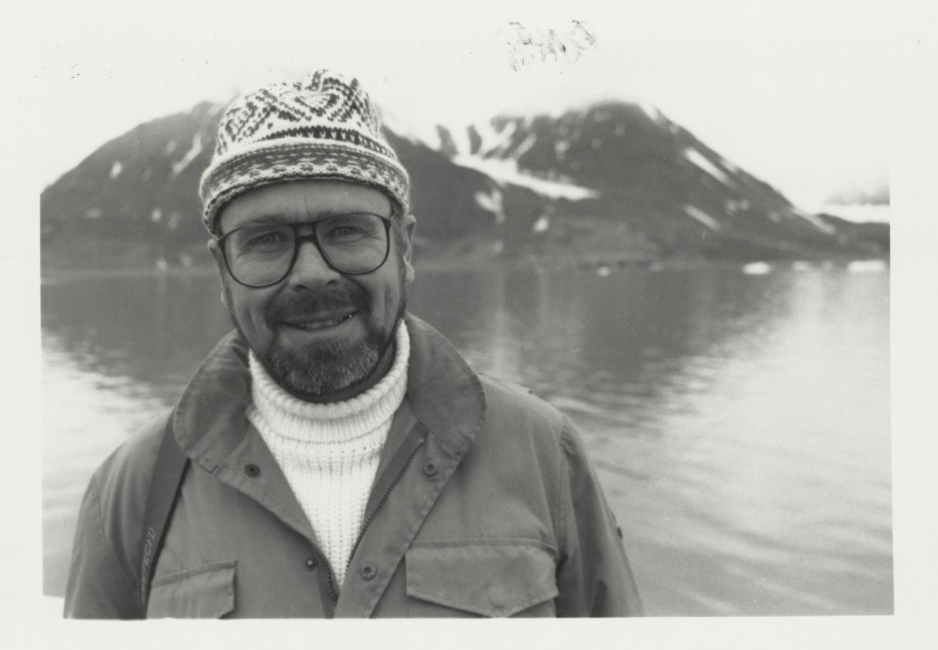
Østreng was the Director of the Fridtjof Nansen Institute for 26 years. (Photo: Svalbardposten's archives)
Clear language and clear thoughts
To place the Arctic in a more comprehensive perspective and to nuance geopolitics, Østreng has strongly focused on clear language in order to address a broad audience.
"Each discipline has developed its own jargon, which isn't necessarily transferable to other disciplines. This particularly applies to social sciences and natural sciences, where the same words can have different meanings."
He believes that interdisciplinary research has a communication problem because there is no shared language between disciplines.
"It is not possible to work with geopolitics without being interdisciplinary. It is a requirement, in my opinion."
He also criticizes the sometimes excessive use of jargon in research.
"Clear language makes the thought clearer. Sometimes, one may suspect that a dramatic and excessive use of academic jargon is trying to hide that the thought is not clear," says Østreng.
He adds that the unclear thoughts are hidden in an unavailable use of jargon. This does not apply to everyone, says Østreng, but he believes this must sometimes be the reason for an excessive use of complicated language.
"The aim of research must be to clarify, not obscure," says Østreng and concludes:
"I believe there is some fear of being clear in research. We must get rid of that fear. This is not a distrust of academic language because we need technical terms, but we shouldn't overdo it. The exaggerations are obscuring, also for researchers, myself included."
"Sometimes, not often, but sometimes one is left with the feeling of the emperor's new clothes."