Danish Intelligence Warns U.S. “Hemispheric Approach” Raises Arctic Security Uncertainty
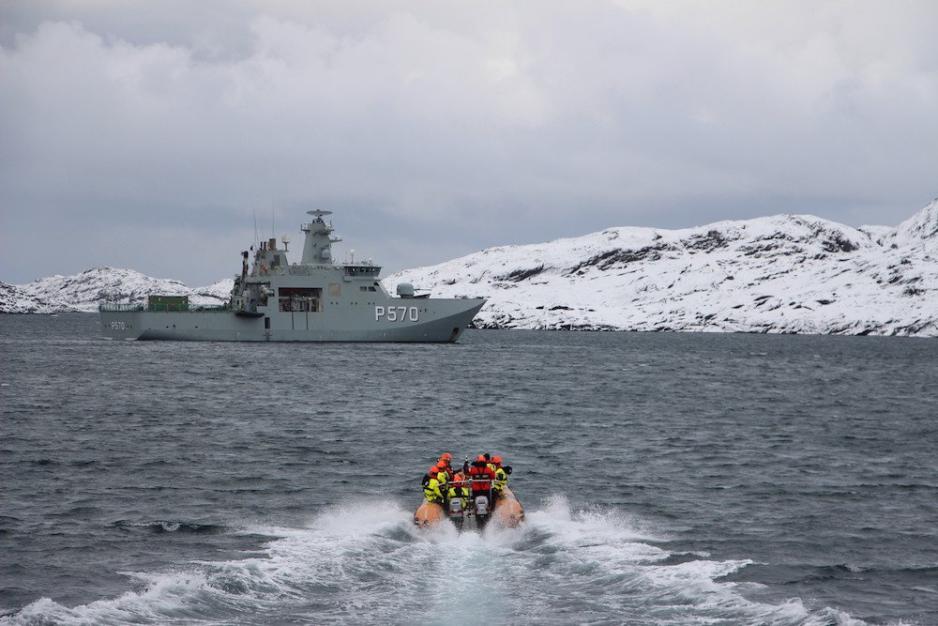
Danish sailors from the ‘Knud Rasmussen’ take part in a 2016 search-and-rescue exercise near Nuuk, Greenland. (Photo: Beredskabsstyrelsen / DEMA)
A sharper U.S. focus on its “immediate region” and the hemispheric approach of Washington’s new National Security Strategy has created doubts in Copenhagen about America’s long-term role in the Arctic. Denmark’s Outlook 2025 concludes that this strategic shift could leave the region more exposed amid rising Russian and Chinese military activity.

The Danish Defence Intelligence Service (DDIS) cautions in its Outlook 2025 that the United States’ updated strategic priorities, emphasizing hemispheric security, economic coercion, and a more aggressive posture toward competitors and allies, have introduced new uncertainties for European and Arctic allies.
While Washington has increased attention on Greenland and the High North, Danish analysts warn that a deeper American pivot toward the Pacific and the Western Hemisphere could weaken the U.S. commitment to broader Arctic stability.
The U.S. Hemispheric Security Turn
The Danish Defence Intelligence Service describes the United States as “significantly prioritizing” its immediate region, reshaping its foreign and security policy to counter China’s influence in the Western Hemisphere and protect U.S. domestic strategic interests.
This marks a notable evolution in U.S. security thinking, one that DDIS notes includes the use of economic coercion, including high tariff threats, and no longer ruling out military force even toward allies.
This fundamental shift also has implications for U.S. Arctic Engagement, the Danish report warns.
Growing uncertainty about the United States’ role as Europe’s primary security guarantor
Although the United States has increased its strategic interest in the Arctic, particularly its focus on Greenland’s role in U.S. national security and early-warning infrastructure at Pituffik Space Base, DDIS stresses that this attention coexists with the broader hemispheric pivot.
Crucially, DDIS highlights growing uncertainty about the United States’ role as Europe’s primary security guarantor, driven in part by Washington’s intensified focus on China and the Pacific.
With U.S. military resources and strategic attention under pressure, Denmark worries the Arctic may not remain a consistent American priority in the years ahead.
Danish Concerns Over U.S. Stepping Back
DDIS warns that the U.S. pivot toward its immediate region “creates uncertainty about its role as the primary guarantor of security in Europe,” a sentiment that extends into the Arctic.
Danish defense officials are concerned that U.S. reallocation of military capabilities toward the Pacific, where China’s rise is the driving threat, may dilute U.S. presence in the High North just as Russia and China intensify their own activities there.
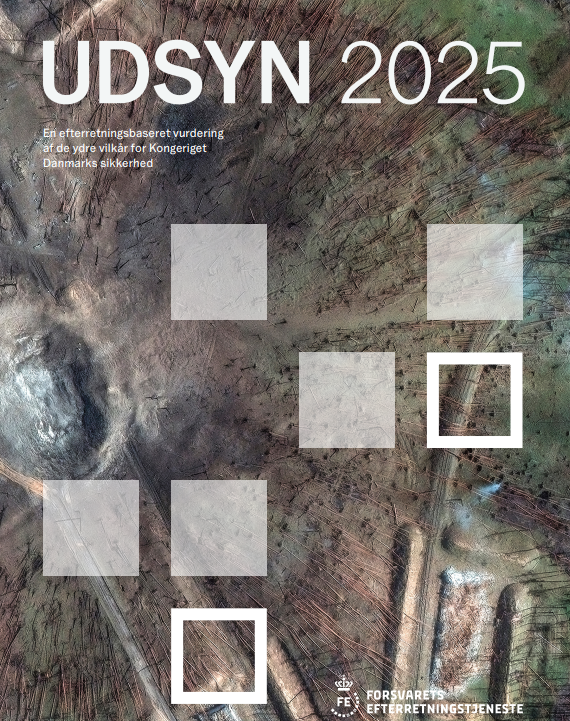
Facsimile of Outlook 2025, the report from the Danish Intelligence Service.
The report stresses that if the United States “withdraws more of its troops from Europe” or shifts focus away from Arctic deterrence, Russia may become emboldened to pursue riskier military behavior in the region, including provocations or hybrid operations.
Rising Strategic Pressure From Russia and China
DDIS situates U.S. strategic ambiguity within a broader competitive environment. Russia remains the dominant military actor in the Arctic, actively expanding and modernizing its Arctic forces.
China, meanwhile, seeks long-term access to Arctic sea routes, natural resources, and critically the ability to deploy submarines under the ice as part of its nuclear deterrent posture.
This trilateral competition between Russia, China, and the United States, means that any perceived American retrenchment in the Arctic risks accelerating Sino-Russian cooperation and shifting the regional balance of power in ways that disadvantage Denmark and other Arctic nations.
The Arctic as a Strategic Warning Line
DDIS underscores that regardless of U.S. global recalibration, the Arctic remains America’s “first and most important warning line” in the event of a major-power conflict with Russia or China.
The sensors and missile-tracking capabilities at Pituffik Space Base are central to U.S. homeland defense, anchoring Greenland within American strategic planning.
Yet DDIS notes that this priority does not automatically translate to broader operational presence.
Washington’s hemispheric strategy may privilege defensive early-warning assets while reducing emphasis on forward Arctic engagement; a potential gap Denmark finds increasingly concerning.
Also read (the text continues)

A More Volatile Arctic Security Landscape
DDIS concludes that the convergence of U.S. strategic repositioning, Russian militarization, and China’s growing Arctic ambitions has transformed the High North from a low-tension region into an arena of major-power rivalry.
Denmark sees the need for closer European coordination in case U.S. commitments become more conditional, transactional, or regionally constrained.
In its concluding assessment, Outlook 2025 argues that great-power mistrust and unilateral prioritization are reshaping the international system.
The U.S. hemispheric turn, paired with uncertainty over Washington’s long-term commitment to Europe and the Arctic, requires Denmark to prepare for a security environment in which traditional guarantees can no longer be taken for granted.
The report warns that the combination of Russian assertiveness, Chinese strategic expansion, and U.S. recalibration will demand greater European defense capacity and more robust Arctic situational awareness to maintain stability in the High North.