Arne O. Holm says Psychological Warfare and a Mental Invasion That Dominates Our Lives
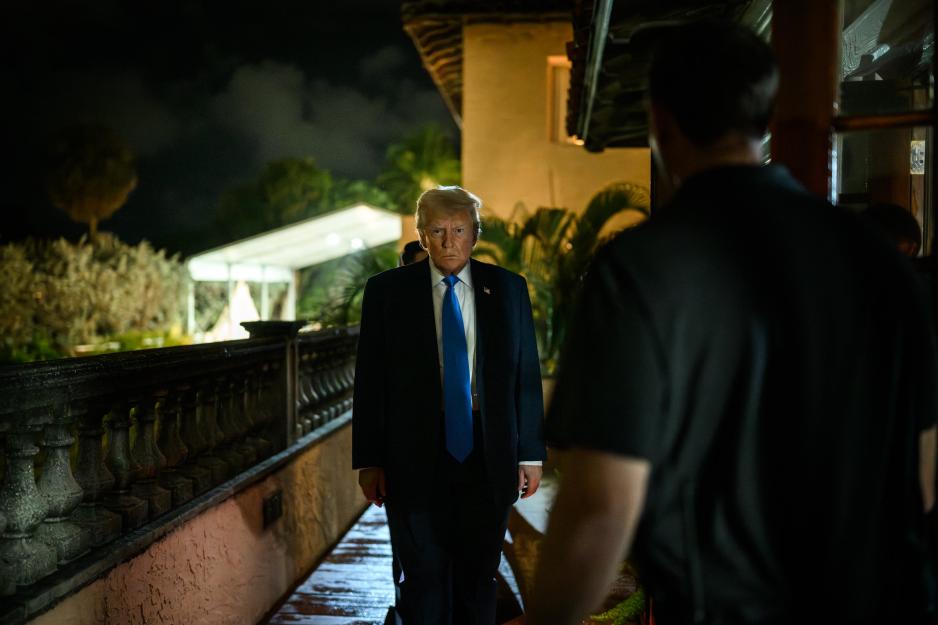
He digs into our heads without an invitation. (Photo: the White House/Daniel Torok)
Comment: He digs into our heads without being invited. A mental invasion that commands attention in conversations where people meet. I am talking about Donald Trump's psychological warfare. A form of terrorism that impacts us all, yet is never on the negotiation table when our most powerful leaders meet.

And they meet often these days. The leaders. They are fluttering like moths from capital to capital, on an eternal hunt for a fire extinguisher, as White House threats are reiterated or replaced by new ones.
A political fire brigade that is watching the fire flare up again every time they think they are starting to get control. Or a new fire is lit somewhere else in the world.
American pyromaniac
Our political leaders are elected and paid to respond when the American pyromaniac strikes. On his side, he can just lean back in his gold-decorated Oval Office while paying lackeys to do the dirty work.
The dirty work involves suppressing legal and peaceful demonstrations, taking over countries, such as Venezuela, and appointing himself president, or ignoring Ukrainians and Palestinians, people who have lost their houses, homes, and families, looking for peace.
Our politicians, our representatives, have a mandate to stop the madness.
We are not framed by the legislation against war crimes.
We, on the other hand, are largely innocent victims of psychological warfare staged by abusers equipped with a moral just as impaired as a spine without cartilage and bones. Our existence, on the outskirts of the military conflicts, is not framed by a law meant to prevent war crimes.
We have no international court to turn to, as the traumas after COVID, the Russian invasion of Ukraine, Israel's destruction of Palestine, and finally Donald Trump, leave us sleepless and despairing.
Flooded
My inboxes, which are many these days, have lately been flooded with messages from people who wake up every day with a mental knot in their stomach, fearing what the news has in store today.
Stories of institutionalized children breaking down, of officers and privates that trusts the assurances from the American defense, but who still struggle to understand the connections in the task they are assigned to perform.
Also read (the article continues below)
Who is a friend and who is a foe?
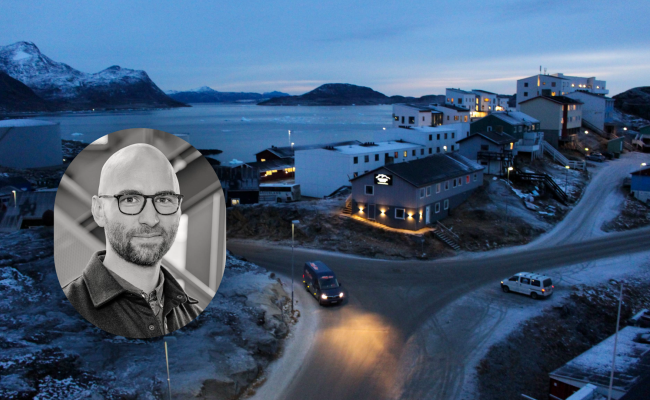
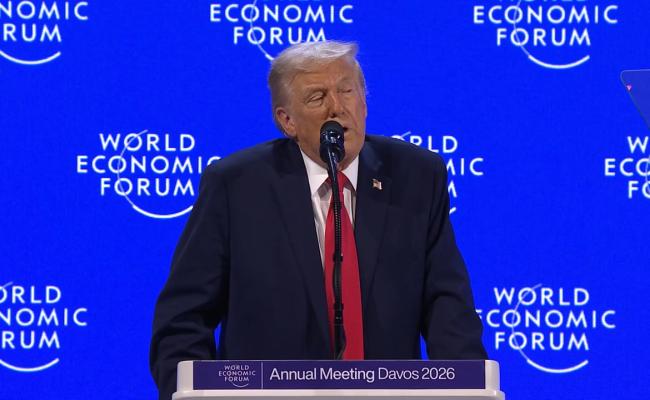
How do you endure in Greenland while the president rages from a podium in Davos, underscoring for 70 minutes that he is asking for "a piece of ice." The people who live their lives on this 'ice' do not exist in the narrative. They are pawns in a political game, robbed of integrity, feelings, and needs.
"I am scared every day," reads one of the tens of messages I have received.
Even experienced journalists speak of anxiety-ridden January mornings.
The social spaces are filled by forces beyond our control.
Lost in the noise
In the city where I live, Bodø in Northern Norway, a political majority has imposed a major and incomprehensible tax shock on its residents. Such topics were about the only things discussed in the election campaign we concluded this fall. Now, however, the conversations around the coffee table hardly touch on our own economy before consistently turning to the night's new statements from Washington.
The attacks on NATO, on the EU, on Europe, are a permanent part of the unwritten menu for anyone who drops by a cafe. Where we once used our social spaces to care for our loved ones, we now worry about forces far beyond our control.
And other important conversations also get lost in the noise. Political measures seem to be moving from idea to reality without resistance. Such as the discussion about the fate of millions of people on the run. Almost imperceptibly, the asylum policy has moved from a discussion about humanism to a battle of the toughest. It now revolves around how we can further restrict, not help.
Also read (the article continues below)
Even the victims of Russia's bloody and brutal war against the Ukrainian people have been hounded off the front pages.
We in the media are also being criticized in the messages we're receiving.
Often rightfully so.
The message is that we give Donald Trump too much space.
Perhaps we do, but it is a difficult balancing act.
The asylum policy has moved from a discussion about humanism to a battle of the toughest.
Criticism of the press
High North News is a newspaper for the Arctic and the High North. Our coverage area is the part of Europe and North America where the emergency meetings have been copious in the last few weeks. And this is not just about Greenland, nor how it impacts Svalbard. It is also about how our entire defense structure is closely woven into the command lines from Washington.
We don't want it to be this way, but we are forced into a security policy reality that tests our ability to maintain a cool distance.
So we do what we can. An essential part of our journalistic mission is telling stories about life in the Arctic, a life to be lived no matter who controls the political agenda. Therefore, we now institute new resources to tell stories about lives as they are still lived, without reaching the front pages or TV news channels.
Personally, I found mental strength in the Canadian Prime Minister Mark Carney's speech in Davos the other day. He did not mention Donald Trump by a single word, yet his message was still exemplary clear. Terrifying, but still directed away from the despots' mental grip on our lives, whether they are located in the East or in the West.
He also set demands on his colleagues, demands to understand that it is no use dancing to the tune of the American one-man orchestra. Those were my words, not Carney's.
Anchored in rules
His statements were about accepting that we are in the middle of a breach. We have passed the time when Europeans should adapt, hoping the problems will pass, and that compliance ensures security.
"We are in the midst of a rupture, not a transition," said Carney.
Innocent only when we stand up against terror.
He spoke of a national sovereignty that was once grounded in rules, but will increasingly be anchored in the ability to withstand pressure.
He asked us to actively take on the world as it is, not wait around for a world we wish to be.
Largely innocent
Initially, I described us, ordinary mortals, as largely innocent in the attacks on our minds. We will only be completely innocent when we are able to stand up against the mental terror as well.
Wonderful Jens Bjørneboe, a writer I often find inspiration in, writes in the trilogy The History of Bestiality that "we are not just victims, we are also co-conspirators if we do not stand up against abuse and dictatorship."
His former colleague, the Russian writer Fyodor Dostoevsky, published the masterpiece The Brothers Karamazov in 1880. He wrote about our own responsibility for "everything and everyone on Earth." That "everyone is guilty for everyone else."
Big, pompous words, some might say.
But perhaps that is just what we need at a time when the mental weapons of attack are becoming increasingly precise in their attempts to shake our own understanding of what is right and what is wrong.