NATO Should Follow Up Success on the Eastern Flank in the Arctic, says UK Foreign Secretary
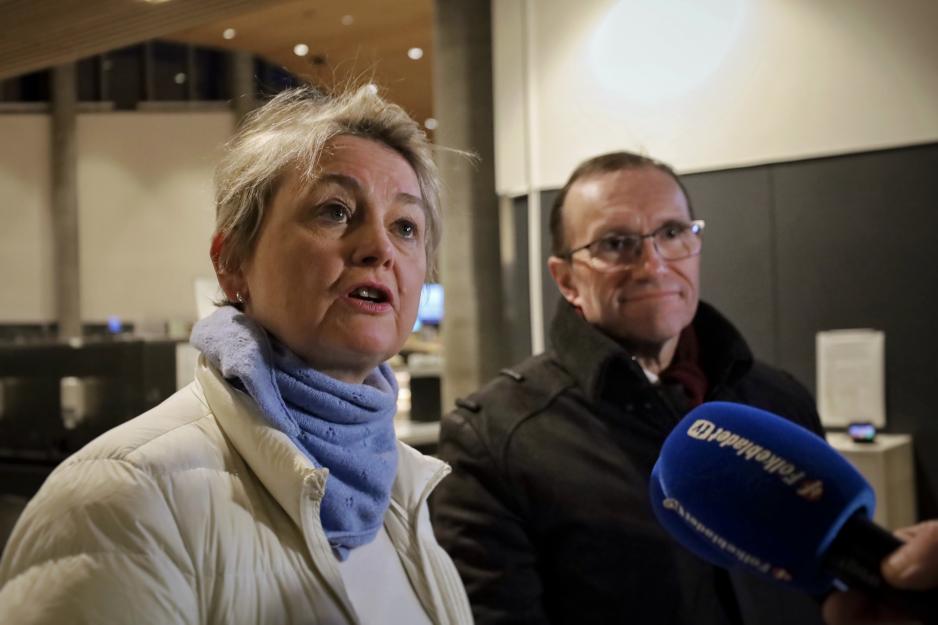
On Thursday January 15th, the UK Foreign Secretary, Yvette Cooper (Labour), and Norway's Minister of Foreign Affairs, Espen Barth Eide (Labour), visited British and Norwegian forces in the Bardufoss area, Troms county, Northern Norway. They also held bilateral discussions. Here they are meeting with the Norwegian press. (Photo: Astri Edvardsen)
Bardufoss, Northern Norway (High North News): NATO should launch stronger coordination and cooperation as part of an Arctic sentry, inspired by joint efforts for enhanced presence in the Baltic Sea and on the Eastern flank, said UK Foreign Secretary Yvette Cooper to HNN last Thursday.

Europe and Canada are now facing attempts at dangerous unilateralism from Putin's Russia and Trump's USA.
In violation of international law, the Kremlin is waging war with full force against the neighboring sovereign state Ukraine, including through the use of military resources in the Russian Arctic.
At the same time, the Trump Administration continues its quest for control over the Arctic island of Greenland, part of the sovereign state of the Kingdom of Denmark. To realize this ambition, Trump makes rethorical references to 'national and international security,' while threathening to use coercive force against an ally. (And other European allies, such as on January 17th).
This is not only in violation of the UN Charter – a central source of international law – but also of the North Atlantic Treaty, NATO’s founding document.
Intensive political and diplomatic work regarding Greenland, Ukraine and the defense of fundamental principles of international law is transpiring. This has significant implications for international security, including in the Arctic.
These are among current key security policy aspects, which partly formed the backdrop for UK Foreign Secretary Yvette Cooper's recent visit to the two Arctic NATO countries that border Russia: Finland and Norway.
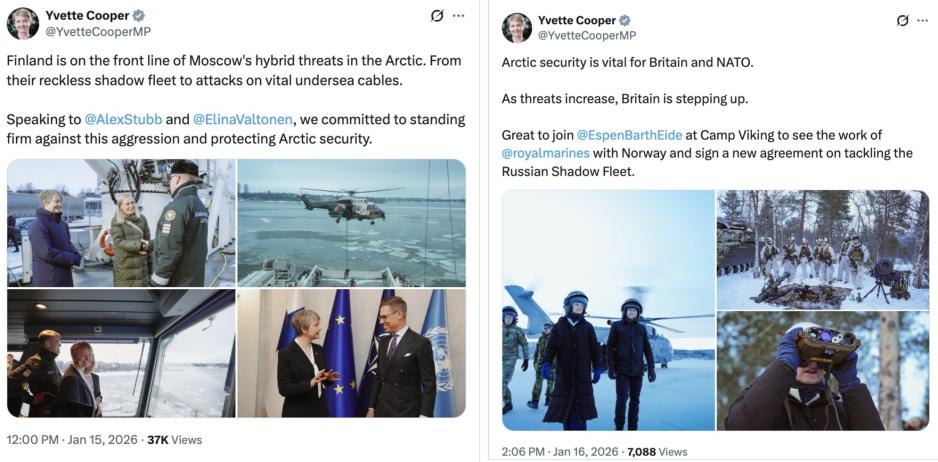
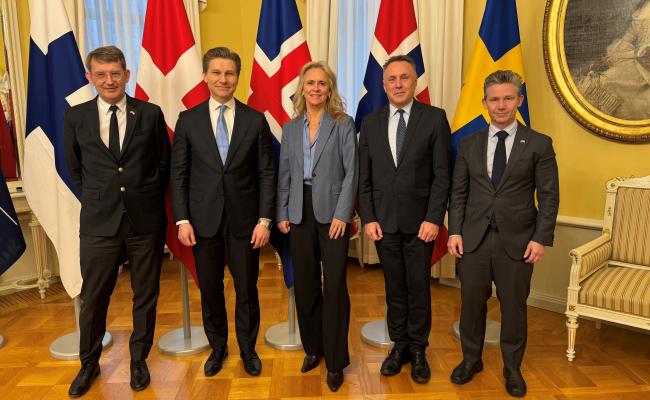
Left: Secretary Cooper’s meetings with Finland’s president, foreign minister and border guard in Helsinki on Wednesday, January 14th. Right: The joint Norwegian-British ministerial visit to the countries' forces in Troms, Northern Norway, on Thursday, January 15th. (Screenshots from X)
Watchful eye to both east and north (and west)
'We must strengthen Arctic defenses to deter Putin,' Cooper emphasized in a press release last Wednesday ahead of the aforementioned tour up north.
The UK Foreign Secretary also clearly advocated that NATO should “step up its work in the Arctic to protect Euro-Atlantic interests in the region.”
“Arctic security is critical to protecting Britain and NATO,” she also underlined, pledging British support for allies, such as Finland and Norway.
During Thursday's ministerial visit to British and Norwegian forces at the Norwegian Armed Forces' Bardufoss garrison, Northern Norway, Cooper elaborated to High North News on her call to NATO:
“If we look at what NATO has already done very successfully in the Baltic Sea and also at the Eastern flank – in what we call the Baltic sentry and the Eastern sentry – we believe that we should be strengthening that coordination and cooperation as part of an Arctic sentry,” said the UK Foreign Secretary to HNN, with her Norwegian ministerial colleague Espen Barth Eide at her side.
Efforts along this line was a central topic when NATO Secretary General Mark Rutte visited Northern Norway in May 2025, hosted by the Norway's prime, foreign and defense ministers, as HNN reported.
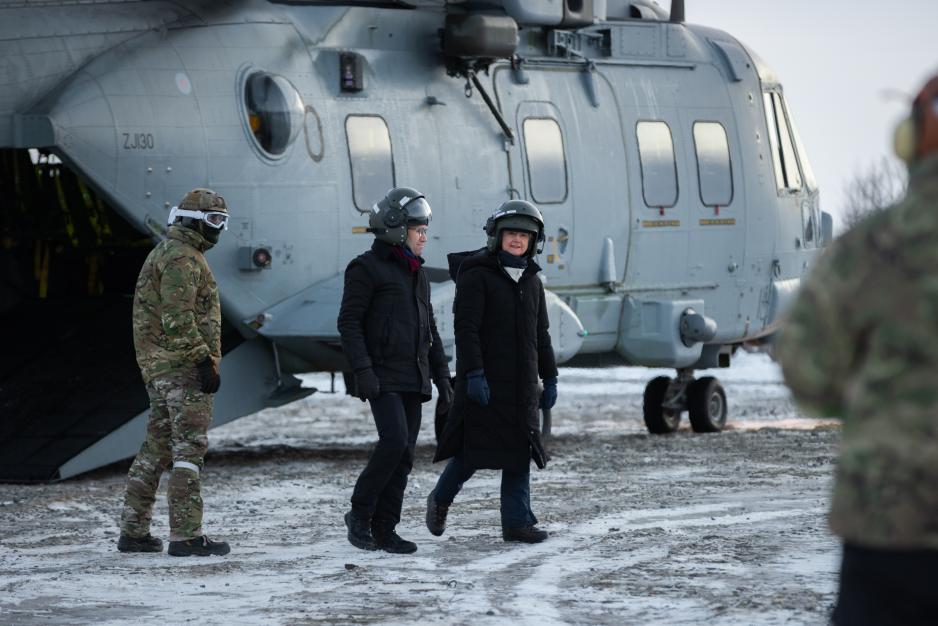
Secretary Cooper and Minister Barth Eide at Mauken exercise and firing range in Troms on Thursday, transported by the UK Commando Force’s helicopters as part of the training activity ‘Operation Clockwork’. (Photo: Ole-Sverre Haugli/the Norwegian Armed Forces)
Focus on Russian forces in the north
“Because we know that the Arctic is a gateway for the Russian Northern fleet to threaten not just the United Kingdom and Norway, but to threaten the whole of the transatlantic alliance,” Cooper continued.
“That is why we want to build on the important work that the UK and Norway have been doing together, and take stronger action right across NATO and right across the transatlantic alliance to value Arctic security,” she stated.
With this, the British Foreign Secretary referred to the United Kingdom and Norway's long-standing security policy and military cooperation in the North within the framework of NATO.
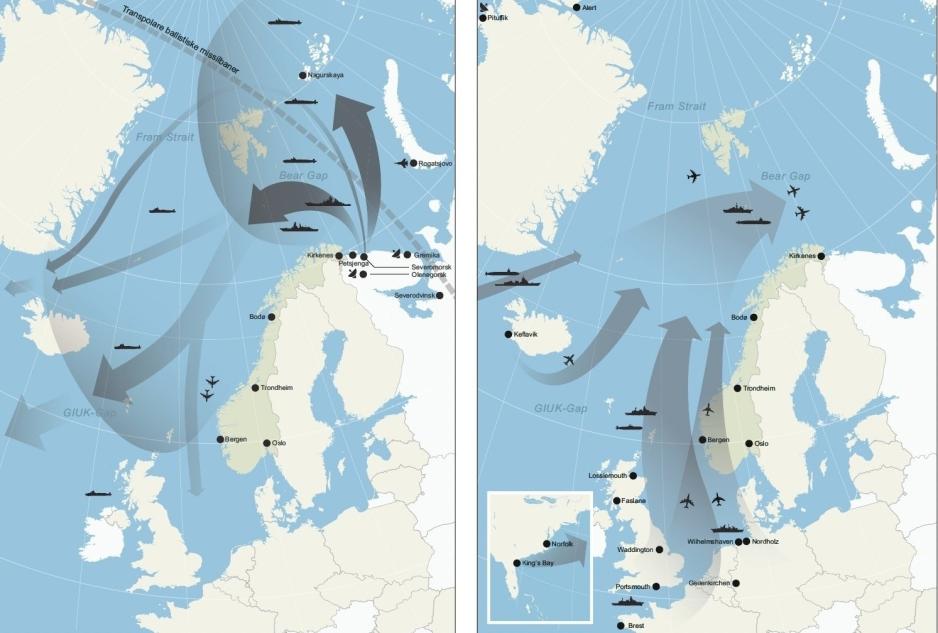
Left: Illustration of typical forms of Russian military activity in Norway's immediate areas. Right: Illustration of typical forms of allied military operations vis-à-vis Russian forces. (Source: Norwegian Defense Commission of 2021, report 2023:14, pp. 144-145).
This Norwegian-British cooperation was further strengthened in December 2025 with the comprehensive defense agreement "Lunna House".
Keywords for the agreement are closer integration of Norwegian and British forces, cooperation on the purchase and operation of new British Type 26 frigates, rapid reinforcement of Norway in crisis and war, as well as joint projects on advanced autonomous systems and drones in the High North.
In early January, the British Royal Navy announced that the Royal Marines will operate year-round in Northern Norway.