
Op-ed: Trump’s Effort to Annex Greenland
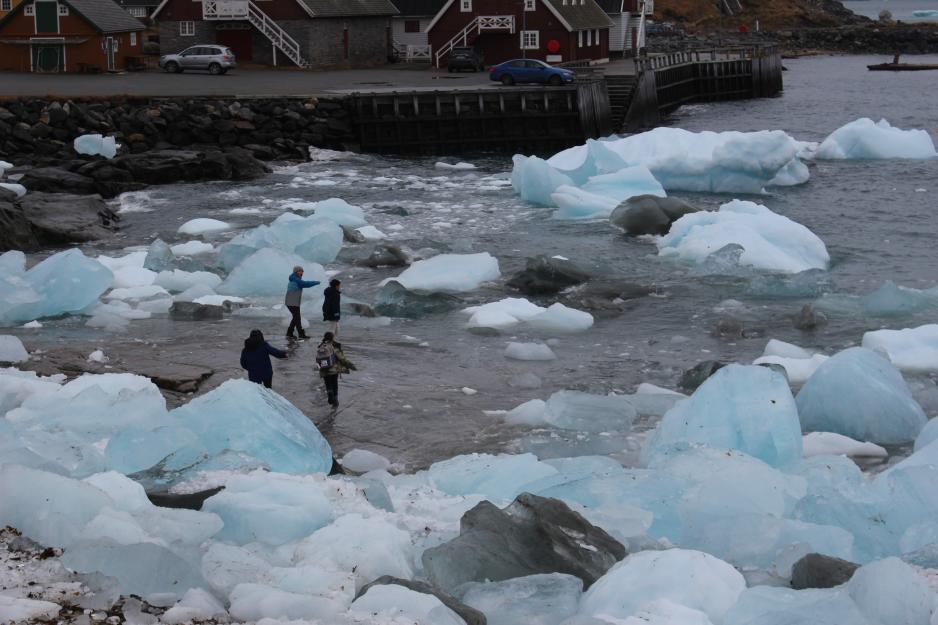
European leaders denounce Trump’s predatory aspirations, issuing a joint statement pledging support for Greenland’s territorial integrity and opposing any annexation. (Photo: Birgitte Annie Hansen)

This is an op-ed written by an external contributor. All views expressed are the writer's own.
Following his military assault in Venezuela and the capture of President Nicolas Maduro and his wife, Cilia Flores, President Trump has intensified his campaign to acquire Greenland as part of a broader expansionist U.S. security strategy aimed at expanding American dominance, particularly in the Arctic.
Greenland’s government categorically rejected a U.S. takeover “under any circumstances,” asserting that “as part of the Danish commonwealth, Greenland is a member of NATO, and the defense of Greenland must therefore be through NATO,” not through a unilateral US annexation.
According to the Danish poll, Verian, roughly 85% of Greenlanders agree.
Trump appears to regard his authority to shape world affairs as expansive and unchecked.
In an Oval Office meeting with reporters regarding his Greenlandic ambitions, Trump claimed he was unconstrained by legal or institutional authority, stating, “Yeah, there is only one thing. My own morality. My own mind.”
Sovereignty and self-determination, as guaranteed under international law, cannot be abrogated
European leaders denounce Trump’s predatory aspirations, issuing a joint statement pledging support for Greenland’s territorial integrity and opposing any annexation.
France, Germany, Italy, Poland, Spain, the United Kingdom, Norway and Denmark reaffirmed NATO’s commitment to Arctic Security, underscoring that sovereignty and self-determination, as guaranteed under international law, cannot be abrogated.
Trump seeks to coerce European acquiescence.
In a social media post, the U.S. president announced that new 10% tariffs would take effect on February 1, applying to all European goods, including from Denmark, and will rise to 25% on June 1, until Europe agrees to a “complete and total purchase” of Greenland.
Against this backdrop, a bipartisan delegation of eleven U.S. lawmakers traveled to Copenhagen on January 16th to meet with Danish Prime Minister Mette Frederiksen and her Greenlandic counterpart, Prime Minister Jens-Frederik Nielsen.
Also read (The text continues)

Frederiksen reaffirmed that Greenland is a sovereign nation, stating that “Greenland is not for sale.” The U.S. delegation, led in part by Republican Alaska Senator, Lisa Murkowski, who opposes Trump’s plan to absorb Greenland, told reporters, “This is not a partisan issue.”
Murkowski then called for “a de-escalation of rhetoric.”
In their meetings with their Danish and Greenlandic counterparts, the American delegates drew attention to the constitutional power of Congress under U.S. law that may restrain presidential power, noting that foreign policy is not the exclusive domain of the presidency.
Trump meanwhile had insisted in a meeting with oil executives that “we are going to do something in Greenland, whether they like it or not.”
Murkowski emphasized the impact on Indigenous self-determination, invoking Native peoples’ deep cultural, spiritual and historical ties to their ancestral lands.
Seven NATO members deployed troops to Greenland
The Senator framed Indigenous sovereignty, such as the Greenlandic Inuit, as inseparable from land, language, spiritual, cultural and political identity, reflected in international legal instruments such as the U.N. Declaration on the Rights of Indigenous Peoples and ECOSOC’s UN Permanent forum on Indigenous Issues.
To underscore Europe’s opposition to Trump’s threats, seven NATO members deployed troops to Greenland, including France, Germany and the UK, to establish a military presence and avoid a “dangerous downward spiral.”
Danish Defense Minister Troels Lund Poulsen announced plans to “establish a more permanent military presence with a larger Danish contribution” to Greenland’s budget.
For the first time in NATO history, European members are deploying troops to deter a NATO member from launching coercive economic measures and coercive threats against another member.
In Trump’s logic of domination, he argued that control of resource-rich Greenland would extend U.S. military and commercial reach into the Arctic, limit China, constrain Russia, and support his proposed Arctic and North Atlantic missile defense initiative.
Also read (the text continues)
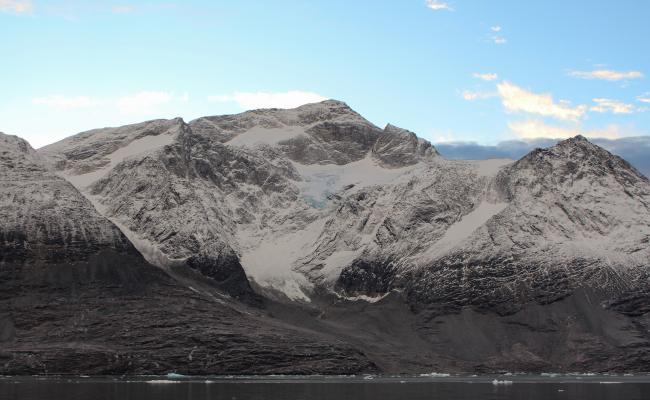
Yet, the U.S. Military Times emphasized that Copenhagen is already prepared to cooperate with Washington to address its security concerns within the extensive set of existing treaties and agreements.
Trump claimed that Greenland’s waters were “covered” with Chinese and Russian warships, “all over the place,” while Sweden’s Defense Minister, Pal Jonson, dismissed his claims as “exaggeration.”
Whether Trump intends to withdraw from NATO’s Article 5 mutual defense guarantee seems precipitously close.
Trump’s effort to subjugate Greenland and the sovereignty of its people, echoes earlier eras of U.S. predations when Native peoples’ lands were seized and Indigenous languages and cultures outlawed by both law and military action.
Trump’s threats against Greenland, more likely to be defined by threats, disinformation, financial inducements and hybrid warfare tactics, operates well outside the constraints of the rules-based-order, potentially weakening NATO and reinforcing Russia’s hybrid warfare operations to divide Europe.
The United States already has broad latitude to achieve its economic, military and political interests
Greenland’s legal status is well established.
The United States already has broad latitude to achieve its economic, military and political interests. Under the 1941 and 1951 defense agreements, the United States retains military base rights, including the present-day basing rights at Pituffik Space Base, north of the Arctic Circle.
In 1953, Greenland was granted representation in the Danish Parliament, expanding Denmark’s alliance with the United States.
The 2009 Self-Governing Act recognizes Greenlanders, primarily Kalaallit Inuit, as a distinct people under international law, providing a legal foundation for a future claim to full sovereignty.
When asked by reporters whether Greenlanders, in this moment, prefer an affiliation with Denmark or the United States, the response was resoundingly: Denmark.
Also read (the text continues)
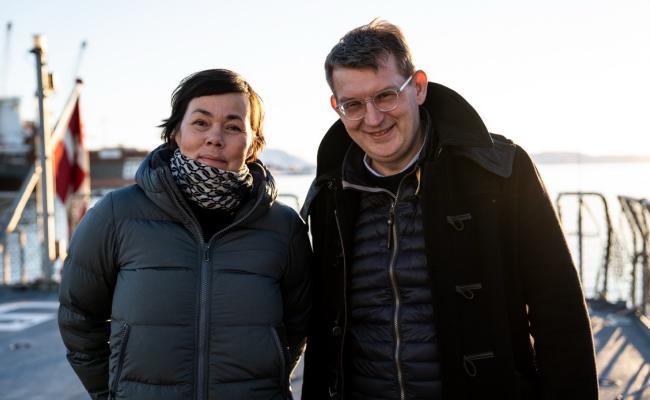
In today’s emerging Arctic order, the principle that unites NATO, Greenland, and Europe’s democracies is clear: sovereignty is not for sale, the self-determination of peoples cannot be altered by coercion; and territorial transfers may result only from free, open, and voluntary choice.
While the United States Congress must address the legal and political dimensions regarding Greenland at home, the NATO alliance must more fully integrate the Arctic into its strategic planning, articulate clear command authority for the High North, and ensure sufficient assets to deter coercive diplomacy, hybrid warfare, or faits accompli.
Trump’s threats to Greenland marks a turning point in the geopolitics of the Arctic region. A powerful, predatory member state has collided with the NATO alliance, Indigenous self-determination, and the rules-based-order.
The Arctic is no longer a peripheral theater, but a centerpiece for the norms that will govern sovereignty, consent and territorial change in the twenty-first century.
Whether NATO and its member states succeed in strengthening the Arctic security architecture to deter a might-makes-right geopolitics will shape not only the balance of power in the High North, but the credibility of its democratic order.