New Research Project to Map ‘Zombie Houses’ in Sweden
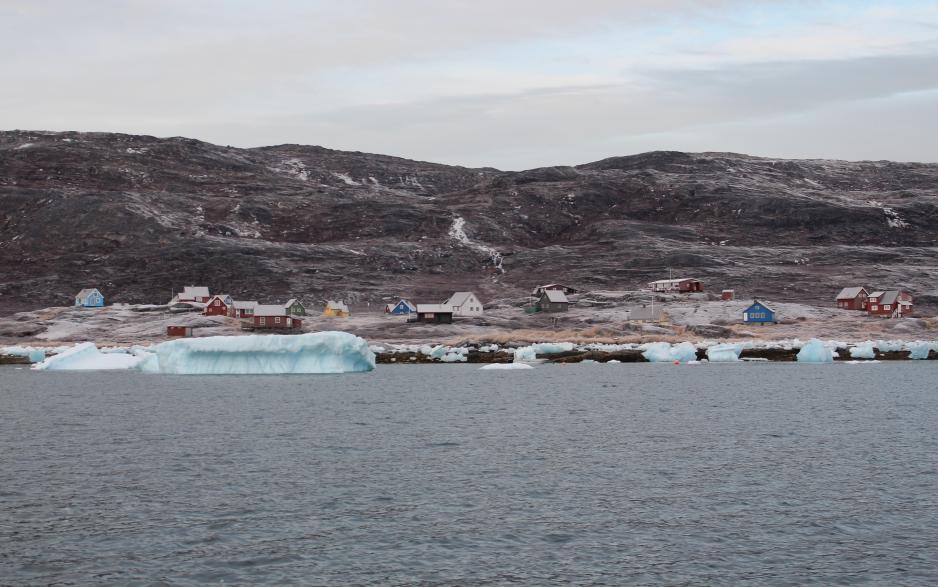
The town of Qoornoq in the Nuuk Fjord in Greenland was abandoned in the 70s due to urbanization. Many of the houses have been taken care of and are used as summer houses. (Photo: Birgitte Annie Hansen)
Researcher Andreas Back at Umeå University will investigate abandoned houses in Sweden and explore how they can be utilized as a resource, particularly in areas experiencing long-term population decline.

Thousands of homes are left empty throughout Sweden. Some are dilapidated and uninhabitable, while others are move-in ready. Urbanization, an aging population, schools closing down, and a lack of infrastructure are among the reasons why houses are being abandoned, and why no one new moves in.
Researchers at Umeå University and Linköping University will now map the extent of abandoned houses in Sweden. In addition, they will look at whether these houses could serve as a hidden resource for future rural development.
The researchers hope to find solutions and uses for the houses that can be used across the country.
"I want to try and understand why houses are abandoned and how to manage this phenomenon," says researcher Andreas Back at Umeå University.
The project "Zombies in the rural housing market – abandoned houses, municipal planning and the future rural housing market" will begin in January 2026 and last until the end of 2029.
"Zombie houses"
The problems of abandoned houses can be seen across the North. While the interest in the North increases, the population is declining. Had it not been for Ukrainian refugees, the population in Northern Norway would have declined in recent years.
In Northern Sweden, many municipalities have experienced major population growth in the past years due to industrial development. But things can go awry there, too. The population of Skellefteå decreased during the first half of 2025, and the decline came in the wake of the bankruptcy of the battery factory Northvolt.
However, most countries in the circumpolar north share a strong urbanization. The people who do not move out of the region often move from the countryside to the large cities in the North.
This leaves the houses, which are often called 'zombie houses' or 'ödehus' in Sweden, empty. However, the extent of the problem remains unknown.
"I don't know exactly how many abandoned houses there are in Northern Sweden or the country as a whole. Part of my motivation for this project is that no one knows how big this social phenomenon is," says Back and continues:
"In Sweden, houses without registered residents are routinely categorized as holiday homes, which means that there are likely thousands of 'holiday homes' in Sweden that are not in use and that are actually abandoned."
Back suspects that there are more abandoned houses in rural areas and in areas that have experienced long-term population decline. This applies to large parts of Northern Sweden, and he believes it is likely that there are many abandoned houses in the region.
How can abandoned houses be utilized?
"I imagine that many could be used as residences or holiday homes if they were available on the market. However, many abandoned houses are never put up for sale and instead deteriorate, replies Back.
Nostalgic feelings
The researcher says there are several reasons why the houses aren't put up for sale, including low prices on such houses, leading to many not seeing a reason to sell.
In addition, many houses are located on agricultural or forestland, which can be used without anyone living in the house. Separating the house from the rest of the land is so costly that it is rarely worth it.
Finally, the emotional aspect also comes into play. People have strong emotions regarding the houses and their locations.
"Perhaps the house represents a connection to their hometown or their roots. This type of nostalgia leads to many owners keeping the house, even if they don't use it. They might have a dream of using the house more in the future or hopes that their children will," says Back, and adds:
"It is perhaps easier to feel this nostalgia when the prices of houses are as low as they are. If the prices were higher, I'm sure the nostalgia would weigh less."
He says that problems and conflicts around inheritance can also be a factor when houses are not sold.
A resource for rural areas
How can abandoned houses be a resource for rural areas in Northern Sweden?
“In Sweden, most people rely on loans to build houses. Banks are often reluctant to lend money for housing construction in sparsely populated areas, because housing prices are so low that the houses cost more to build than they are worth on the market when completed,” says Back.
"That means that only the existing buildings are available. If abandoned houses can be made available on the housing market, it could be a resource for rural areas when no or very few new homes can be built.
If these homes are put up for sale, are there actually people who want to live there? Is there a need for more housing in the Swedish countryside?
"I believe abandoned houses, in many cases, are a sign of low demand. But that does not seem to be the case everywhere," replies Back and continues:
"I have heard of rural municipalities claiming that people who want to move there are unable to get mortgages to build a new house or buy an existing house. In these cases, the housing market may be creating a housing shortage in places where there is actually housing available. This situation is exacerbated by the fact that we do not have any public support systems in Sweden that make it possible for people to build houses in rural and sparsely populated areas."
A sign of something bigger
In addition to exploring how abandoned houses can be a resource, Back will map the number of abandoned houses in Sweden and where they are located, as well as investigate how municipalities and associations are already working on this problem.
Based on this, he will attempt to understand why houses are abandoned and how to manage this phenomenon.
"My hope is that it could lead to a national discussion about rural housing markets in Sweden. Perhaps especially since the phenomenon also exists in other countries," says Back.
He believes the problem can be seen as a sign of something bigger – a sign of the relationship between cities and the countryside.
"While the housing markets in the big cities reach absurd price levels, empty houses are falling into disrepair in the countryside. From my perspective, these two things are connected. One cannot exist without the other."
"It says something about how society and the economy in general relate to urban and rural areas."
The researcher says that there is very little research on the topic and that it is important to try to understand which factors in society lead to houses not being used and how this can be changed.
"In addition, it may be reasonable from a kind of climate perspective to reuse existing houses as much as possible before we build new ones," he concludes.