Is It Realistic for Norwegian Fishing Vessels to Achieve Zero Emissions?
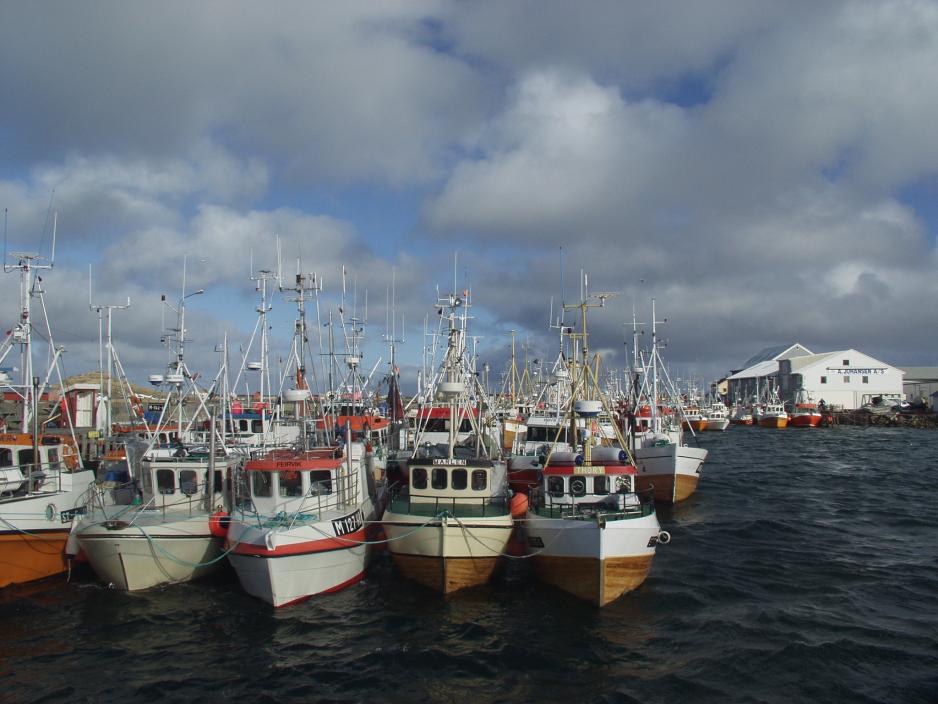
Fishing vessels in Lofoten, Northern Norway. (Photo: the Norwegian Society for Sea Rescue)
A new study has examined whether fishing vessels become more environmentally friendly when diesel is replaced with batteries and hydrogen. The Study has looked at the entire lifespan of the vessel, and not just emissions during use.

Norway is to cut emissions across all sectors, including the seafood industry. The Norwegian fishing fleet is facing major environmental challenges and will make significant cuts in emissions in a short time.
The Norwegian fishing fleet consists of 5,000 fishing vessels and emits about 1 million tonnes of CO2 annually, which accounts for 2,7 percent of Norway's total emissions.
The aim is for the fishing fleet to cut emissions by 55 percent by 2030 and achieve near zero-emissions by 2050. To achieve these goals the fishing fleet must go through a significant technology shift.
This has been met with strong resistance from the fisheries industry, which is already strictly regulated. The industry points to the lack of power, grid and incentives as the biggest challenges.
A new sustainability study from the ZeroKyst project has now examined whether fishing vessels become more environmentally friendly if diesel is replaced with batteries and hydrogen.
The ZeroKyst project aims to enable rapid technology shifts across all vessel types in the seafood industry. The project develops and demonstrates a zero-emissions driveline (Siemens Blue Drive and HybridZ), a new zero-emissions vessel, 10 reconstructed vessels, services for the reconstruction and maintenance of zero-emission vessels, and a complete solution for the flexible supply of electricity and green hydrogen as maritime fuel.
The new study has looked at the entire lifespan of the boat, as well as the production of batteries and hydrogen and the amount of energy used. Several former studies have only examined emissions while the boat is in use.
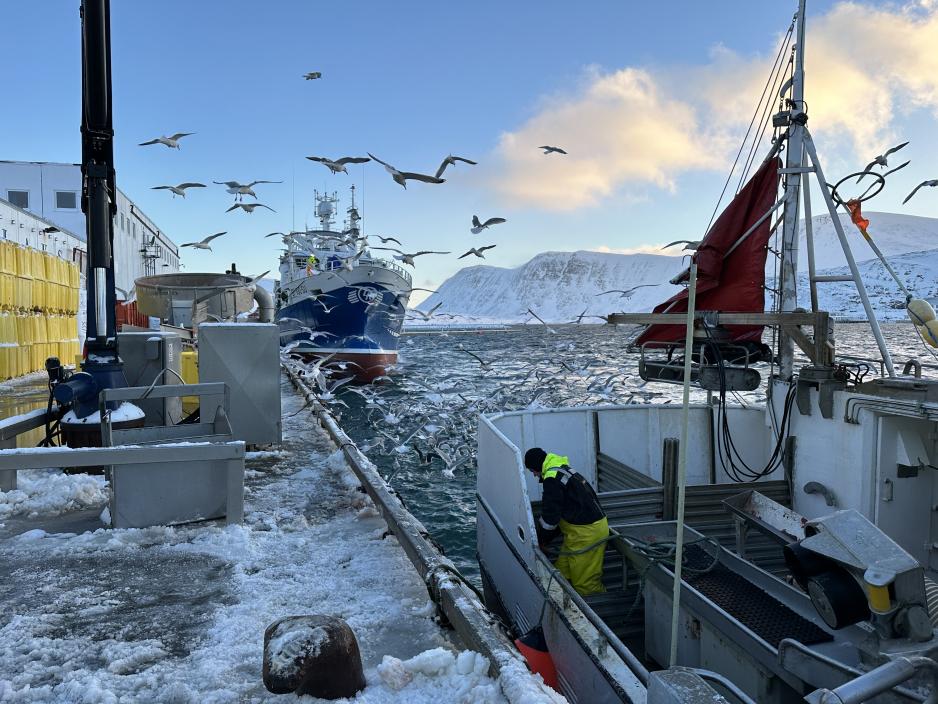
Boats docked in Tufjorden, Northern Norway. (Photo: Lillian Hansen/Norges Råfisklag)
Comparison
The study compared three types of boats: a regular diesel boat, a hybrid boat, and a zero-emission boat (run on hydrogen and batteries) throughout the vessels' entire lifespan.
The findings show that emissions from diesel vessels negatively impact climate and health to the highest degree, while the production of batteries, fuel cells, and other components for hybrid systems has negative consequences at the production stage.
Of the three boats, the zero-emissions boat achieved the largest reduction in direct emissions, up to 92 percent, as long as it utilized low-carbon electricity and hydrogen produced in Norway from renewable energy. In other words, batteries and hydrogen can be much better for the climate, but only if the energy used is clean.
Use versus production
When in use, the diesel vessel emits CO2, exhaust, soot, and particles, while the hydrogen and battery boat has no emissions.
However, to get a zero-emission boat, large batteries, advanced fuel cells, and hydrogen tanks must be produced. This requires a lot of energy, uses rare materials, and pollutes during its production.
The environmental impact does not disappear; it occurs at a different stage in the boat's life cycle.
The study concludes that battery and hydrogen boats can have almost zero operational emissions, but they involve higher technological risk, high costs, and infrastructure needs. Hybrid boats can offer around a 30 percent reduction in emissions compared to a traditional diesel vessel. They can be a practical solution in the short term for many coastal vessels, as they can be implemented with existing infrastructure.
The scientific article is currently under peer review for publishing in a scientific journal; a preprint version can be accessed here: «Do battery and fuel cell systems have the potential to reduce vessel life cycle emissions? – A comparative LCA study for a Norwegian coastal fishing vessel».