Arne O. Holm says The EU Finally Gets It, Leading to New Possibilities for Us
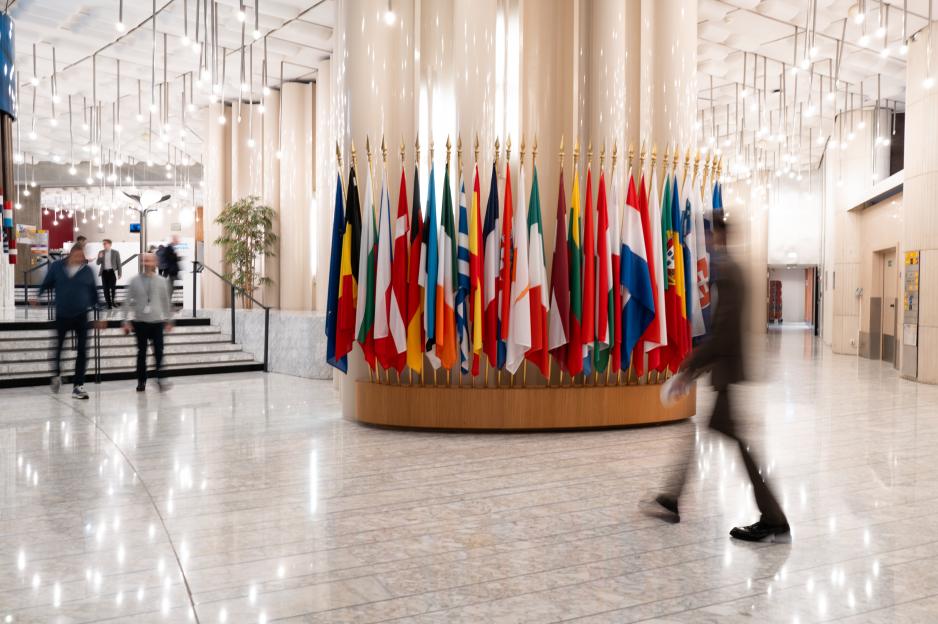
The European Parliament has adopted an updated Arctic Strategy by a large majority. (CC-BY-4.0: © European Union 2025 – Source: EP)
Comment: While Norway is refusing to adjust its position on the EU, the EU recently adopted a new strategic resolution for the Arctic that could have a major impact on Norway and the High North. Its most notable feature is the recognition of increased militarization in the North.


This is a comment written by a member of the editorial staff. All views expressed are the writer's own.
The EU's previous Arctic strategy was adopted in 2021. Since then, Russia has waged war against Ukraine, and Donald Trump has returned to the presidential seat in the US.
Fear of the US
The latter receives little attention in the new EU resolution. At least not directly, which is due to the never-ending fear of retaliatory measures from the irrational US president.
The war in Europe has massive consequences, according to the EU, and not least for the High North. Or as our journalist Malte Humpert describes it in his review of the new strategy:
But while former Arctic EU strategies have been sloppy European attempts to implement climate measures, merely for the especially interested, security policy and geopolitics now serve as the main topics of the new strategy.
Norway is pointed out as a key partner as an EU and NATO ally, both as an energy supplier and as part of the security policy. It shares the latter with Iceland and Greenland, together with the EU members Finland and Sweden.
Back in 2021, the EU's position was that all oil and gas production in the Arctic should be phased out. That may still be a goal, even though Norwegian production on the continental shelf is a prerequisite for limiting oil and gas purchases from Russia. The latter is more important than the former.
European sloppy work for the especially interested.
A two-way problem
Yet, when the Arctic is recognized as a security policy center in an EU context, it has practical consequences, and that is where the structures become a problem.
And that is a two-way problem.
The EU wants to influence the developments in the North through the Arctic Council, among other organisations. But the EU is still not a member of this international organization. The EU is only an observer and does not have any direct influence on the council's work. They are left out.
On the opposite side, non-members Iceland and Norway are left out as the EU is designing its Arctic policy.
The EU's foremost measure against non-members is market-based regulation of trade, combined with the allocation of research funds of sometimes massive proportions.
Norway is left out, but so is the EU.
But none of this gives the EU the ability to put power behind security policy demands.
NATO designs the security policy in the North, not the EU.
Bigger influence
The EU's new Arctic strategy can, however, provide Norway and Iceland with a bigger influence in the EU. Just a few weeks ago, the EU completely ignored the two countries and implemented restrictions on the import of ferroalloys.
The EU's recognition of the Arctic as more than a climate-exposed producer of raw materials, but rather a region that is crucial to democracy and peace, changes some of the rules of the game in the North.
It does not replace an EU membership, but it could at least strengthen our negotiation position.