Arne O. Holm says Why November 2028 is Crucial for Europe's Security
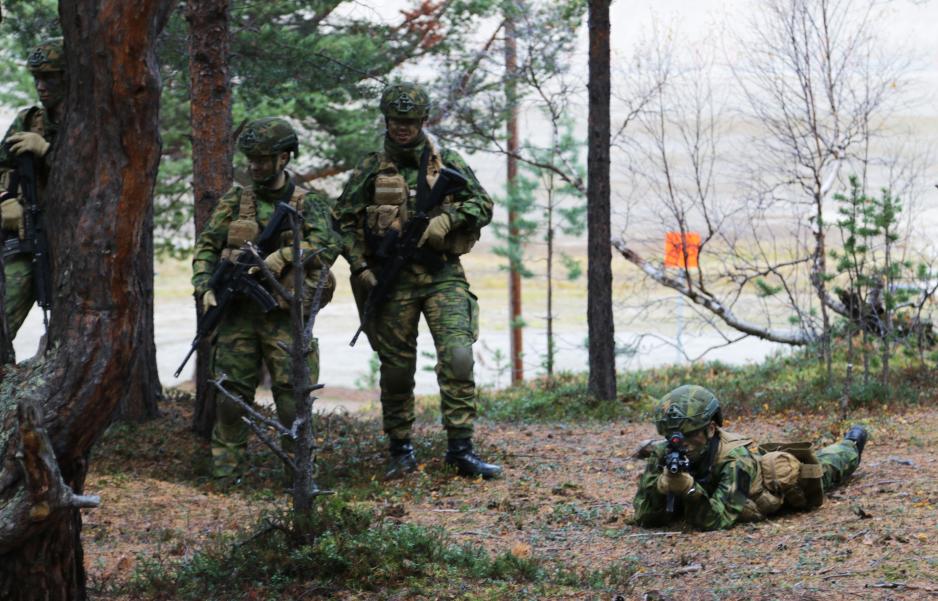
NATO is rearming at a breakneck pace and believes it is fighting against the clock. The photo is from a military exercise in the Finnish Jaeger Brigade in Sodankylä, Finland. (Photo: Arne O. Holm)
Comment: When will Russia once again be able to attack another European country? For Northern Europe and a number of Baltic states, that will hopefully not be possible until November 7th, 2028. The so-called peace agreement for Ukraine showcases the gravity of the situation.


This is a comment written by a member of the editorial staff. The comment expresses the writer's opinions.
Most estimates from military and political perspectives have pointed to the years 2028 and 2029 as the years in which Russia may be able to expand its war operations in Europe.
Of course, we cannot know if that will happen. But we do know that Russia's aggression toward Europe goes far beyond a victory in Ukraine. Thus, this forms the basis of NATO's force buildup.
Russia's military power
The timing of a possible attack comes from analyses of Russia's military power. Today, it is nearly taken for granted that Russia does not have the capacity for anything more than the war against Ukraine, at least not without the use of nuclear weapons.
At the same time, Russia continues its massive military rearmament. Should they win the war, or Ukraine capitulate, the date for an attack on other countries will move closer.
The most pessimistic of estimates comes from Germany, where German Lieutenant General Alexander Sollfrank claims that Russia is capable of a limited attack on NATO countries already today, according to the news agency Reuters.
At least not without the use of nuclear weapons
Within NATO, including sources such as NATO's Secretary General Mark Rutte, the belief is that Russia will be able to launch a bigger attack in 2029.
Several military sources say a full-scale attack on NATO could be possible in 2028-2030.
Arms race
Distinctions are made between a full-scale attack and limited attacks on parts of NATO. The latter is feasible well before November 2028.
But why is November 2028 such a crucial intersection for NATO and European defense?
The obvious answer is that Europe will not be able to defend itself at an earlier date. A race is taking place between NATO and Russia when it comes to building power, and NATO's stated goal is to be fully operational by 2028-2029.
The US rewards the warlord with victory.
But the timing is important for another reason, as well.
On November 7th, 2028, Americans will go to the polls. This will be the first opportunity to rid themselves of Donald Trump. Of course, we cannot know who will succeed him, if he even accepts stepping down.
But what we do know is that as long as Donald Trump is in power in the United States, he is more than willing to cede European countries to Moscow. This is showcased in his proposal for what is completely misleadingly called a “peace plan”.
Rewarded
Instead, it is a recipe for how attacks on neighboring countries are rewarded. It is an acceptance of moving national borders through military attacks and that the warlord is rewarded with victory, while the attacked party is sentenced to capitulation and relinquishment of its own territories.
Should this “agreement” become the solution, it only means that Northern Europe and the Baltic countries must cling to the hope that a new Russian attack will not come until Donald Trump has stepped down as president.
Should it happen before November 7th, 2028, Donald Trump and the USA are ready to hand over their so-called allies to Moscow.