
EU Parliament Charts New Arctic Course, With Norway and Other Arctic Partners at the Center
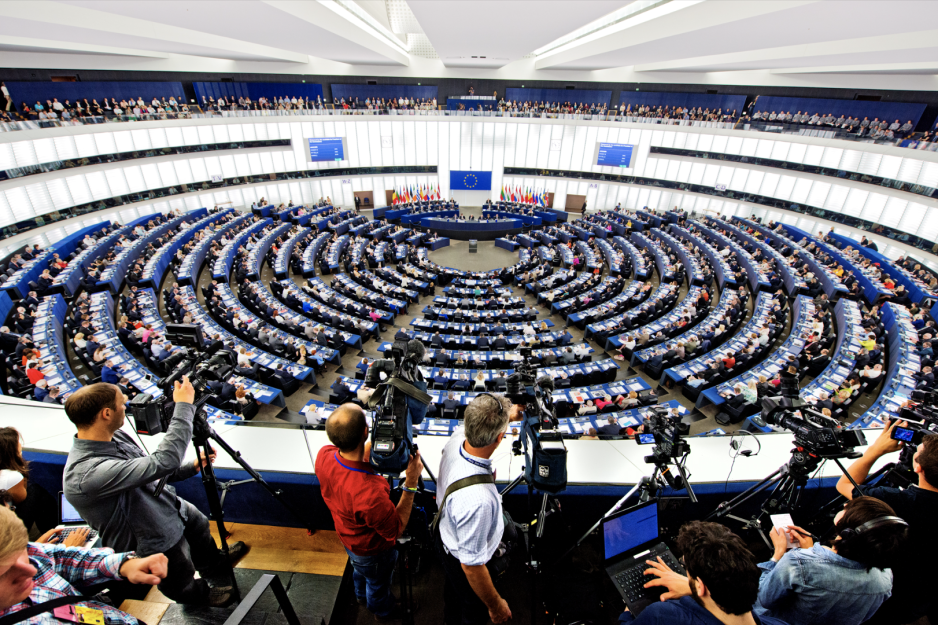
EU Parliament during vote. (Source: EU Parliament via CC BY-NC-ND 2.0)
The Parliament of the European Union adopted a new Arctic resolution warning of military buildup and highlighting the need for cooperation with Nordic partners, including Norway, to ready itself for the coming geopolitical competition. The measures passed with a broad majority of 510 votes for, 75 against, and 80 abstentions.

The European Parliament has adopted a landmark recommendation laying out a comprehensive strategy for the EU’s diplomatic, environmental, and security engagement in the Arctic.
The decision, captured in the 22-page resolution A‑10‑2025‑0229, signals a shift in Brussels’ Arctic policy, embracing deeper cooperation with Arctic states, especially Norway, and underlining the region’s importance for Europe’s energy security, climate resilience, and geopolitical stability.
Diplomacy, security and global context
The resolution comes amid intensifying geopolitical competition in the Arctic, including increased militarization by Russia, infrastructure investments and polar routes backed by the People's Republic of China, and rising strategic interest from global powers.
To safeguard European interests, including freedom of navigation, protection of maritime infrastructure, and environmental security, the European Parliament urges robust cooperation with NATO, enhanced maritime domain awareness, joint exercises, and coordinated surveillance and defence efforts.
In parallel, the Parliament encourages deeper multilateral governance in the Arctic via the Arctic Council and regional forums, supporting observer-status efforts, engaging with Arctic institutions (e.g. Arctic Economic Council or the Arctic Mayors’ Forum) and strengthening representation (e.g. through the recently opened EU Office in Nuuk).
Following rapid transformation due to climate change, new shipping routes and shifting power dynamics.
A more assertive Arctic role for the EU
The resolution reflects growing recognition within the EU that the Arctic is no longer a remote periphery, but a region of strategic significance.
This realization follows comments by EU Commission President Ursula Von Der Leyen earlier this fall about the Arctic sitting at the center of European security and independence, following its rapid transformation due to climate change, new shipping routes and shifting power dynamics.
The European Parliament argues that the EU must abandon “Arctic exceptionalism,” the idea that the region requires a distinct, isolated policy, and instead calls for the integration of the High North into its broader foreign-policy, security and energy strategies.
The document calls for a dedicated Arctic unit within the European External Action Service (EEAS), a strengthened mandate for the EU Special Envoy for Arctic Matters, and greater institutional capacity to coordinate Arctic engagement, a shift from environmental protection and infrastructure to security and diplomacy.
Norway cornerstone of the strategy
At the heart of the new approach lies the role of Arctic states, particularly Norway, but also Greenland, Iceland and other Arctic actors, as partners in sustainable development, energy supply, and security cooperation.
Also read (the text continues)
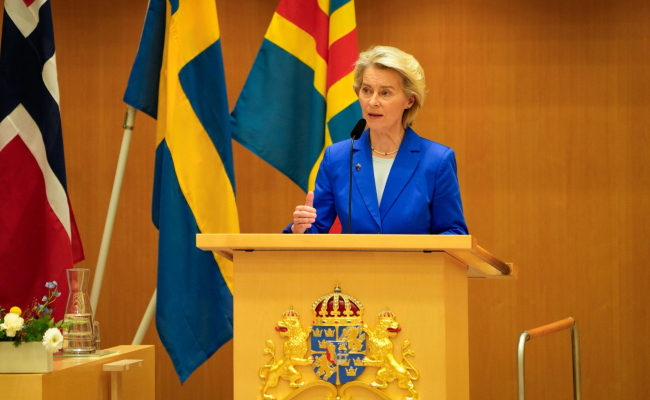
The Parliament explicitly names Norway as a “key EU and NATO ally,” noting its importance not only for energy, primarily gas, but also for defence cooperation and broader geopolitical resilience.
Norway’s significance stems from its status as a major supplier of natural gas to the EU and as a stable, like-minded partner in the North.
Key EU members like Germany receive almost half of their natural gas from Norway, a substantial shift away from Russia since 2022.
The resolution argues that strengthening ties with Norway – potentially even exploring alignment under Article 42(7) mutual defence clause of the Treaty on European Union – would help close strategic gaps in the EU’s and NATO’s collective defence (including in the so-called GIUK gap).
Beyond energy and defence, the recommendation foresees cooperation with Arctic partners on renewable energy (e.g. green hydrogen, hydropower, wind, geothermal), digital connectivity (subsea cables), research and sustainable fisheries, sectors where Arctic states already have capacity and expertise.
The role of the High North in helping Europe diversify its energy mix and reduce dependence on authoritarian suppliers.
Earlier initiatives e.g. on the subject of green hydrogen between Norway and Germany have yielded little tangible results in recent years, with Equinor exiting a planned joint project.
Securing energy, connectivity, and strategic autonomy
A central pillar of the Parliament’s new approach is the role of the High North in helping Europe diversify its energy mix and reduce dependence on authoritarian suppliers.
The resolution emphasizes Arctic hydrocarbons during a transition period, as well as long-term potential in renewables and green hydrogen from Iceland, Greenland, and Norway.
Complementing the energy focus is a push for Arctic-to-Europe digital connectivity.
This includes EU-backed initiatives such as Polar Connect and the “Vision 2030” concept for resilient trans-Arctic submarine cable routes linking Greenland and Iceland with continental Europe.
Also read (the text continues)
These would deepen EU-Asia digital links, secure high-speed communications, and strengthen EU digital sovereignty.
The Parliament warns, however, that such infrastructure could be vulnerable to hybrid threats.
Subsea infrastructure, including data cables, power lines, and pipelines have repeatedly come into the crosshairs of state actors engaging in hybrid warfare, as incidents in the Baltic Sea and between Northern Norway and Svalbard highlighted in recent years.
To counter such risks, the EU should coordinate with NATO to invest in surveillance, resilience and security capabilities, including satellite communications, sea-floor mapping and critical-infrastructure protection.
Here Norway is leading efforts to protect subsea infrastructure through international partnerships, increased security measures, and the development of new technologies.
All approaches should occur in compliance with international law
It agreed to strategic partnerships with the UK and last week signed a similar declaration with Poland.
Upholding law, environment, and Indigenous rights
While the Parliament’s Arctic resolution seeks to harness Arctic opportunities, it underscores that all approaches should occur in compliance with international law, such as the United Nations Convention on the Law of the Sea (UNCLOS).
The resolution further calls for full participation of Arctic Indigenous peoples, such as the Sámi, decision-making and policy planning.
With the adoption of the resolution the European Parliament has signaled a decisive shift.
The Arctic is no longer a remote outpost, but a strategic frontier vital for Europe’s energy supply, security, digital infrastructure, and environmental resilience.
By placing Norway and other Arctic states at the core of its strategy, the EU is betting on cooperation, sustainability and law-based governance.
The next step will be for the European Commission to integrate the non-legislative resolution into the upcoming updated EU Arctic policy.