Op-ed: We Cannot Build a Sustainable Arctic from Military Budgets
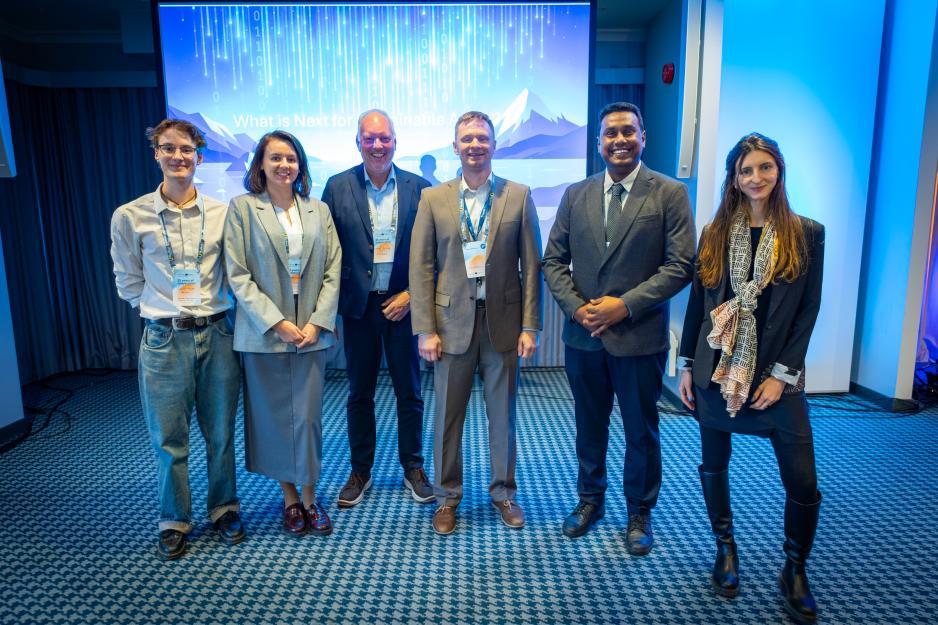
This op-ed draws on discussions at the Interreg Northern Periphery and Arctic Conference in Bodø, Northern Norway this autumn, where colleagues (from left) Carter Ayasse, Dr. Alina Kovalenko, Dr. Erlend Bullvåg, Dr. Andrey Mineev, Sakib Jawhar and Maria Kourkouli presented findings from the Arctic Business Index report. (Photo: Nord University)



This is an opinion piece written by an external contributor. All views expressed are the writer's own.
Over the last decade, Arctic strategies have multiplied. Countries, regions and even non-Arctic actors have all published their visions for the North.
This activity should signal progress, yet many Arctic communities still face ageing populations, shrinking workforces and uneven development. National ambitions are growing, but local prosperity, employment and well-being are falling behind.
Since 2022 the political language around the Arctic has changed. Security now takes up much more attention than cooperation. Norway links military interests and human security. The United States has updated its Arctic plans with a strong focus on defence and alliances.
Canada emphasises sovereignty while also calling for inclusive governance. Russia continues to focus on extraction and large infrastructure. Several countries still rely on pre-2022 strategy documents. Together this creates a fragmented policy landscape.
The question is clear. Can we talk about sustainable development if the region is viewed mostly through a security lens?
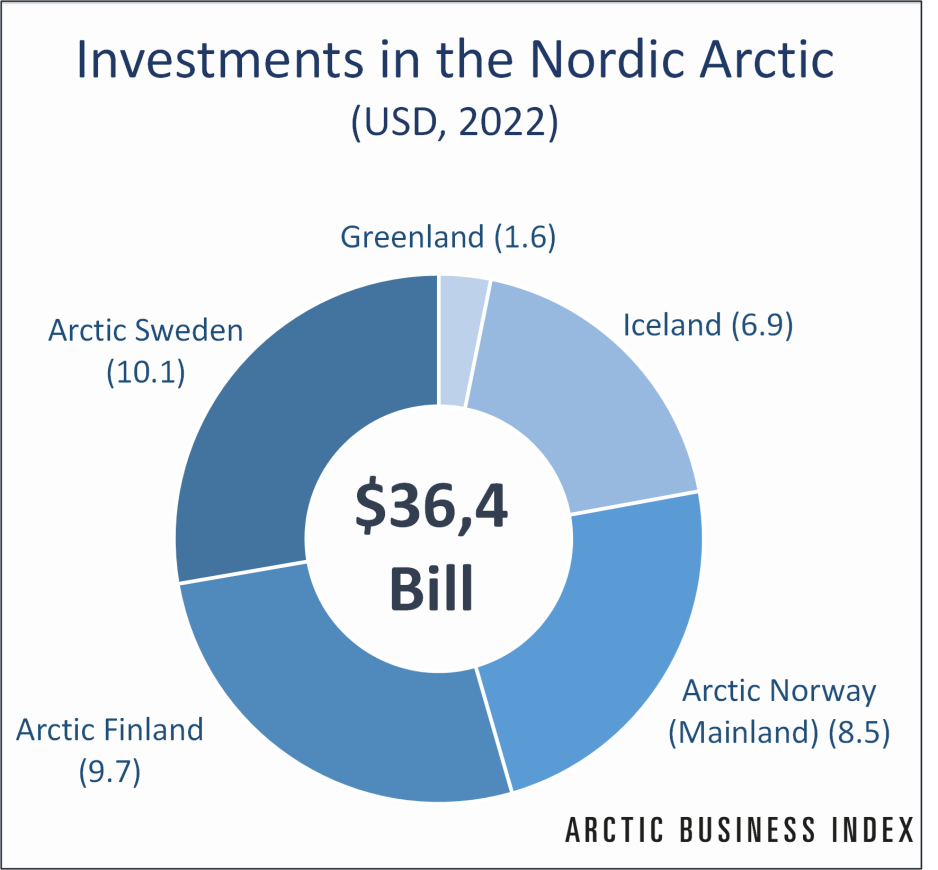
Investments in the Nordic Arctic. (High North Center for Business and Governance)
Our results from Arctic Business Index – a project at the High North Center at Nord University, give some important perspectives. Long term stability in the Arctic depends on people, clean energy and knowledge. Without these three elements, regional development becomes shallow.
Activities may continue, but communities lose capacity. This is already visible in the demographic data. Birth rates are falling. Populations are ageing. Smaller municipalities continue to lose residents through outmigration.
International migration now plays a larger role in sustaining many towns, but the structural trends remain strong.
Investment patterns show a similar imbalance. The Nordic Arctic still attracts about 35 to 40 billion USD every year. Iceland and Greenland have the fastest growth rates, while Sweden, Finland and Norway record the highest volumes.
Total Arctic investments remain heavily concentrated in resource extraction, while innovation capacity in the region is still limited. Many Arctic regions rely on knowledge and technology produced elsewhere.
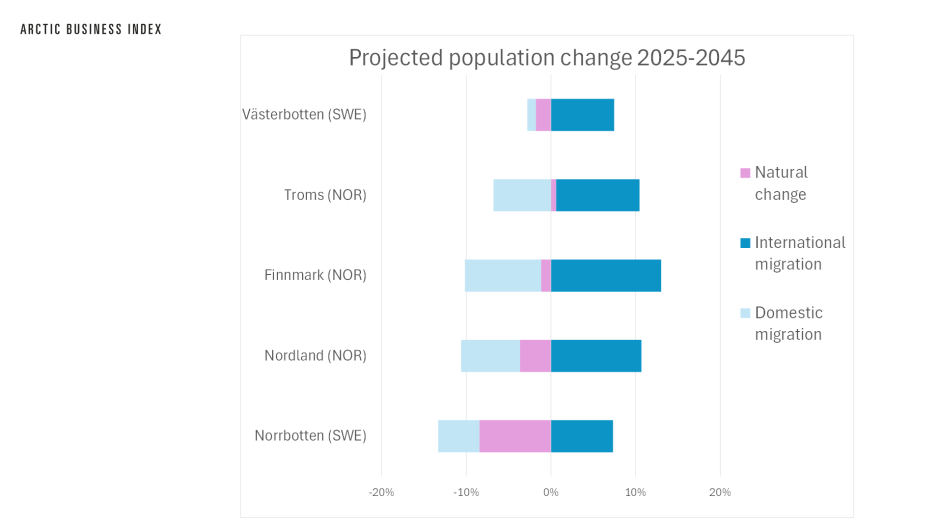
Projected population change. (High North Center for Business and Governance)
There is a more promising direction. The Nordic countries already hold many of the elements needed for a people-centered development model. Norway has maritime and ocean industries. Sweden is advancing a large green industrial base.
Finland has strong digital innovation and growing clean energy capacity. Together these strengths can support each other, but only if countries choose to coordinate and align their efforts.
Food innovation shows what this looks like in practice. Companies across Iceland, Sweden and Northern Norway are developing new ways to grow food in cold climates and create value from fish byproducts.
These activities connect economy, culture and local identity, and create new local business opportunities supported by companies across Iceland, Sweden and Northern Norway.
Food innovation strengthens community resilience, supports cultural identity and reduces dependence on single resource sectors. Most importantly, these activities are driven by Arctic companies and communities themselves.
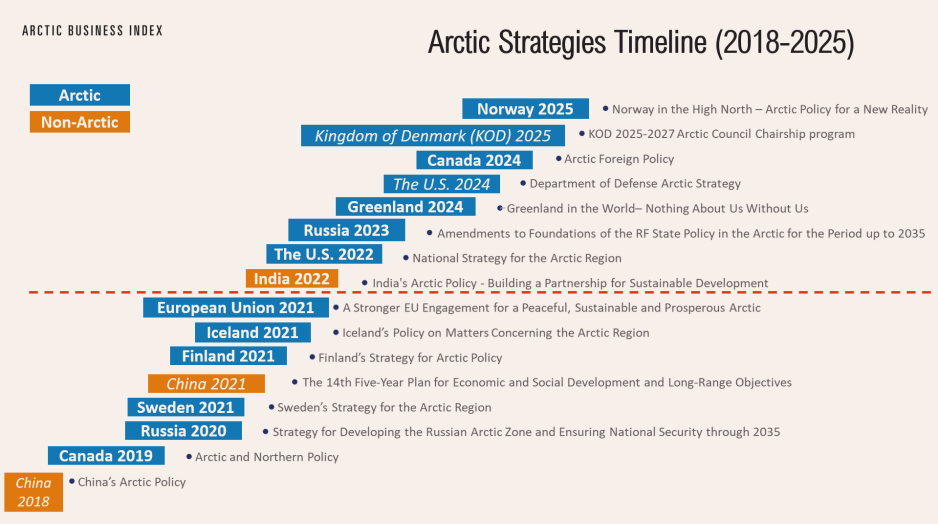
Arctic Strategies Timeline. (High North Center for Business and Governance)
A sustainable Arctic will require more of this. It needs long-term investment in education. Strong local institutions. Cooperation that reaches beyond political boundaries. A clearer focus on what matters for people who live in the region.
If national strategies move too far toward security, these priorities fall behind.
Security budgets can strengthen defence, but they do not address the core challenges highlighted in the Arctic Business Index.
They do not reverse population decline, expand research and development capacity or build the education and knowledge systems that shape long term regional development. Those tasks rely on civilian investment and cooperation.
Sustainable development in the Arctic depends on whether people, knowledge and clean energy remain at the center of policy. The future of the region will be decided not only by national security plans, but by the choices made in towns, universities and local industries across the North.