
Newsletter The Ripple Effects of the War
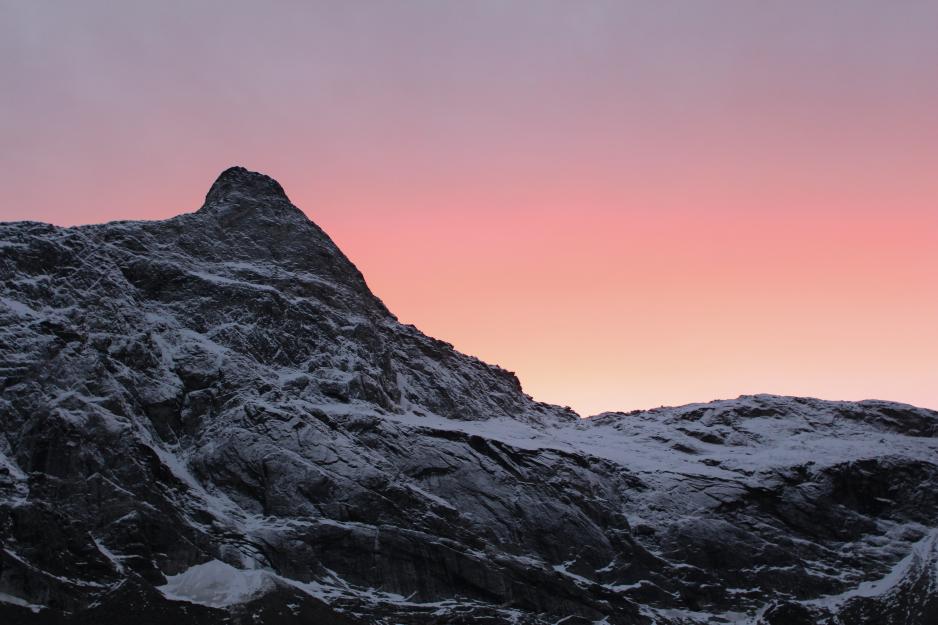
Mount Sermitsiaq in Nuup Kangerlua, Greenland, on a cold November morning. (Photo: Birgitte Annie Hansen)
Dear reader. An update of the EU's Arctic policy could have a major impact on Norway, which is not a member. Here is the latest news from the High North.


Christmas is nearing fast, but the High North does not stop for that reason.
In industry news, the Swedish mining company LKAB has inaugurated a new ship loader in the Port of Narvik, Northern Norway, which is of central importance for the company's exports.
However, most of what takes place in the Arctic still revolves around security and the consequences of Russia's war in Ukraine.
Because when will Russia once again be able to attack another European country?
“For Northern Europe and several Baltic states, that will hopefully not be possible until November 7th, 2028. The so-called peace agreement for Ukraine showcases the gravity of the situation," writes commentator Arne O. Holm in one of two important comments this past week.
Europe's contribution to Putin's war machine is also disputed.
The EU and the Arctic
The Parliament of the European Union adopted a new Arctic resolution warning of military buildup and highlighting the need for cooperation with Nordic partners, including Norway, to ready itself for the coming geopolitical competition.
While Norway is refusing to adjust its position on the EU, Holm writes that the EU recently adopted a new strategic resolution for the Arctic that could have a major impact on Norway and the High North.
“Its most notable feature is the recognition of increased militarization in the North."
A car ride north of the Arctic Circle reveals a partly abandoned region of empty and decrepit houses.
Researcher Andreas Back at Umeå University will study abandoned houses and how they can be a resource, particularly in areas that have experienced long-term population decrease.
Read about all this and more at High North News. On Thursday, Holm is participating in the Fridtjof Nansen Institute's High North Seminar, this year focusing on the Nordic balancing act in the Arctic.
Arctic greetings from Editor-in-Chief Trine Jonassen