
“More Important Than Ever to Be Present,” Says Prominent Reporter in the North
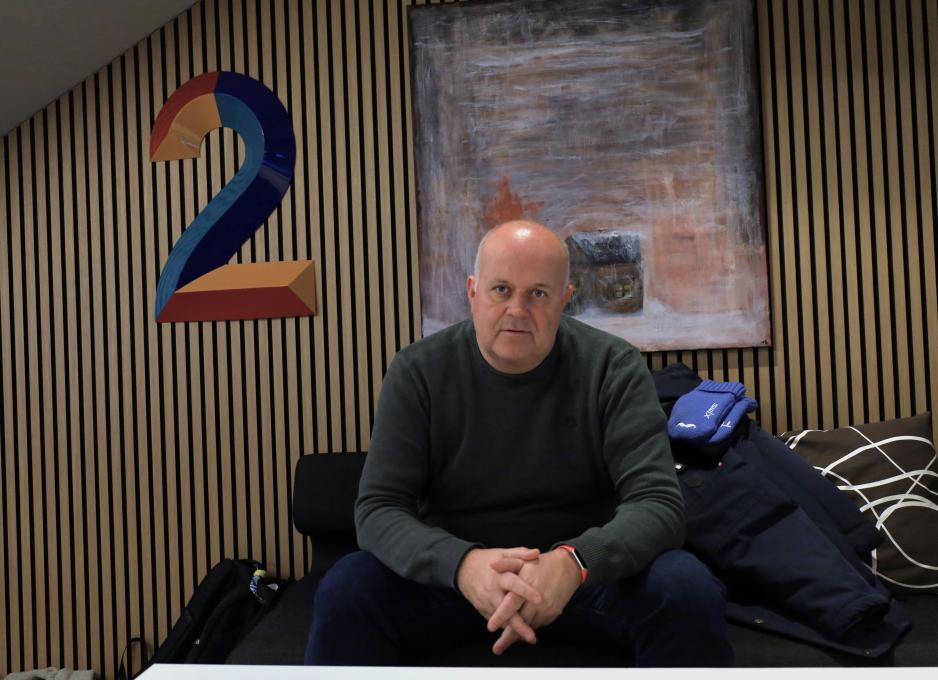
Roy-Arne Salater is TV2's news reporter in Nordland, Northern Norway. The office is located in Bodø, but Roy-Arne is covering the entire county.
Bodø, Northern Norway (High North News): Norway's commercial public service broadcaster, TV2, is cutting photographers at its regional offices, leaving only two reporters to cover half of Norway. The cuts are part of a trend in which Norwegian national media outlets are reducing their physical presence in the districts, according to professor at Nord University.

"Our job is to reflect Nordland and Northern Norway. We are supposed to report on what is happening and cover the diversity of the region. I am afraid that will be difficult to achieve in the same way going forward," says TV2's news reporter, Roy Arne Salater, to High North News.
We met Salater and photographer Run Gyllander Eide in their newsroom in Bodø. The two were recently notified that TV2, which is Norway's commercial public service broadcaster, is cutting photographers in their regional offices.
Thus, Salater and journalists in five other regional offices are losing an important partner in the coverage of people, important events, and the development of their regions.
In the Northern Norwegian region, there are two reporters left, in Tromsø and Bodø. They will largely be alone in covering half of Norway. For Salater, this entails Nordland county that stretches over 500 kilometers, from the border to Trøndelag in the south to the Troms border in the north.
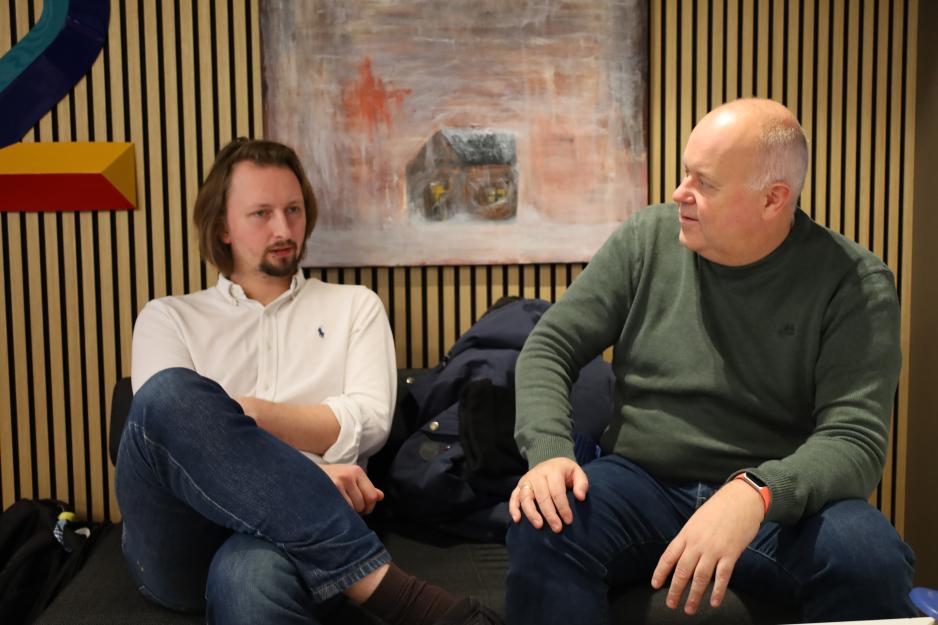
TV2's regional offices will no longer have their own videographers, such as Run Gyllander Eide (to the left). The photographers employed by Screen Story will lose their agreement with TV2. (Photo: Hilde Bye / High North News).
Cutting photographers at regional offices
"We are six reporters spread across TV2’s local offices across Norway. With the photographers, we are 12 people. The news that they will now be leaving was a shock," says Salater.
The news was revealed at the end of October and concerns TV2's termination of the contract it has with Screen Story Film and TV, a production company owned by TV2.
"Journalists will now have to be video journalists as well," commented TV2's news editor Karianne Solbrække to Medier24. She added that the company must make tough choices due to a demanding financial situation.
"We have to operate cheaper and more simply," she said, adding that there is a connection between the cuts and the state budget, in which TV2 does not receive VAT exemption. This is estimated to cost the company between NOK 150-200 million a year.
We have to make tougher priorities.
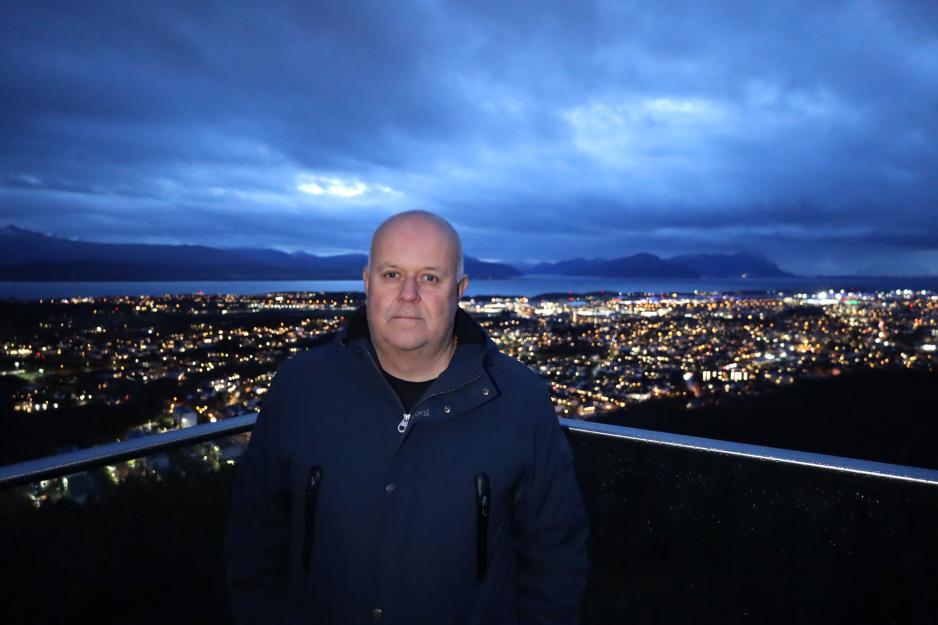
"Our job is to reflect Nordland and Northern Norway," says TV2 reporter Roy-Arne Salater in Bodø. (Photo: Hilde Bye / High North News)
Cuts where it's already dire
"The editorial staff here is small as it is. To suddenly be left standing alone is tough," says Salater about the decision.
"We can divide tasks between us. Run can go out as a video journalist and gather opinions from people in the North on various issues, while I can do other things."
He also points out that close cooperation is crucial in other cases, like when reporting on larger reports and events.
For example, the two describe an incident when a train on the Nordland railway line derailed between Mo i Rana and Hemnes.
"We rushed from Bodø and started on the three-hour drive. Run and I get in the car. He drives, and I research while on the phone continuously. I schedule meetings, gather quotes, and appear live on TV from the car. Such things will be more difficult to do as a reporter alone," emphasizes Salater.
"A distinct quality"
"The regional offices are probably where teamwork is most important. There is also a distinct quality of our work that can only be done with two people. There is also a great need for photo services," says Gyllander.
Salater adds that there will still be a need for TV, even if there will be more online publishing. He believes it could become more difficult to get one of the top stories on the 9 o'clock news, for example.
"It is also about professional pride for those of us who do this. It will definitely be put to the test. We are yes people, and we do as much as we can."
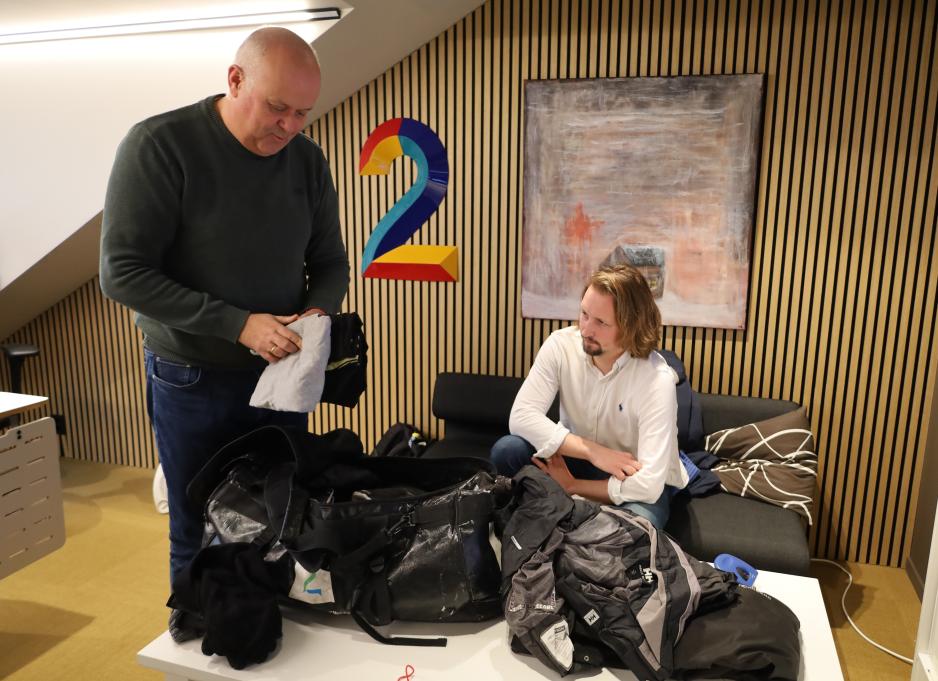
"Suddenly you have to leave," says Roy-Arne. Both he and Run are ready to go 24 hours a day. They keep spare clothes, rain gear, mittens, and a water bottle in a bag at the office.
Fewer voices from the North?
What thoughts do you have about the consequences for the coverage of the Northern Norwegian region?
"We have to make tougher priorities regarding cases and issues from Northern Norway compared to what we do today," says Salater.
"Unfortunately, I think there will be less coverage from Northern Norway. It's sad."
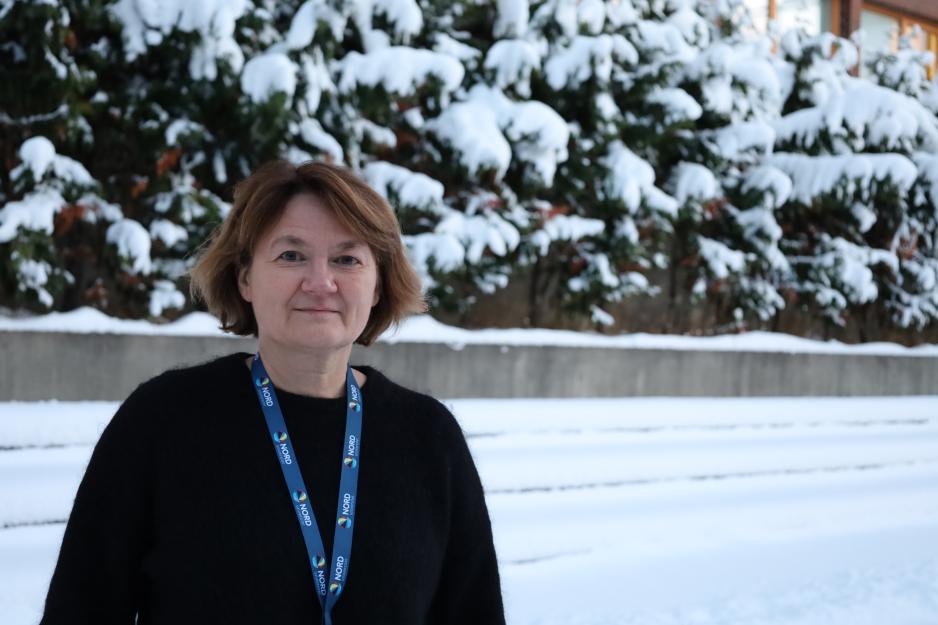
Birgit Røe Mathisen is a professor of journalism at the Faculty of Social Sciences at Nord University. For many years she worked as a journalist and is now teaching at the journalism program in Bodø.
Retreat
Professor of journalism at Nord University, Birgit Røe Mathisen, considers TV2's cuts as part of a larger trend, where the national media have retreated from the districts over several years.
While TV2 and NRK maintain their regional offices in line with their missions as public broadcasters, several large national media have closed their local offices in the north.
"A few years ago, several of the large media houses had their own regional or district offices in Northern Norway and other parts of the country. Many of these have been closed down, one by one," says Mathisen.
"We also see the same regionally with several of the regional newspapers that previously had larger coverage areas. These have also retreated and now cover more and more of the publisher's city than the surrounding districts."
The public broadcasters NRK and TV2
- NRK, Norwegian Broadcasting Corporation, is a non-commercial, wholly state-owned company and is Norway's public broadcaster.
- NRK's district division is organized into four regions and 13 regional offices. The district division is distributed across 50 offices around Norway.
- TV2 has an agreement with the Norwegian government to deliver commercial public broadcasting services on TV. The agreement expires in 2028.
- In this agreement, TV2 commits to having editorial staff involved in the news broadcasts with workplaces in at least six different locations in the districts.
- Public broadcasting must meet democratic, social, and cultural needs in society.
Sources: The Norwegian Media Authority, NRK, the Ministry of Culture and Equality, and Store norske leksikon.
Detect trends
Mathisen says the downward trend within the national media naturally has consequences for coverage and for what is detected when one largely views a part of the country from a distance.
"There is a big difference in traveling to cover a major event and then returning, compared to living in an area permanently, building a source network, and being able to detect things that are happening by talking to people in various positions and roles."
"The result is a different type of journalism," she continues.
Also read (article continues below)
"A distance to the society 'out there' could result in not being able to detect central trends. For example, this was a significant discussion after the first election of President Donald Trump in the US in 2016. It is about the lack of presence and which people one talks to," she says and adds:
"If one is to detect such movements in public opinion, one must be where it happens."
As a positive addition, Mathisen highlights the importance of the large and rich flora of local media that can be found in the districts of Northern Norway.
"This is a strength and gives a greater chance for news published there to be picked up by larger media and reach the national agenda. This can remedy the issue to a certain extent, but it is not the same as the presence of the national media," she adds.
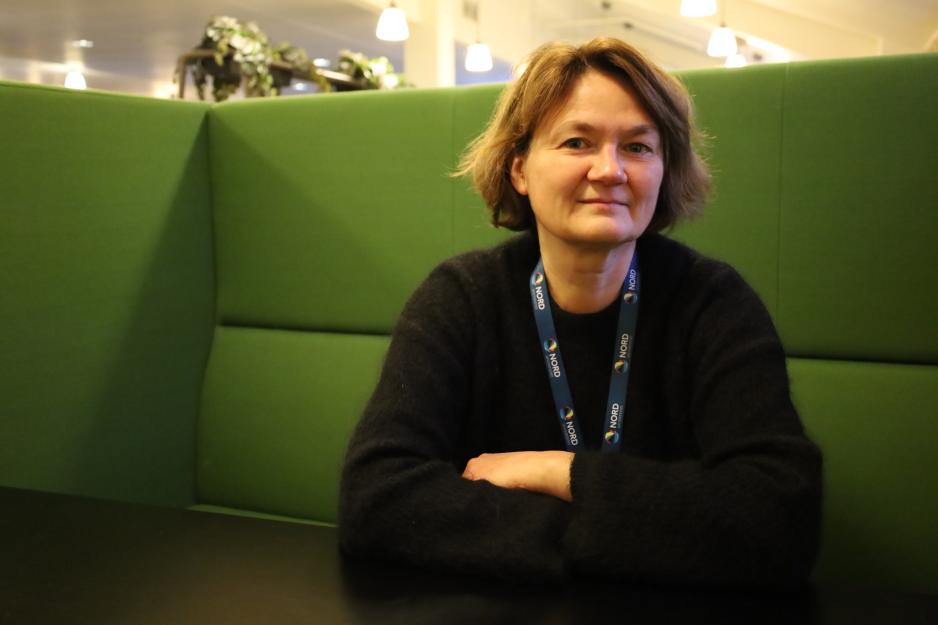
"Conditions are different when you are not physically present throughout the country, but only travel out for large individual events. When you are present for a longer period of time, you build up a different source network and gain better insight into processes and movements," says Mathisen, professor at Nord University. (Photo: Hilde Bye)
Going in the opposite direction
One of the national newspapers that went in the opposite direction, and established an office in the North, while others shut down, is Klassekampen.
The newspaper established a physical office in Tromsø in 2017, and journalist Ole Magnus Rapp has since covered Northern Norway and Svalbard for the newspaper.
"I feel very lucky to work for a newspaper like Klassekampen. The issues I work with now include everything from the lack of trailer drivers in the North, to herring and its movement northward," says Rapp to HNN, and continues:
"The northern content fits well with Klassekampen's mix. What happens in the North, both big and small, is taken seriously and is of high priority."
Before Rapp joined Klassekampen, he worked for 14 years at Finnmark Dagblad, and then 24 years as Aftenposten's correspondent at the newspaper's former office in Tromsø. Like Aftenposten, Dagbladet, VG, and Dagens Næringsliv also had physical offices in the Arctic city.
What do you think about the development that has taken place regarding the national media's physical presence in the North?
"It is a sad development. To put it this way, I can't cover the Oslo area as well from up here."
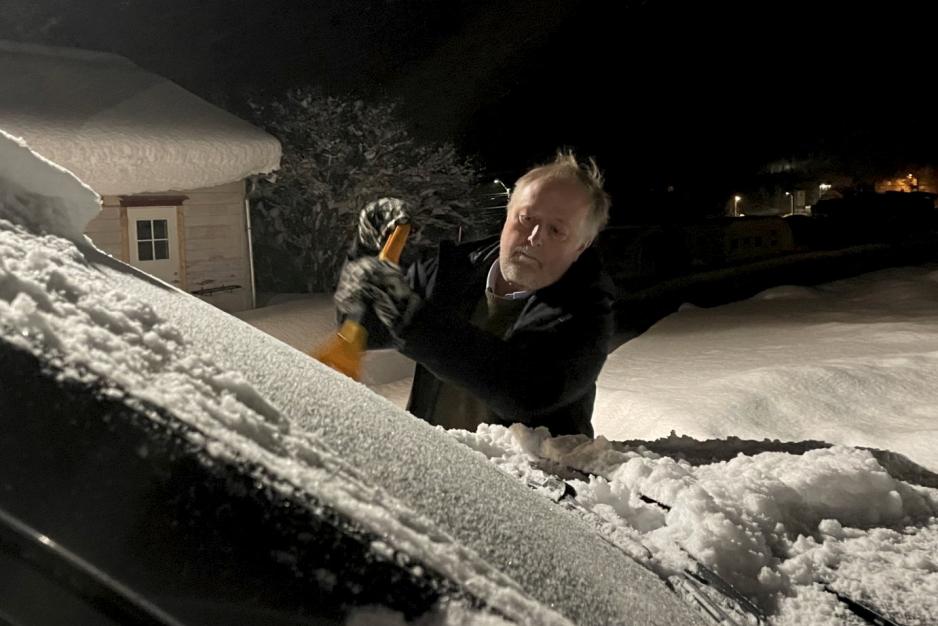
Journalist Ole Magnus Rapp in Klassekampen removes ice from the window of his car on an early morning in the North. Rapp drives a lot in connection with his reporting. "Driving through an area often provides a completely different perspective on things. New ideas pop up, and I must often stop along the way to investigate things." (Photo: Private)
The High North's increasing significance
Rapp also highlights the recent increased focus on Northern Norway and the High North. This also applies to media based in the south.
"The government is constantly underlining the importance of what is happening in Northern Norway. Enormous sums are sent northward to build up the Armed Forces. We have the important fisheries, including the dimension concerning the relations between Norway and its neighbor in the north, Russia.
"The development indicates that the national media should rebuild regional offices in the North. It is not only NATO that should have 'eyes and ears' in the North, so should Norwegian media," he states.
Mathisen at Nord University also emphasizes the importance of reflecting the High North on an equal footing with other regions in Norway.
"The way the world looks now, it is clear that the High North is particularly relevant. This is largely about the proximity to Russia and the strengthening of the Armed Forces."
"We need editorial media more than ever. Especially considering the current security situation, not least in Northern Norway, which will likely feel the pressure of Russian propaganda. That is why presence is so incredibly important," says Salater from TV2.
Restructuring
In Bodø, Salater and Gyllander will have 6 months together before the contract with TV2 officially expires in the summer of 2026.
"Run will probably come with me as a photographer on some projects, but not anywhere near like he is today. We have received signals that we will bring a photographer with us to the big events, but we won't have regular photo services anymore. A photographer must therefore be hired, and people aren't sitting around waiting, which means everything has to be planned more," explains Salater.
"My everyday life will probably look completely different. We don't really know how Screen Story will restructure after this decision, so much is still unclear for me," concludes Gyllander.
Continued contract with TV2
CEO of Screen Story, Tommy Aase, tells Kampanje that they are in close dialogue with union representatives.
"It is too early to say anything about how this will turn out. Screen Story will still have a contractual relationship with TV2, but the volume of news production will be smaller than today."
TV2 was established in 1991 and is a commercial broadcaster.