Op-ed: Too Close for Comfort: America’s Grip on Nordic Security
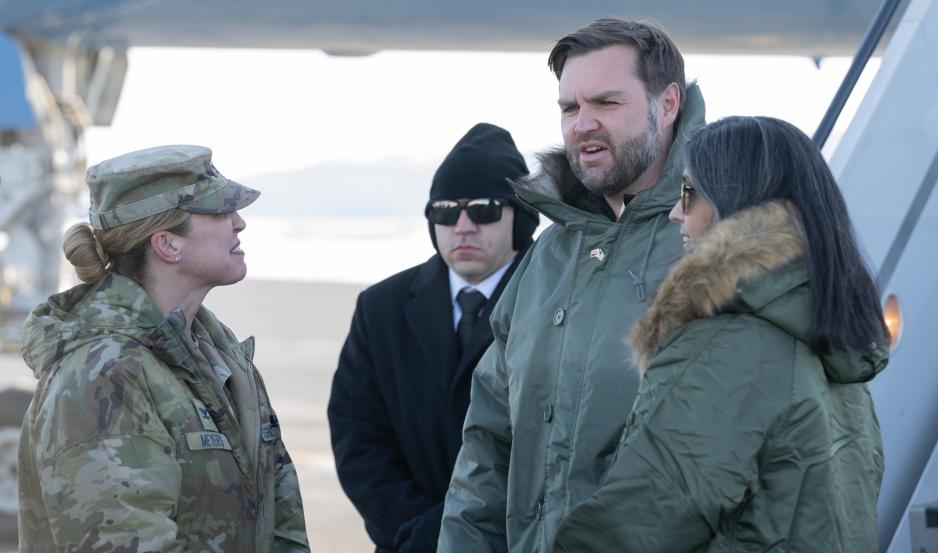
Then-commander of the Pituffik Space Base in Greenland, Colonel Susannah Meyers hosted a visit from U.S. Vice President J.D. Vance to the base on March 28, 2025. (Photo: Jaime Sanchez/U.S. Space Force)

This is an op-ed written by an external contributor. All views expressed are the writer's own.
During the Biden Administration, the United States expanded its military footprint in the High North. Faced with the Trump Administration today, do we even want the U.S. in the region? This op-ed shows that the U.S. has become part of Nordic security and defence.
It’s a pity the U.S. is not behaving as an Ally today. In that sense, this op-ed is both an opening for debate and a point of concern.
The U.S. cements itself in the High North
Last decade, American involvement in the High North has only grown. Because the rising Russian threat in the High North presents a dangerous situation to North America as well.
Even if President Trump does not see Russia directly as a threat, he has to agree with the reality that Russia is a nuclear-capable power with a large bulk of strategic assets located in the High North.
From the High North, Russian missiles and submarines have a direct line to the United States via the Arctic. If the U.S. wants to do anything about this, they need eyes and ears in the region.
Except Iceland, with whom the U.S. has a mutual defence agreement
There are two clear manifestations of U.S. interests: the Defence Cooperation Agreements (DCA) and its investments in Northern military infrastructure. The DCAs are treaty-based agreements between the United States and another country.
In the case of the High North, there exists such a DCA with all the Nordic countries except Iceland, with whom the U.S. has a mutual defence agreement, which gives them access to Keflavik Air Base. All the DCAs were (re-)negotiated under the Biden Administration.
These agreements are important because they grant U.S. forces exclusive access to certain areas and facilities. Looking at the map, the area covered is extensive.
The presence of U.S. forces is extremely important. They can get used to working in Arctic conditions, but more importantly, in the event of a Russian attack, they can help the Nordic states to deny the Russian forces for as long as possible until reinforcements are in place.
The presence of foreign troops in general acts as a tripwire. The Nordics want the U.S. fighting on their side, so the presence of U.S. forces increases the chances that the U.S. will help.
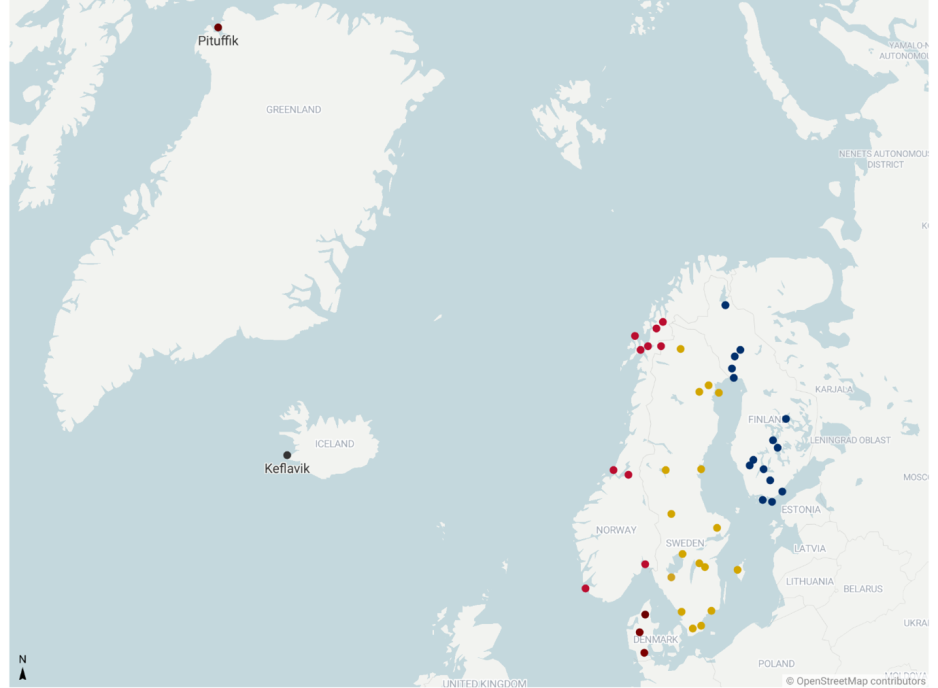
The U.S. defense agreements are important because they grant USA forces exclusive access to certain areas and facilities. (Map: Google)
A second manifestation is U.S investments in the High North. Below is a table that looks at the past four fiscal years. Three under President Biden, and the last under President Trump. Notice that Air Station Rygge receives a significant part of the investments.
Do we trust the Trump Administration?
Despite significant efforts from the Nordics to increase their deterrence and defence through national means and regional cooperation, the U.S. remains the ultimate security guarantor.
The United Kingdom is a necessary backstop for U.S. disengagement, but the U.S. has not signalled any move away from the High North yet.
This enhanced level of cooperation works if there is trust between partners and if they agree on how to counter threats. Today, the U.S. has strayed away from being a trusted partner.
The threats towards Greenland could be materialised through an unwanted increase of U.S. troops in such a way as to annex the country. Repurposing the DCAs in a way never envisaged before.
Will the Nordics strike the DCAs or push the U.S. away, thereby exposing themselves to the Russian threat? If Trump puts his hostility into action, the responses of the Nordics will be constrained by the fear of being abandoned.
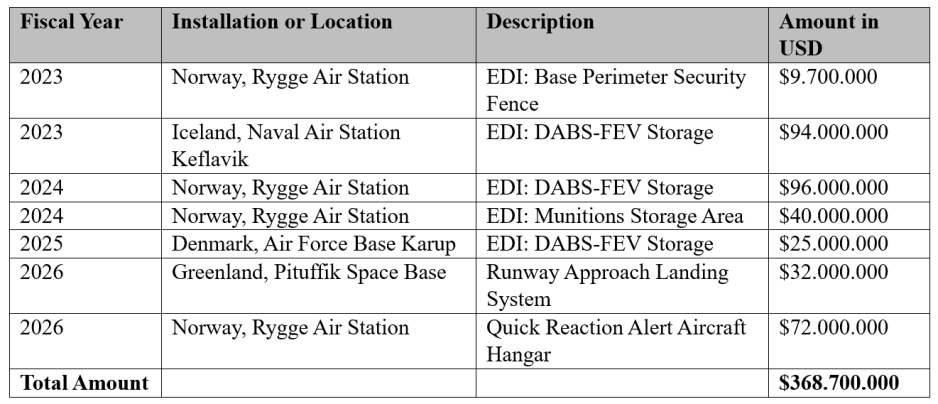
U.S investments in the High North.
Do you have an opinion you want to share? Send it here with your picture and a short bio.