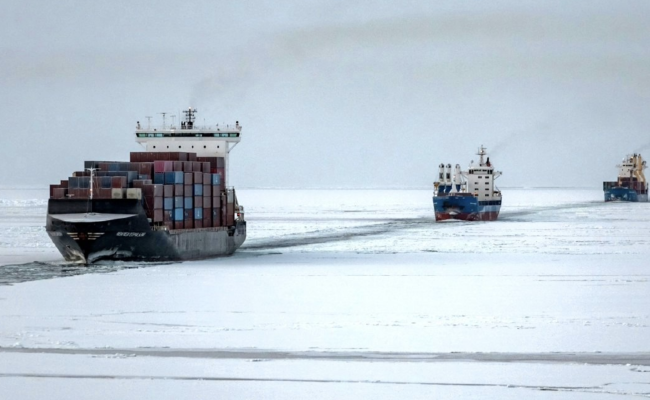
Russia Delivers First Domestically Assembled Arc7 LNG Carrier After Years of Sanctions Delays
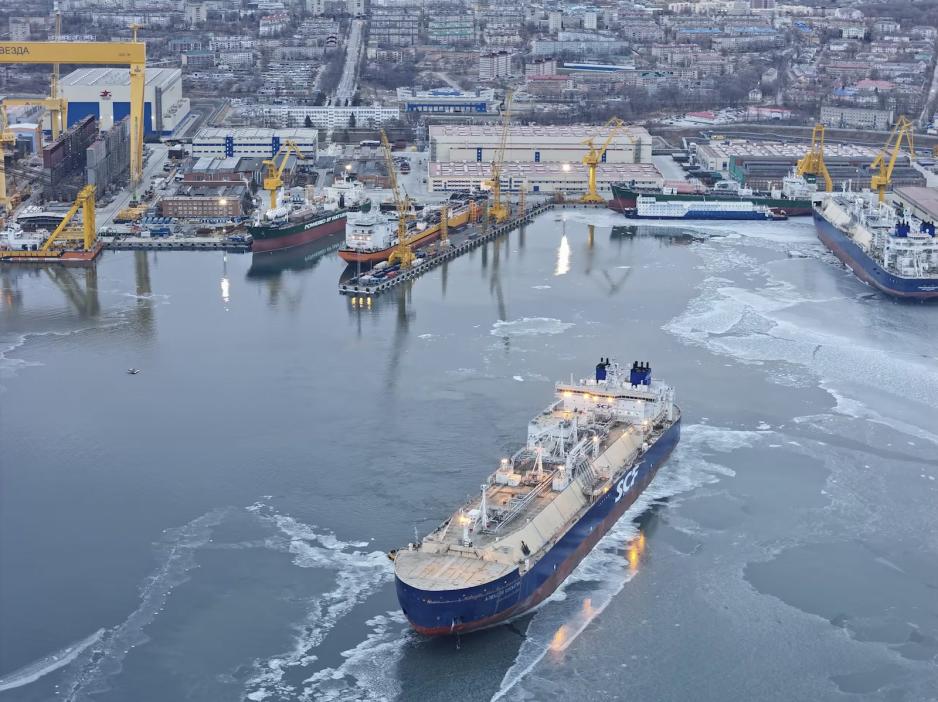
Arc7 LNGC Alexey Kosygin departing the Zvezda Shipyard. (Source: Sovcomflot)
Russia has completed its first domestically assembled Arc7 LNG carrier after years of sanctions-driven delays, offering a rare boost to Novatek’s Arctic LNG 2 project but underscoring the deep challenges still facing Russia’s shipbuilding ambitions. The vessel will double the project’s winter export capacity.

Russia has launched and handed over its first domestically assembled Arc7 ice-class liquefied natural gas carrier, the Aleksey Kosygin, to state-controlled shipping company Sovcomflot, marking a rare piece of good news for the country’s shipbuilding ambitions after years of delays caused by Western sanctions and technology shortages.
The Aleksey Kosygin was assembled at the Zvezda shipyard in Russia’s Far East and has now been transferred to its operator Sovcomflot, Russian media reported.
The vessel, designed to operate year-round in Arctic conditions, had originally been scheduled to enter service several years ago but was repeatedly delayed as sanctions cut off access to key equipment, engineering support and expertise.
Large sections of the vessel’s hull were not built in Russia. Instead, they were constructed by South Korean shipbuilder Samsung Heavy Industries and towed to Zvezda for final assembly, highlighting the limits of Russia’s domestic shipbuilding capabilities for complex LNG carriers.
In total, Samsung supplied five Arc7 hulls under contracts signed before Western sanctions were imposed following Russia’s invasion of Ukraine.
The ship underwent roughly a year of on-and-off sea trials
Western sanctions slow construction
The Aleksey Kosygin’s prolonged construction and testing underscore the challenges Zvezda has faced in completing Russia’s first-ever domestically assembled LNG carrier of this class.
The ship underwent roughly a year of on-and-off sea trials, reflecting technical issues and delays as the yard sought to integrate propulsion systems, cargo handling equipment and ice-class features without the full participation of Western suppliers.
Two additional Arc7 LNG carriers are expected to follow in 2026, Russian news agencies have reported, though no firm timeline has been confirmed and further delays remain likely.
One major uncertainty is the LNG containment system: the industry-standard membrane technology is supplied by France’s Gaztransport & Technigaz (GTT), which no longer operates in Russia due to sanctions.
Replacing or localising that technology has proven difficult and is widely seen as a bottleneck for future deliveries.
Of the five hulls originally provided by Samsung, the status of the final two at the Zvezda yard is more uncertain, with their completion likely years away, depending on Russia’s ability to source or substitute sanctioned components and resolve outstanding technical issues.
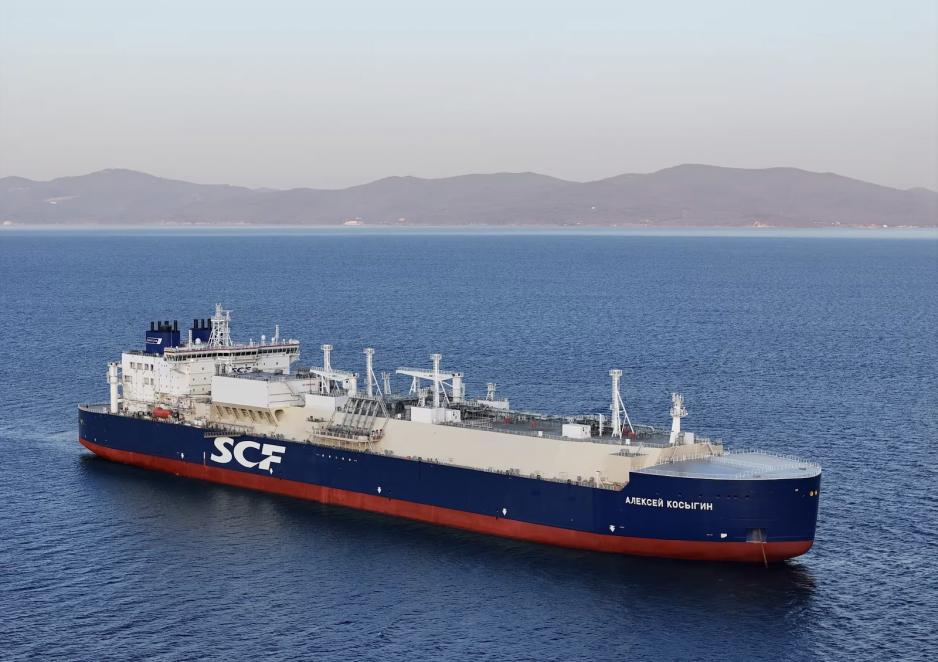
Arc7 LNGC Alexey Kosygin ready for commissioning. (Source: Sovcomflot)
Lifeline for Arctic LNG 2
Despite those challenges, the launch of the Aleksey Kosygin represents a rare piece of positive news for Novatek, Russia’s largest LNG producer and the operator of the Arctic LNG 2 (ALNG2) project.
Until now, the project has relied on a single Arc7 carrier, the Christophe de Margerie, severely constraining winter exports.
With the Aleksey Kosygin expected to enter service later this winter, Novatek will effectively double ALNG2’s winter export capacity.
Together, the two Arc7 vessels can maintain a roughly weekly shuttle schedule, allowing an estimated 250,000 to 300,000 tonnes of LNG per month to be transported to the Saam floating storage unit near Murmansk.
From there, cargoes can be transshipped onward to China’s Beihai LNG terminal.
Also read (the text continues)
While that volume remains only a fraction of ALNG2’s full design capacity, it is a significant improvement over the winter of 2024/25, when Novatek was forced to shut in production for extended periods because it had no access to Arc7 ice-class vessels capable of operating in heavy Arctic ice.
Lower ice-class vessels insufficient
The importance of the specialised Arc7 fleet was underscored earlier this winter when the Arc4-class LNG carrier Buran attempted to reach ALNG2 in early December.Despite multiple attempts and escorts from nuclear-powered icebreakers, the vessel failed to reach the terminal, demonstrating that lower ice-class ships cannot reliably serve the project during winter.
With Aleksey Kosygin joining the fleet, Novatek is expected to keep a steady flow of LNG moving from ALNG2 to the Saam FSU through the winter months and onward to Asian markets.
In the past four months, the company has completed 20 LNG deliveries from the project, providing much-needed revenue to the project, though the cargoes are being sold at discounts of up to one third to prevailing market prices.
For Russia’s shipbuilding industry, the delivery of the Aleksey Kosygin is both a symbolic achievement and a reminder of ongoing constraints.
While it demonstrates that Russia can, eventually, assemble highly complex Arctic LNG carriers at home, the years of delay and reliance on foreign-built hulls highlight the lasting impact of sanctions and the uncertainty surrounding the remaining Arc7 hulls and future vessels.