Canada Must Be Wary of Its Southern Neighbor, Say Researchers
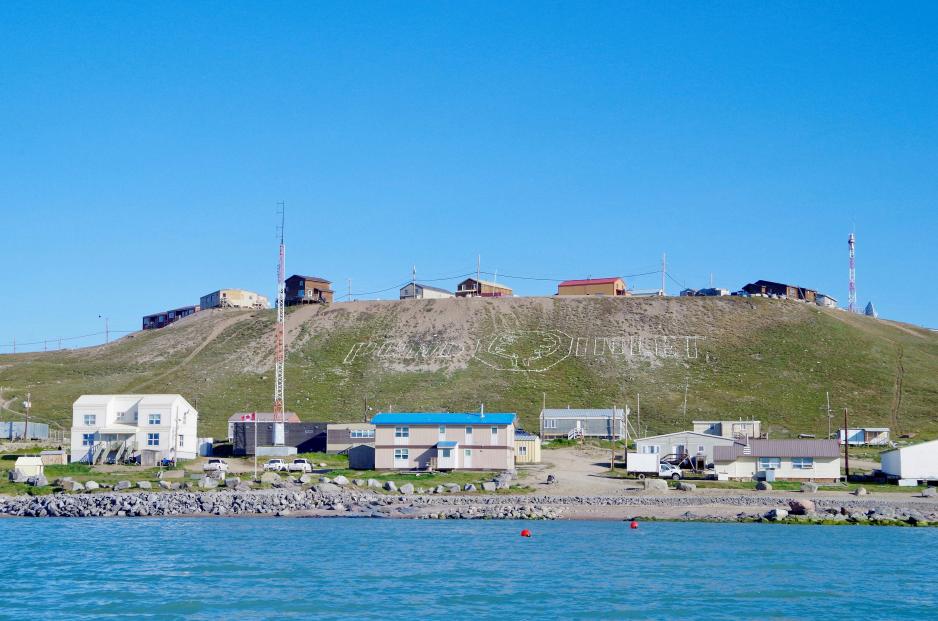
Hamlet of Pond Inlet on Baffin Island, Nunavut, Canada. (Photo by Isaac Demeester on Unsplash)
Last year, US President Donald Trump's ambitions to expand US territory included Greenland, but also Canada, as 'the 51st state.' The Trump Administration's recent reinforcement of its desire to take over Greenland has clear political implications for Canada's security policy, say researchers Gabriella Gricius and Mathieu Landriault.

The Trump Administration's attack on Venezuela and simultaneous push toward the annexation of Greenland have proved that President Donald Trump's statements are to be taken seriously.
Last year, Trump's expansionist ambitions also included Canada, with the president referring to the country as 'the 51st state.' While Canada has steered clear of the spotlight in recent weeks, some still fear it remains on the menu for the US president, who has expressed a clear desire for American dominance in the Western Hemisphere.

Gabriella Gricius, Researcher at the University of Konstanz in Germany and Fellow and Media Coordinator at the NAADSN.
Researcher Gabriella Gricius at the University of Konstanz in Germany says that the situation regarding Greenland "will likely mean that Canada will want to make sure that it performs its sovereignty in a more assertive manner, particularly with similar rhetoric about Canada as the 51st state."
"If the US can successfully pressure or annex Greenland based on 'national security,' there may be some fear in Canada that similar justifications could be used against Canada," she adds.
Wary of their southern neighbor
How does the development regarding Greenland affect Canada's security policy?
"The situation with Greenland, on the one hand, has clear political impacts on Canada’s security policy but fewer operational consequences. What it shows Canadian policymakers is that they must be warier about their southern neighbor and be more alert towards similarly unpredictable behavior, such as an influence operation in domestic Canadian politics, as a way to gain leverage in US-Canadian trade talks," explains Gricius.
However, she does not believe that American and Canadian operational cooperation through the North American Aerospace Defense Command (NORAD) will be drastically changed due to the recent development.
"That said, any unilateral military action from the Trump administration would be highly destabilizing for Canadian security as it would threaten a close ally (Denmark) and the Canadian-US relationship."
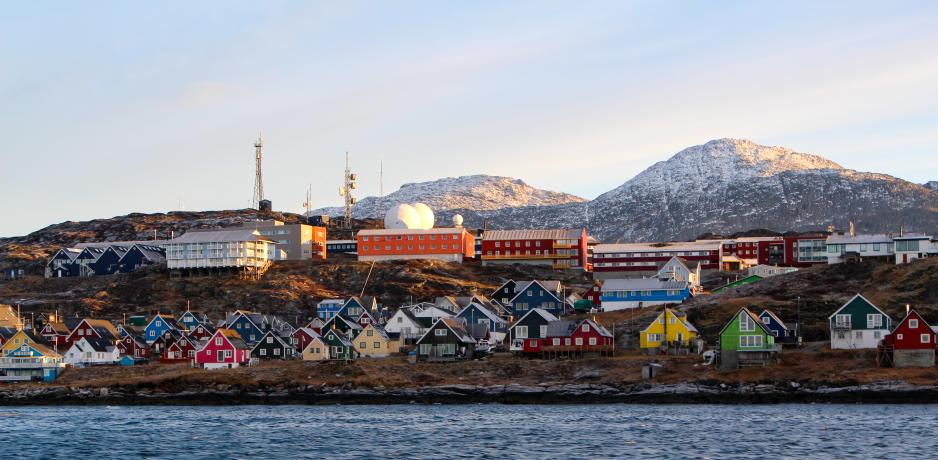
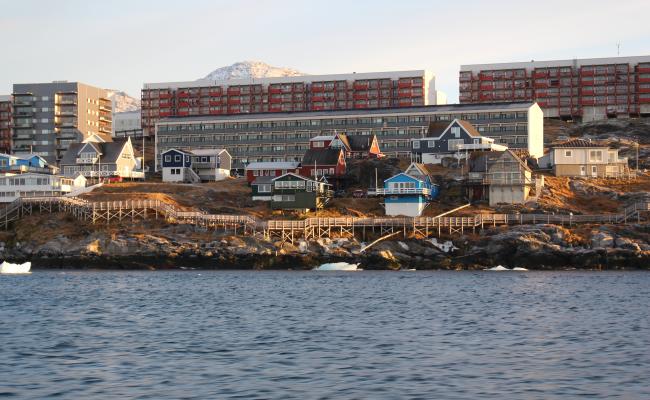
Greenland was named a key partner in Canada's Arctic foreign policy. (Photo of Nuuk, Greenland: Birgitte Annie Hansen)
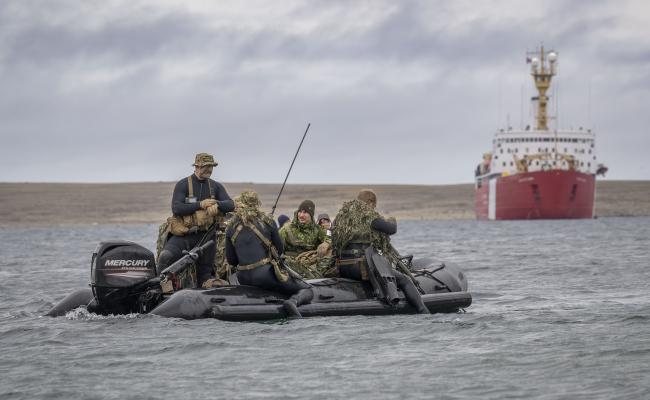
Gricius adds that the US justification for purchasing Greenland is premised on Russian and Chinese ships around Greenland being a threat to the US national security. She underscores that these statements are inaccurate, but that a similar logic could be used for the US demanding access to patrol the Canadian Arctic, either on land or through the Northwest Passage.
"It begs questions about what Canada feels it must do to ensure that the US does not feel a need to patrol the Canadian Arctic themselves."
Is Canada's own Arctic presence sufficient today?
"The overall consensus is that Canada’s Arctic presence is insufficient. Existing infrastructure is limited and not sufficient to support sustained operations, and domain awareness is limited," says Gricius and continues:
"Canada must update the North Warning System to account for different types of threats, such as hypersonic missiles and long-promised over-the-horizon radars that have been promised under NORAD modernization. It also must construct deep-water ports and year-round road access."
Any unilateral military action from the Trump administration would be highly destabilizing for Canadian security.
The Canadian Northerners

Dr. Mathieu Landriault, Researcher at the University of Ottawa and Network Coordinator at NAADSN.
Researcher Mathieu Landriault at the University of Ottawa studies media and public opinion on Arctic security and sovereignty. He says that according to polls, Canadian Northerners expect the Canadian Government to act if Greenland were to be annexed by force.
"Very few (7%) wanted Canada to keep a low profile, with half supporting diplomatic action, while the other half backed a more forceful approach (imposing sanctions on the US or supporting Greenland militarily). The military support to Greenland was particularly high for respondents in Nunavut, because of geographical proximity with Greenland and cultural affinities," he explains.
But Landriault says Northerners are not more concerned about Canada's sovereignty than Southerners.
"About 80% of respondents in both cases think that Canadian Arctic sovereignty must be used, if not, we are at risk of losing it: in other words, historical and legal titles are not enough, we must be present."
He says there is a greater appetite for increasing military spending in the Arctic, both from Northerners and Southerners in Canada.
"I think the Canadian Government will bolster its military presence in the Canadian Arctic, both because of operational and security concerns, but also because they know it carries little political cost since most Canadians support this idea."
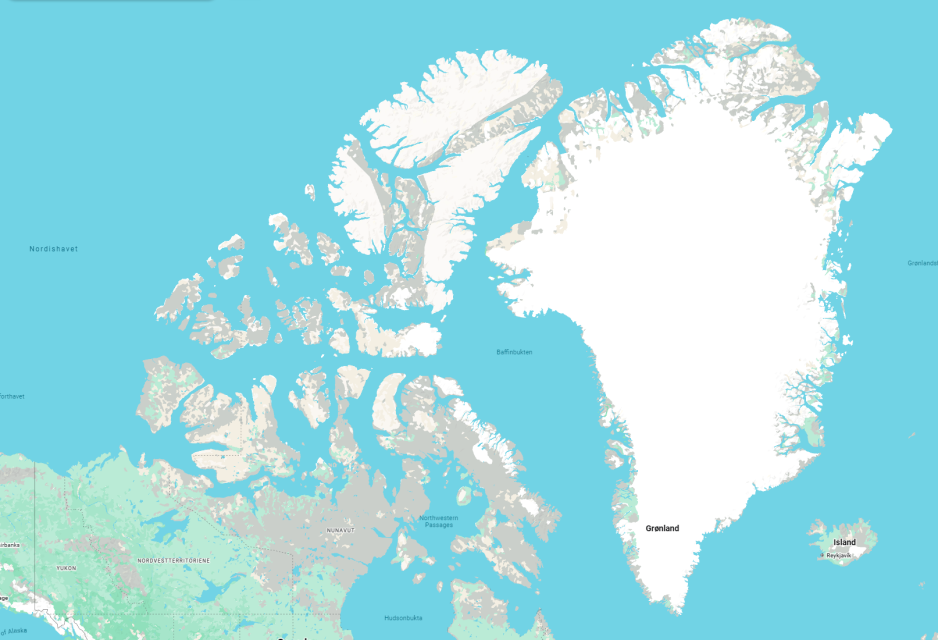
Researcher Mathieu Landriault says military support to Greenland was particularly high for respondents of a poll in Nunavut, because of geographical proximity and shared culture. A seasonal direct flight between Nunavut and Greenland was established in 2024, leading to even closer cultural ties. (Source: Google Maps)
How does the situation with Greenland impact Canada's security policy interests in the Arctic?
"I think Canadian Arctic security interests are greatly impacted: we never had such a situation so close to our border, the threat of a military intervention," says Landriault and continues:
"Plus, if Greenland were to become American, the Canadian Arctic would suddenly have American presence both to the West (Alaska) of the Northwest Passage and to the East (Greenland). With the new aggressive and expansionist US, this could represent a liability or facilitate a possible Freedom of Navigation Operation through the Northwest Passage."
Canada's Arctic strategy
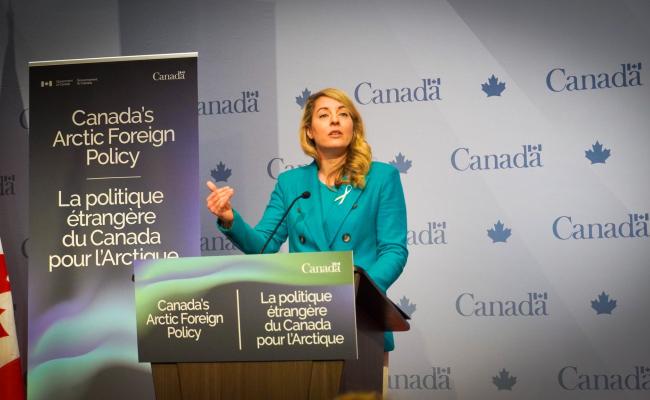
Canada presented its Arctic foreign policy, also referred to as a diplomatic strategy, in December 2024. The policy had a strong focus on security and included four central measures to assert sovereignty in the Arctic: bridging the intelligence gap, strengthening research security. bolster regional security architecture and manage Arctic boundaries through a rules-based approach. It also highlights Greenland as a key partner.
Russia was considered the most significant threat, but the US's expansionist ambitions have now added another factor to the Arctic's geopolitical landscape.
Is the Canadian Arctic foreign policy still sufficient?
"Much of the critique surrounding Canada’s Arctic strategy already existed before the situation with Greenland emerged, namely that the steps that were outlined in the Arctic Foreign Policy document were too little too late," says Gricius, and adds:
"It is less that the strategy needs to be updated and more that the pace of change must be quicker to make sure that the promised changes will actually take place."
Landriault also highlights the importance of action in regard to the Canadian Arctic foreign policy.
"Actions and investments are more important than words. I think the review of the United States-Mexico-Canada Agreement (USMCA) will tell the Canadian government what type of relationship we can envision in the medium term with the US," he concludes.