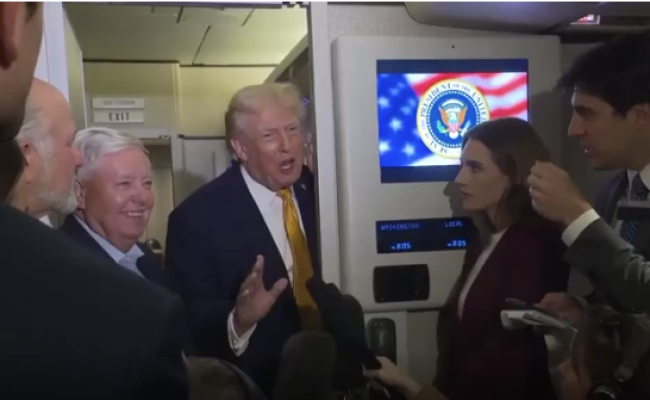
White House Draws Up Plans to Acquire Greenland as Trump Revives Territorial Ambitions
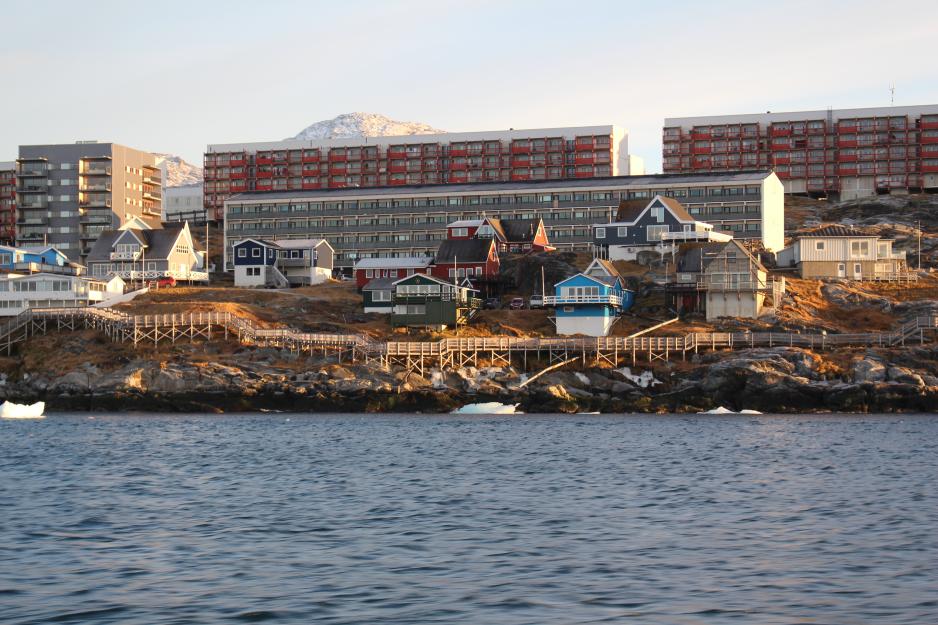
Since the 19th century, the United States has made several attempts to purchase the island of Greenland from Denmark. (Photo: Birgitte Annie Hansen)
Donald Trump’s fixation on Greenland has entered a dangerous new phase with the White House actively drawing up acquisition plans, calling it a "national security priority." As U.S. actions in Venezuela reframe what Washington may be willing to do, European allies fear rhetoric is turning into policy. Even prediction markets like Polymarket are betting on Trump’s actions vis-à-vis Greenland.

In a development that has jolted European allies and Arctic security analysts alike, the Trump White House is actively drawing up options to acquire Greenland, including diplomatic, economic and even military measures, reviving an idea long dismissed as rhetorical.
The move comes on the heels of the United States’ dramatic military operation in Venezuela and has intensified fears that Washington’s Arctic ambitions may extend beyond rhetoric into real policy planning.
“Denmark and the EU should be very concerned about all of this because this apparent obsession with Greenland dates to the first administration and has clearly been super-charged in the second administration,” says Klaus Dodds Interim Faculty Dean for Science and Technology at Middlesex University.
Have grown relevant
For months, former U.S. President Donald Trump’s comments about Greenland were widely seen in Europe as emblematic of his unpredictable style: provocative, unusual, and unlikely to materialize into policy.
Yet those remarks, from musing about buying the island to refusing to rule out military force, have grown eerily relevant as Trump’s second term unfolds and his administration explicitly considers how Washington might take control of the Arctic territory.
We are in uncharted territory
On January 6, 2026, the White House acknowledged that discussions over how to acquire Greenland, including through diplomatic transactions, are active in the Oval Office, and stressed that the use of the U.S. military “is always an option,” the BBC reports.
The statement underscores how seriously this once fringe idea is now being treated by senior advisers.
Geopolitical rupture
“We are in uncharted territory. In the past we have had NATO member states that have had varying commitments to liberal democracy and shared values,” Dodds continued.
“Now we face a situation where the largest NATO member in terms of military power has threatened the territorial integrity of two other member states.”
The developments have sparked a rare geopolitical rupture between the United States and its closest allies, as Denmark, the European Union, and NATO partners vocally reject what they describe as threats to territorial integrity.

Klaus Dodds is Interim Faculty Dean for Science and Technology at Middlesex University. (Photo: The Wilson Center)
From Provocation to Policy Planning
Trump’s fascination with Greenland is not new. During his first presidency, he infamously floated the idea of buying the island from Denmark, a proposal Copenhagen swiftly rejected as “absurd.”
Since returning to the White House, Trump has reiterated interest repeatedly, framing Greenland’s strategic location as vital to U.S. national security, especially in competition with China and Russia in the Arctic.
“The U.S. is adamant that aside from the Indo-Pacific (which is code for China), Washington expects to be truly hegemonic in the western hemisphere. I think this is underpinned by a sense that the U.S. must grab land and resources where it can – to ensure that it has the means and ways to resist China and any other competitor in the future,” Dodds explains.
While analysts initially viewed Trump’s comments as bluster, the explicit mention within the White House of possible acquisition strategies, and even military options, has shifted the perception from rhetorical to potentially operational.
In internal discussions cited by the BBC, advisers have debated both a direct purchase and alternatives that would grant the U.S. expanded access to Greenlandic territory without formal sovereignty.
Venezuela and an Arctic “Donroe Doctrine”
The backdrop to this renewed push is Washington’s recent military operation in Venezuela, in which U.S. forces seized President Nicolás Maduro.
That action has stunned global observers and, according to European officials, lent momentum to Trump’s territorial ambitions.
Some U.S. commentators describe this emerging strategy as a modern reinterpretation of the Monroe Doctrine, colloquially dubbed the “Donroe Doctrine,” emphasizing hemispheric dominance and the imperative to secure territory and resources for U.S. geopolitical strength.
Also read (the text continues)

Trump’s broader worldview
While fundamental differences exist between the situation in Venezuela and comments about Greenland, both exist within the context of resources.
“Both Greenland and Venezuela are similar in the sense that they, alongside Canada, have been threatened with annexation and appropriation. Resources loom large whether oil or critical minerals. And the U.S. is wary of China in general in the western hemisphere,” confirms Dodds.
Trump’s linking of Venezuela and Greenland, two very different geopolitical situations, reflects this broader worldview.
Greenland is a long-standing ally, part of the Kingdom of Denmark and a NATO territory, whereas Venezuela was a hostile state allied with Russia.
Yet under Trump’s logic, both represent arenas where the United States must assert control to counter what he perceives as strategic threats, Dodds elaborates.
Greenland belongs to its people
This reflects an “imaginary” sphere of dominance rather than traditional geopolitics.
European and Danish Alarm
European response has been swift and increasingly unified.
On Tuesday, leaders from France, Germany, Italy, Poland, Spain, the United Kingdom, and Denmark issued a joint statement emphasizing that “Greenland belongs to its people” and reaffirming that decisions about its future rest solely with Denmark and Greenland, not Washington.
Danish Prime Minister Mette Frederiksen has gone further, warning that any U.S. attempt to take over Greenland by force would signify the end of NATO, an alliance built on collective defense and mutual trust.
She has strongly condemned the idea of annexation and urged the U.S. tandon such rhetoric.
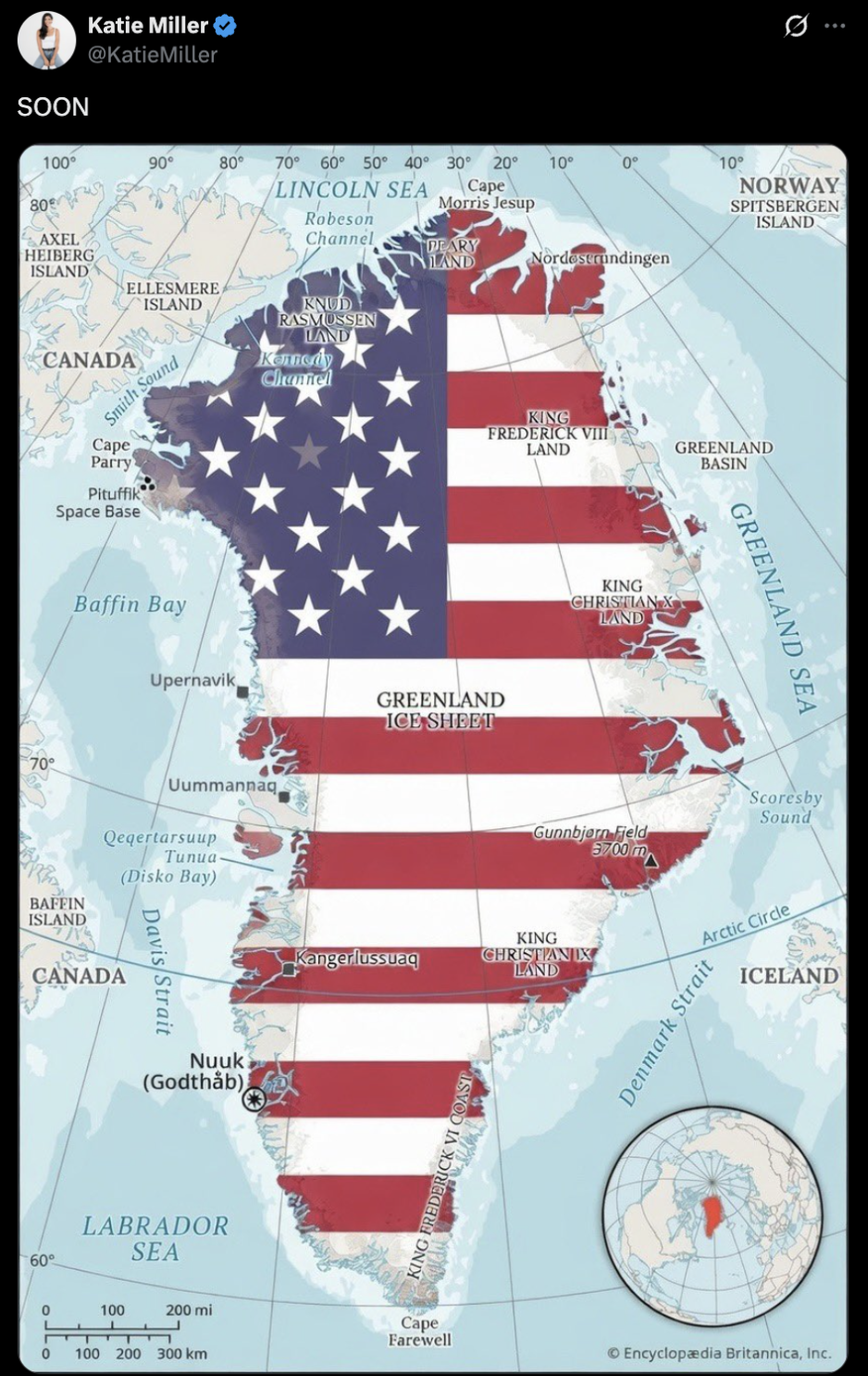
A post with a picture of Greenland with an American flag above posted by Katie Miller, has received a lot of attention on X. (Screenshot)
Greenland’s government has similarly rejected the idea of becoming part of the United States, with Prime Minister Jens-Frederik Nielsen calling the rhetoric “completely and utterly unacceptable.”
While many Greenlanders support expanded independence from Denmark, polls indicate strong opposition to joining the United States.
A NATO Ally Under Pressure
The situation raises fundamental questions about NATO’s role and the security guarantees among alliance members.
NATO is designed to defend members against external threats, but has no precedent for a member state’s territorial ambitions against another.
Dodds added that Denmark and the EU “should be very concerned” because Trump’s focus on Greenland appears rooted less in conventional geopolitics and more in what he calls “ego-politics” – an effort to expand American territory and influence akin to past expansionist episodes.
Denmark has boosted defense spending in the Arctic and European officials argue that cooperative security arrangements with NATO partners already address many concerns the U.S. cites.
“Denmark has responded positively to Trump’s complaints about sub-par defence spending, but my sense is whatever Denmark does they will be found to be wanting,” Dodds confirms.
“This is about raw geopolitical power, and we face the unsavoury prospect of this rhetorical pressure becoming ever more explicit in terms of its demands and expectations.”
Market Bets Reflect Escalation
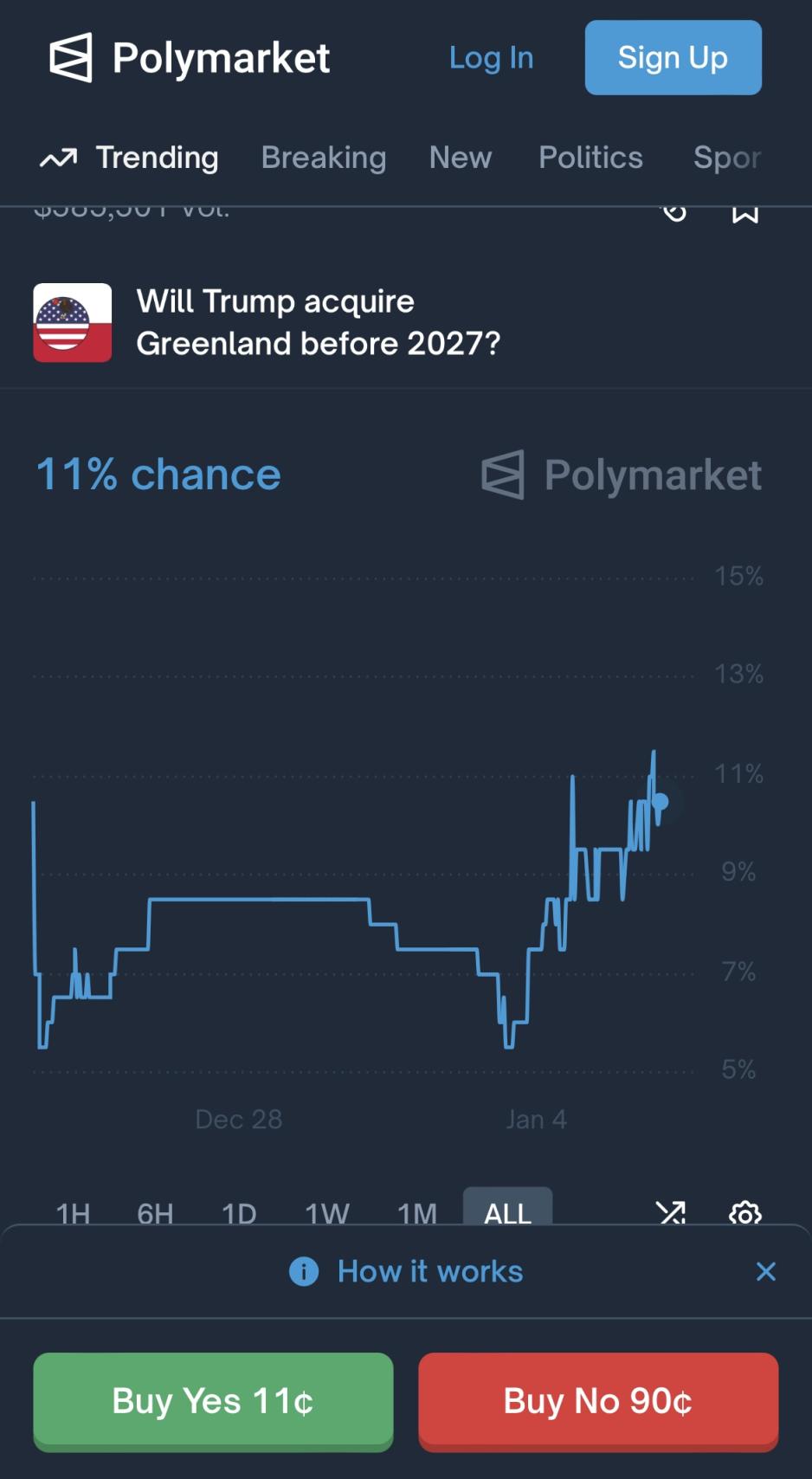
The escalation of rhetoric has even found its way into prediction markets on platforms like Polymarket, where traders have placed bets on whether Trump will successfully acquire Greenland by 2026 or 2027.
These markets, though speculative and not forecasts, underscore how the prospect, once treated as fringe, is now being taken seriously enough that participants see real odds of it happening.
Analysts say such bets reflect broader perceptions of unpredictability in U.S. foreign policy and a belief that Trump’s ambitions can drive unorthodox outcomes.
However, Denmark’s firm rejection and the strong opposition from European capitals suggest any actual path to U.S. control would face overwhelming political, legal, and diplomatic barriers.
Yet the fact that the White House is drawing up real plans, and publicly acknowledging that military options are on the table, marks a shift from rhetorical provocation to potential policy action.
That shift has exposed deep cracks in transatlantic relations and raises urgent questions about the future of NATO, the rule of international law, and the limits of American power.
“If the US is genuinely concerned about the security of Greenland including its seas, then go back to the original text of the 1951 Defence Agreement with Denmark. There is plenty of latitude. But Article 2 is clear – Greenland is part of the Kingdom of Denmark. Period,” Dodds concludes.