Op-ed: Where One Health Meets the Arctic Climate Resilience Reality
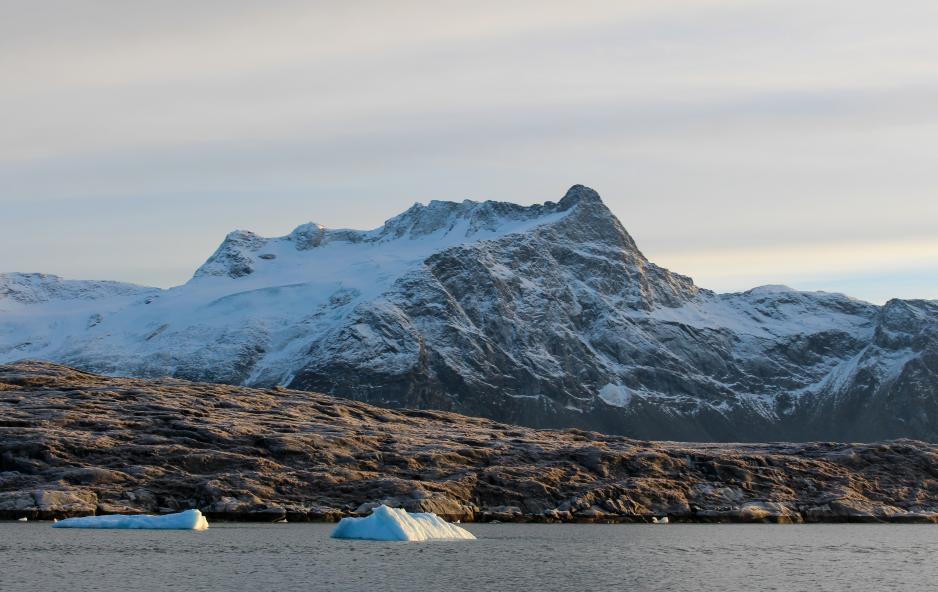
The warming of the Arctic can pose a significant health risk for more than four million people, says Hassan Alzain. (Photo from Nuuk, Greenland: Birgitte Annie Hansen / High North News)
Op-ed: The Arctic is warming at about 3.5 times the global average, reshaping food systems, infrastructure, and posing a significant health risk for more than four million people. The One Health approach offers a path forward, but only if it moves beyond coordination and delivers protection on the ground, writes Hassan Alzain.

This is an opinion piece written by an external contributor. All views expressed are the writer's own.
One Health Approach
The One Health approach illustrates how human health, animal health and environment health, are interconnected and interdependent. At the center of this approach, where the three areas overlap, can be found the discipline of Environmental Health – the only discipline that engages with and wields enforcement powers all three areas. Of course, whilst the One Health approach may be seen as the latest attempt to mitigate and halt climate change, Indigenous Arctic communities have long practiced integrated stewardship of land, food, and health, closely aligning with what One Health now seeks to formalize.
Climate change impacts in the Arctic
The impacts of climate change on the Arctic are many and varied, providing a real threat to the health and livelihoods of the Indigenous populations who live there.
Permafrost thaw is often framed as an infrastructure or carbon problem, yet its health implications are equally profound. Around 70 percent of Arctic infrastructure is built on permafrost, and near-surface thaw is projected to place tens of thousands of buildings, roads, and pipelines at risk by mid-century.
These changes create cascading health threats. Thawing ground destabilizes water and wastewater systems, mobilizes legacy contaminants, and alters wildlife habitats. Arctic soils store an estimated 1,400 to 1,600 gigatons of carbon, and thaw-driven microbial activity raises risks linked to both greenhouse gas release and pathogen exposure.
Arctic food systems are among the most climate-sensitive in the world. Average Arctic temperatures are rising at roughly 3 to 4 times the global rate, disrupting subsistence hunting, fishing, and reindeer herding that Indigenous communities have relied on for generations. These shifts directly affect nutrition, food safety, and disease exposure.
Warming seas and thawing coastlines are altering ecological baselines, and harmful algal blooms have expanded northward, whilst higher temperatures remove the ability to store and preserve food in a traditional manner, thus creating an increasing reliance on imported food.
Explanation alone does not secure safety.
Delivering and governing One Health
One Health offers a lens to understand these cascading effects and to explain these interconnections, but explanation alone does not secure safety. Environmental Health translates One Health into practice through tools such as drinking water surveillance, sanitation standards, land use controls and housing safety regulations - that reduce exposure and protect health in rapidly changing Arctic conditions.
Yet, although at the center of these impacts, Indigenous organizations remain underrepresented in many national and international One Health and climate adaptation frameworks. This exclusion weakens outcomes. Health interventions designed without Indigenous leadership often fail to reflect local ecological knowledge and seasonal patterns.
Environmental health provides a practical bridge by operating at the community level, where Indigenous governance, regulatory practice, and lived experience intersect. Embedding Indigenous leadership into Environmental Health decision-making strengthens One Health delivery while respecting rights, knowledge systems, and self-determination.
From approach to Arctic action
One Health will not succeed in the High North if it remains an approach detached from delivery. Arctic adaptation requires institutions that can regulate, enforce, and prevent risk across food systems, water infrastructure, housing, and land use under conditions warming faster than anywhere else on Earth.
As Graeme Mitchell, environmental health educator at Liverpool John Moores University, observes: “In the Arctic, climate change compresses risk into shorter timeframes. Environmental health is what allows One Health to respond at that speed, by shaping the everyday systems that determine whether communities are exposed or protected.”
For policymakers, the message is clear. Strengthening Environmental Health capacity, integrating Indigenous governance, and aligning Arctic adaptation with food safety and infrastructure protection are not peripheral tasks. They are central to making One Health work where climate impacts are most severe.
If One Health is to deliver meaningful protection in the High North, it must be judged not by how well sectors coordinate, but by how effectively societies manage the environments that sustain health. In the Arctic, that shift cannot wait.