
Nordic Children Sleep Outside in Sub-Zero Temperatures
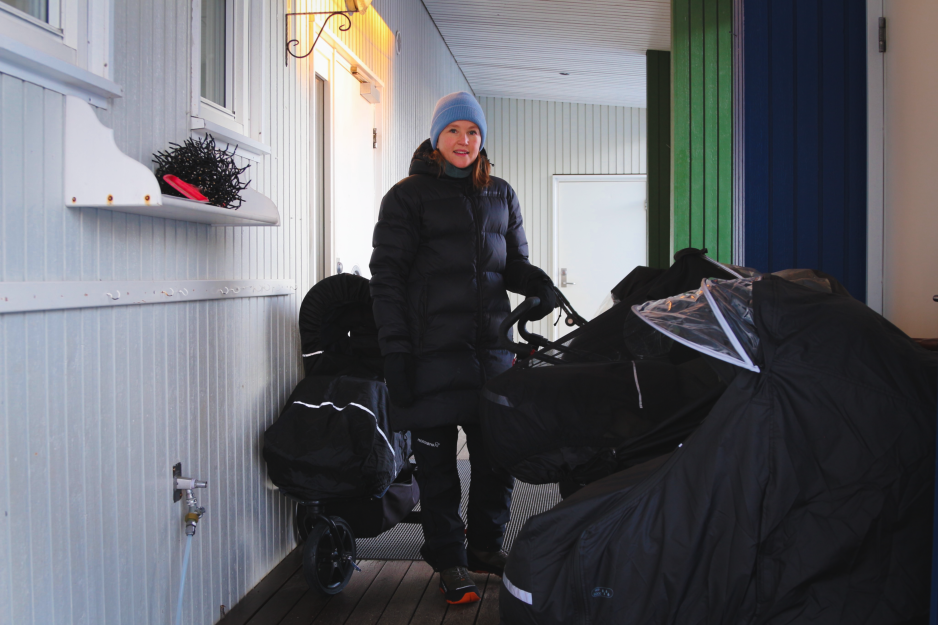
Pedagogical director at Studentongan kindergarten, Marianne Nikolaisen, believes that sleeping outside is healthy for the children. (Photo: Linn Ophaug)
Bodø, Northern Norway (High North News): Sleeping outside in the wintry cold may seem exotic, seen from the outside. In Nordic kindergartens, it is a generations-long practice.


Heaps of snow have gathered outside Studentongan kindergarten in Bodø, Northern Norway, and the air is still and cold. Yet, the strollers are neatly lined up outside, under a roof, well protected from wind and weather.
Inside the strollers, the children are fast asleep, as usual, every day, year-round.
"The tradition is that the children have slept outside for years and years, I don’t know of anything else, anyway. The bigger kids sleep outside year-round. I don’t really know the origin, it’s just a tradition," says educational director Marianne Nikolaisen.
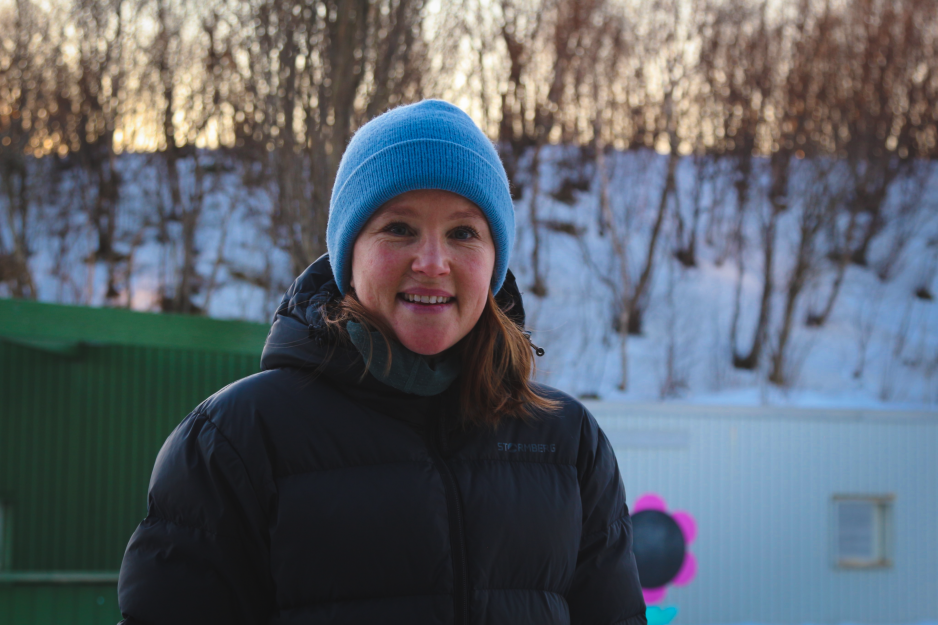
Pedagogical director at Studentongan kindergarten, Marianne Nikolaisen, believes that sleeping outside is healthy for the children. (Photo: Linn Ophaug)
About common sense
For many outside the Nordic region, it may seem extreme for little children to sleep outside in sub-zero temperatures. For the staff, however, it's about routines, assessments, and safety. They underscore that there isn't a fixed temperature limit, but an overall assessment.
"It's about common sense. If there is a lot of wind, we assess where the stroller should be placed in regard to the wind direction. We don't expose them to unnecessary amounts of snow or rain. The strollers are placed under roofs," explains Nikolaisen.
Each stroller is regularly controlled. The staff know the children well, assess the thickness of each child's sleeping bag, add extra blankets as needed, and adapt clothing to each child. Some get warm quickly, others need more insulation.
It's about reading the children, not just the thermometer.
Sleeps outside in minus ten degrees Celsius
Even as the temperature reaches double-digit minus degrees Celsius, as long as the weather is stable. The combination of strong winds and cold, however, can lead to the children sleeping in a cool room instead.
The parents who aren't familiar with the tradition may react to it.
"But when we explain why and how we do it, and that we are confident in the practice, no one has set restrictions for their children not to sleep outside," says Nikolaisen.
She has no doubts that the children sleep well in the fresh air.
"Although the bigger children play around them, they sleep better and more undisturbed. They get used to the sounds and sleep through them. I think the biggest advantage is the fresh air."
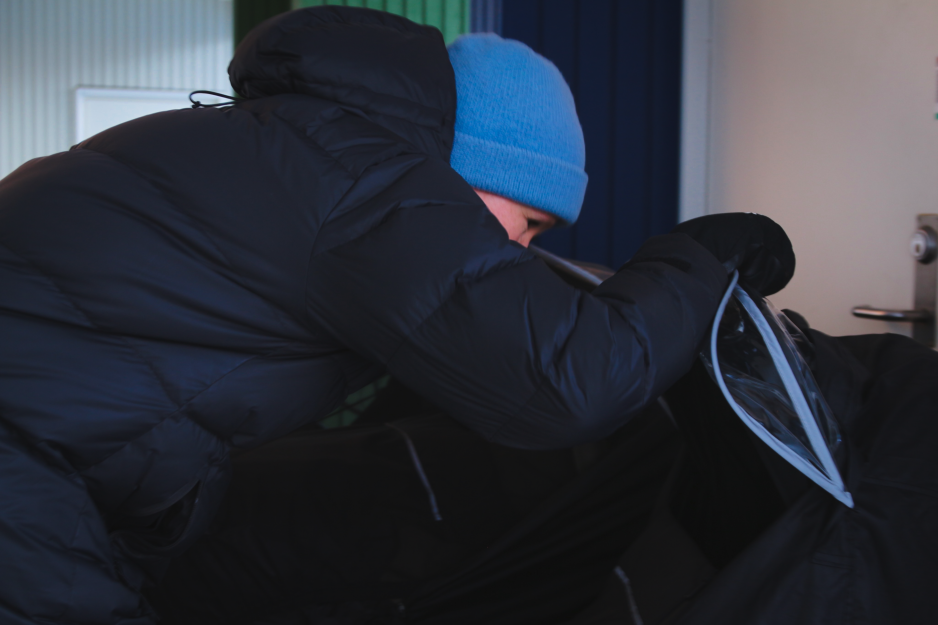
The staff check the strollers every tenth minute. (Photo: Linn Ophaug)
Little research, a lot of culture

Ingunn Skjesol, group leader at Nord University, emphasizes that there is little research on sleeping outside for children. (Photo: Private)
Ingunn Skjesol, Head of Division at the Faculty of Nursing and Health Sciences at Nord University, believes the tradition is closely linked to the idea that fresh air is healthy.
"It is very common to sleep with the bedroom window open, even when it's cold. Many have a fundamental belief in outside air being good for us," she says.
At the same time, there is little research on children sleeping outside.
"We don't have an academic basis for recommending a certain temperature limit. We also do not know whether it is healthier to sleep outside in the winter."
She underscores that the tradition is first and foremost cultural.
"Some believe that you get less sick or sleep better, but we have no proof of that," says Skjesol.
A natural part of everyday life
To Nicolaisen and her colleagues, sleeping outside is so natural that they can hardly see any disadvantages. At the same time, she understands that the practice may seem strange for outsiders.
"It's just about what you're used to. I can understand that some may find placing the children outside in the cold strange."
As Skjesol, Nicolaisen also points to culture and trust as an explanation for why the tradition is so strong in the Nordic region.
"It is very safe here when they are sleeping. No one should be scared of their children being taken; we look after them the entire time. We have routines to check on them every ten minutes to ensure they are well and warm," she concludes.
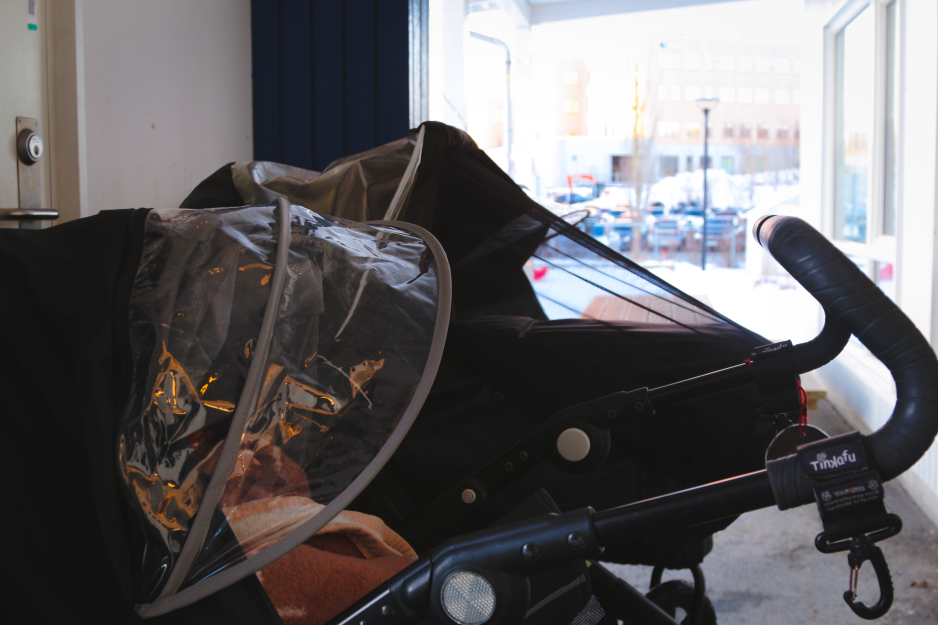
The strollers are placed under roofs. (Photo: Linn Ophaug)