Russia’s First Homebuilt Arc7 LNG Carrier Completes Ice Trials, Adds to Arctic Traffic Off Norway
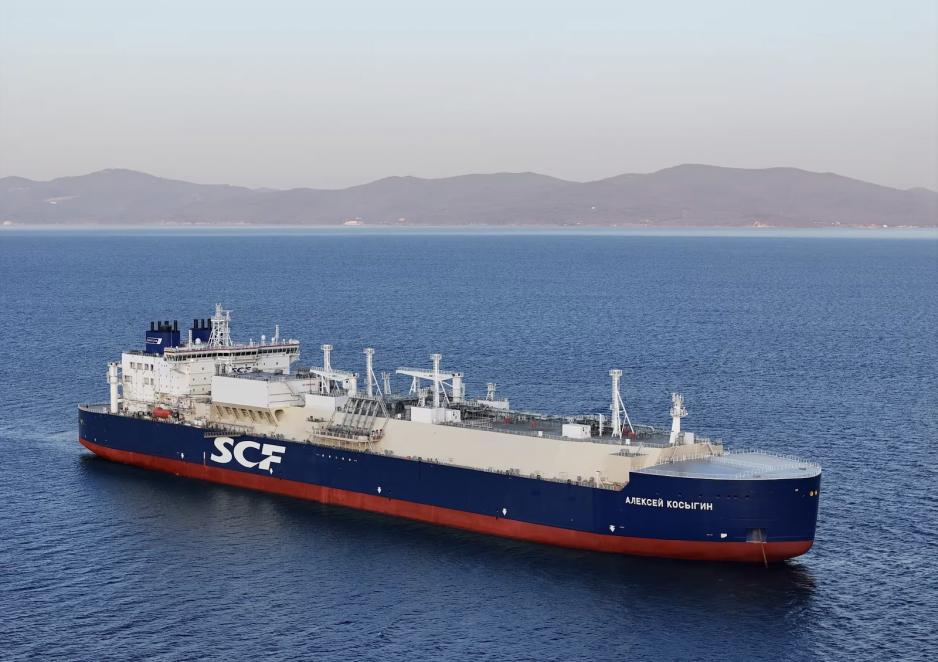
Arc7 LNGC Alexey Kosygin ready for commissioning. (Source: Sovcomflot)
Russia’s new carrier for liquefied natural gas, Alexey Kosygin, has completed a Northern Sea Route transit doubling as ice trials, underscoring Moscow’s ability to sustain Arctic LNG exports despite sanctions. The voyage expands Russia’s shadow tanker fleet and heightens maritime safety concerns for Norway.

Russia’s first domestically assembled Arc7 carrier for liquefied natural gas (LNG), Alexey Kosygin, has completed a full transit of the Northern Sea Route (NSR), a voyage that doubled as ice trials and marked a symbolic milestone for Moscow’s sanctioned LNG sector.
The passage underscores Russia’s ability to bring complex Arctic shipping assets into service despite Western restrictions, and carries growing implications for Arctic maritime safety, including for Norway.
As the first LNG carrier assembled in Russia, the Arc7-class vessel demonstrates that Western sanctions imposed after the February 2022 invasion of Ukraine have slowed, but not stopped, the development of Russia’s Arctic LNG logistics chain.
The voyage served simultaneously as the initial operational deployment and ice trials, with Alexey Kosygin covering the NSR in approximately 13 days at an average speed of 8–9 knots.
Not all good news for Moscow and Russia’s largest LNG firm
Escorted by the nuclear-powered icebreaker Sibir, the LNG carrier spent much of the transit leading the convoy rather than following in the icebreaker’s wake, highlighting its strong winter navigation capabilities.
Novatek needs a lot more ships
However, it’s not all good news for Moscow and Russia’s largest LNG firm, Novatek. Five completed Arc7 LNG carriers remain undeliverable at Hanwha Ocean in South Korea due to Western sanctions.
At the same time, Russia’s Zvezda shipyard has continued assembling Arc7 hulls that were delivered by Samsung Heavy Industries prior to sanctions coming into force.
While restrictions have delayed construction at Zvezda by several years and complicated the launch schedule for Alexey Kosygin and subsequent vessels, Russia has nonetheless managed to complete the ships, partly with assistance from China.
This pattern mirrors developments elsewhere in Russia’s Arctic energy sector.
Also read (The text continues)
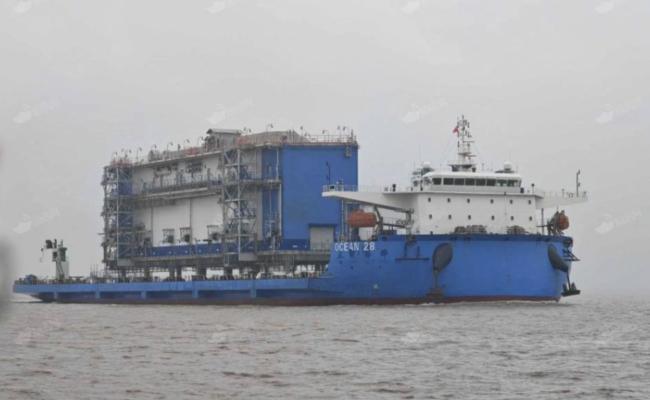
The secret delivery and commissioning of Chinese-built onshore power plants for the Arctic LNG 2 project demonstrated how Russian engineers, using Chinese technology, redesigned systems originally dependent on Western equipment.
In both cases, sanctions forced adaptation rather than outright cancellation, enabling Moscow to bring projects back on track through alternative supply chains.
Improved 2nd generation Arctic carriers
Technically, the new Arc7 LNG carriers built for Arctic LNG 2 represent an evolution beyond the vessels serving Yamal LNG. They are optimized for winter navigation along the NSR, featuring a redesigned bow and significantly higher installed power.
With 51 megawatts of propulsion, around 6 MW more than the earlier Yamal LNG carriers, the new ships are better suited for independent operations in heavy ice conditions.
Placing Alexey Kosygin into service for the sanctioned Arctic LNG 2 project has broader strategic implications. It enables larger volumes of LNG to move out of the Russian Arctic and transit southward, including along Norway’s Arctic coastline.
For Norway, this trend is increasingly relevant
The vessel also expands Russia’s so-called LNG “shadow fleet” to 12 carriers, a sizable force that Novatek, the majority operator of Arctic LNG 2, has assembled over the past 18 months.
Growing shadow fleet
For Norway, this trend is increasingly relevant. Shadow fleet vessels have frequently been observed operating with deactivated AIS transponders, obscuring their identity, position, and movements.
Such ships have also been seen loitering and circling off the Norwegian coast in the Barents Sea while awaiting cargoes. These practices undermine maritime transparency, increase the risk of accidents, and violate established international rules and norms for safe navigation.
As Alexey Kosygin’s successful NSR transit shows, Russia is steadily building the capacity to sustain Arctic LNG exports despite sanctions.
For neighboring Arctic states, particularly Norway, the challenge is no longer theoretical: it is unfolding in real time along some of the world’s most environmentally sensitive and strategically important sea lanes.