
Op-ed: The Arctic Moved South: How Turkey Became Russia’s Sanctions Back Office
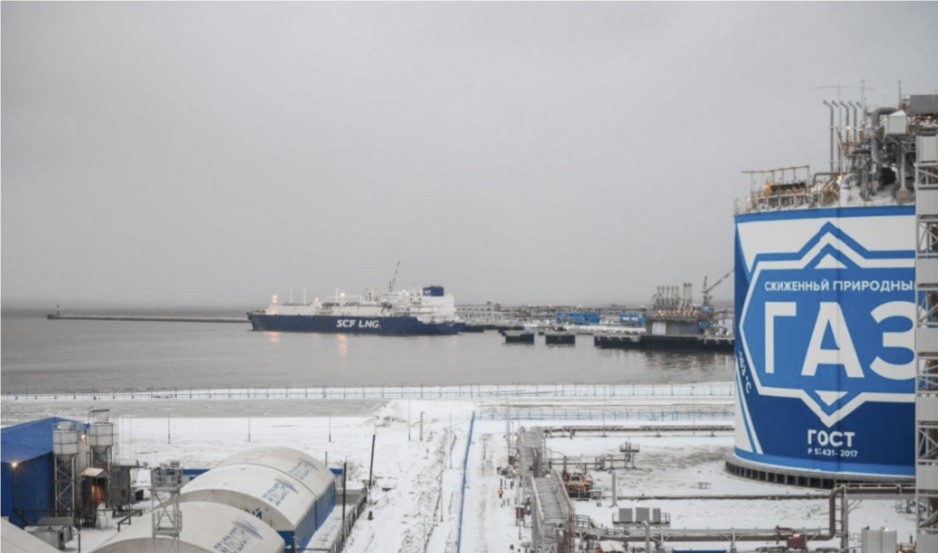
Novatek’s Yamal LNG project in the Arctic. (Source: Novatek)

This is an op-ed written by an external contributor. All views expressed are the writer's own.
The Arctic is still widely framed as geography. Russia treats it as a services chain. When Western sanctions hit that chain in February 2022, Russian flows did not stop - they were displaced.
What could no longer operate reliably in the High North re-emerged through the south, with Turkey becoming the critical intermediary.
Before the war, Moscow’s northern bet was explicit:
Turn the Arctic Northern Sea Route into a sovereign corridor insulated from Western pressure, built on state icebreakers, national ports and the promise of “great connectivity” that would reroute energy and trade away from southern chokepoints.
Sanctions reversed that logic by targeting not territory, but enablers - finance, insurance, classification, shipyards, ice-class tonnage and critical technology. The Arctic corridor did not collapse; it mutated.
Official figures still project confidence
It ceased to be a commercial alternative and became an opacity corridor.
Official figures still project confidence. Roughly 37.8 million tonnes of cargo moved along the Northern Sea Route in 2024. Yet almost all of that volume consists of domestic resource haulage under Russian escort.
True international transit remains marginal. Only around three million tonnes transited the route that year - a statistical footnote beside the 1.57 billion tonnes that passed through Suez in 2023.
The 2025 season confirmed the ceiling rather than breaking it. Ice conditions continue to compress the open-water window, and transit traffic remains stable but structurally unscalable.
What has changed since February 2022 is not volume but composition.
Also read (the text continues)
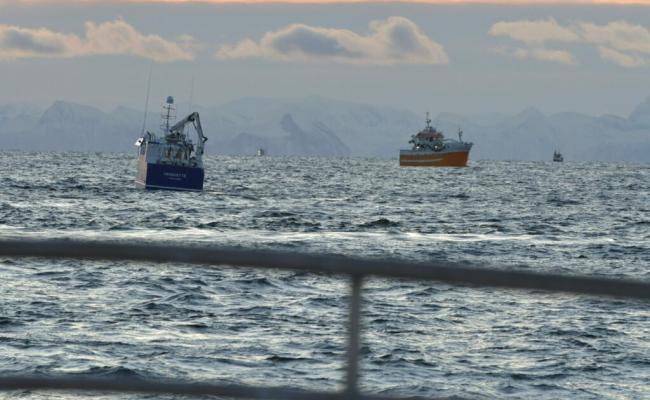
Monitoring by environmental and compliance bodies shows a sharp rise in sanctioned and high-risk vessels operating along Russia’s Arctic coast, including oil tankers with ageing hulls, limited or absent ice class and repeated AIS gaps.
This is not maturation. It is risk concentration. Search-and-rescue capacity remains thin, winter response effectively single-node, and insurance either prohibitively expensive or opaque.
Russia’s Arctic is no longer only a climate or development story; it is a compliance and safety problem. Risk, however, is not a growth model.
When the High North became a sanctions-and-safety minefield, Russia needed a southern vent. Turkey became that vent.
Ankara did not close the Bosphorus. The Montreux regime keeps commercial passage legally open. The shift since 2022 lies elsewhere. Turkey absorbed functions the sanctions architecture did not lock down. Trade surged.
Russian crude accounted for roughly two-thirds of Turkey’s oil imports through most of 2024
Russian imports into Turkey jumped to nearly 59 billion dollars in 2022 and remained above 45 billion dollars in 2023. Oil provides the clearest lens.
Russian crude accounted for roughly two-thirds of Turkey’s oil imports through most of 2024, with refinery intake rising to record levels before retreating only after new U.S. sanctions in early 2025 raised compliance costs.
This was not alignment. It was arbitrage.
The novelty is not TurkStream, which is only one corridor among several. It is the industrial and regulatory laundromat built around Turkey’s refineries, terminals, traders, insurers, flag registries and documentation.
Crude becomes products. Origin becomes opaque. Sanctions designed to bite at the point of extraction grow porous at the point of transformation.
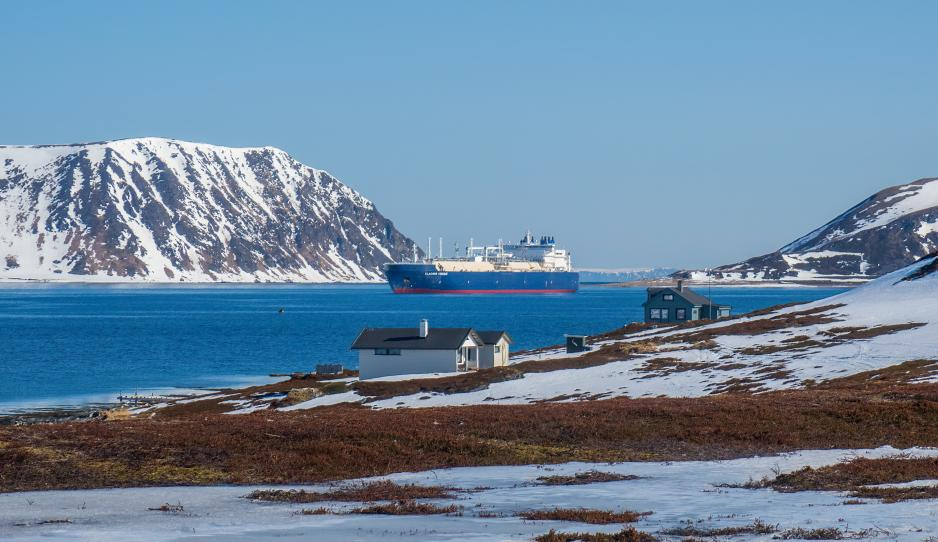
LNG carrier Vladimir Voronin off the coast of Honningsvåg in Northern Norway on 15 April 2023. (Source: Courtesy of Kjell-Bendik Pedersen)
Turkey demonstrated this leverage in December 2022, when it demanded additional insurance guarantees for tankers transiting the straits as the G7 price-cap architecture entered force.
No ban was imposed, yet queues formed. A strait that is legally open can still be strategically throttled through compliance friction. Time becomes power.
Brussels and its partners have since tightened restrictions - crude bans, product bans and progressively lower price caps - yet enforcement still depends on where the service stack resides.
Turkey is precisely where that stack can be reconstructed beyond EU jurisdiction. Energy is only part of the picture.
Export controls now focus on dual-use items identified in Russian weapons systems, and sanctions on Türkiye-based exporters and logistics actors confirm that the Turkish node is logistical as well as petro-financial.
Also read (the text continues)
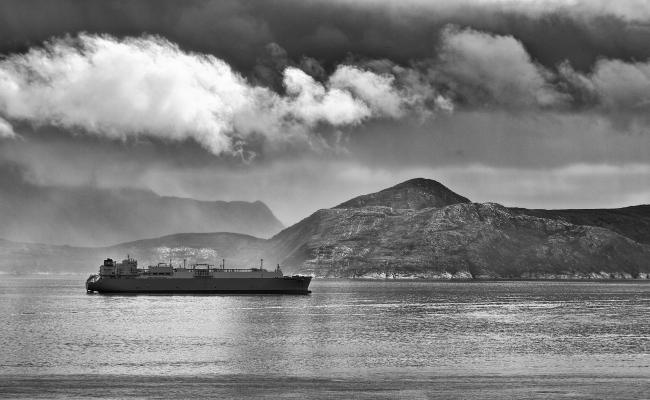
This exposes an uncomfortable Arctic-NATO reality. Northern allies can harden the High North, monitor Arctic transits and sanction ice-class carriers and LNG projects.
But as long as a NATO member functions as the commercial back office where Russian flows are converted into legally consumable trade, pressure applied in the Arctic will continue to leak south.
This is not Russia’s ingenuity alone; it is Western tolerance for indirection.
This is not a legal breach by Turkey. It is a strategic mismatch - tolerated by the alliance and enabled by a European Union that still treats the Arctic as a regional theatre rather than a services system.
The policy conclusion is therefore not a declaration about shared values, but a choice of instruments.
Either Europe integrates Turkey’s straits-and-services ecosystem into its Arctic sanctions perimeter - through intelligence sharing, shipping due diligence, port-state control, insurance scrutiny and conditionality tied to market access - or it will continue doing what it has done since February 2022:
Watching the High North harden while Russia’s war economy remains liquid in the warm waters of the Bosphorus.