Op-ed: An Arctic Social Contract
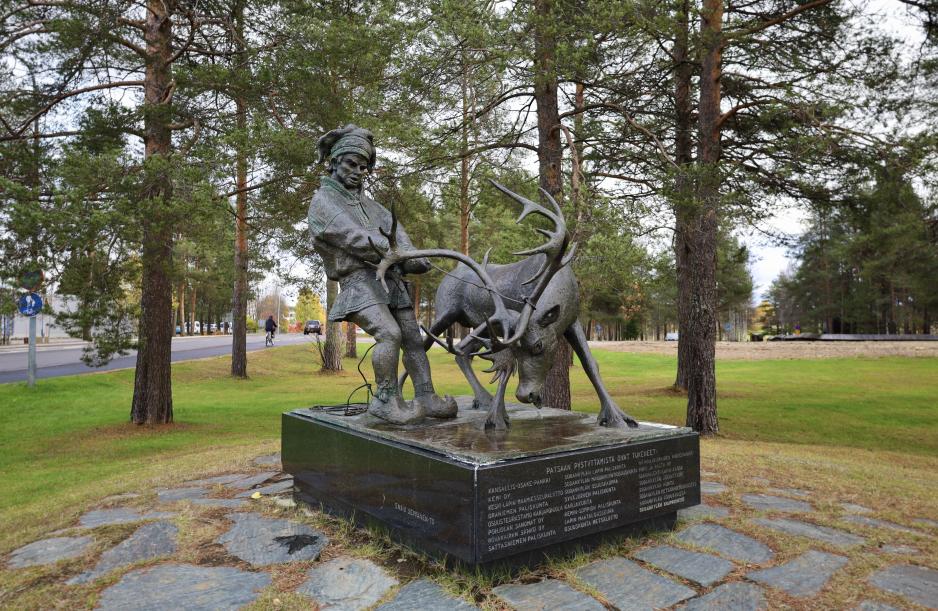
The reindeer statue in Sodankylä, Finnish Lapland, as it is popularly called. The monument was erected in 1970 in honor of the people of Lapland and the rest of Finland who have made the harsh forest landscape their home. (Photo: Astri Edvardsen)

This is an op-ed written by an external contributor. All views expressed are the writer's own.
The development of the Arctic requires a "human face." It is a fundamental error to believe we can safeguard the climate while marginalizing the societies that inhabit it.
In a global landscape where Eastern borders remain frozen and the climate crisis reshapes the North, Finland is at a crossroads, forced to reinvent its national model.
The Kalevi Sorsa Foundation**is currently championing an "Arctic policy for the people", a strategic pivot that seeks to transform systemic challenges into a blueprint for social justice and national resilience.
Economic democracy and the new tax frontier
Economic progress is no longer measured solely by GDP growth, but by the equitable distribution of its outcomes. The Foundation advocates for a specialized resource rent tax targeting multinationals that harness Lapland’s mineral wealth and wind energy.
The core objective is clear, windfall profits derived from public land must be reinvested into the community to modernize local infrastructure.
A strategic shift is urged for municipalities
To tackle the "wage drainage" caused by skyrocketing housing costs, the proposal includes state backed,low interest loans for developers who commit to rent capping for at least 20 years.
Furthermore, a strategic shift is urged for municipalities, stop selling off public land and instead utilize long term leases for social housing projects.
Reviving the "Korpilampi spirit"
As we navigate 2026, rising social polarization necessitates a return to the foundations of Finnish consensus. The Foundation calls for a reinvigoration of the tripartite dialogue bringing government, trade unions, and employers back to the same table.
This "Korpilampi spirit" is the only mechanism capable of ensuring wage stability and social peace, providing the middle class with the security it needs to thrive in uncertain times.
In this framework, education and healthcare are not viewed as fiscal burdens, but as a "social subscription"a collective investment that shields citizens from the volatility of the global market.
Also read (The text continues)
Navigating the AI transition
Technological disruption must not become a vehicle for new forms of exclusion. The foundation proposes a joint funding model between the state and the private sector for comprehensive AI literacy programs.
The goal is to deploy technology as a tool for cohesion enhancing telemedicine and digital public services to effectively bridge the vast distances of the Arctic circle.
Regional equity and the Sámi factor
The findings of the Unequal Finland report are a stark warning against a "four speed Finland".
The proposed Arctic railway is envisioned not merely as a transit project,but as a green artery connecting Finland to Norway and the North Atlantic, dismantling the North’s isolation while reinforcing EU strategic autonomy.
Crucially, every investment in Northern territories must honor the rights of indigenous populations. The Foundation stands firmly behind a "co determination" model,ensuring that Sámi communities possess a substantive voice in the management of their ancestral resources.
The Kalevi Sorsa Foundation reminds us that Finland’s true power in 2026 is rooted in social cohesion, not just technological prowess. An Arctic that prioritizes its people securing housing,ensuring fiscal fairness,and fostering dialogue is an Arctic that will remain sovereign and prosperous.
This "Arctic Policy for the People"is far from a utopian vision; it is a geopolitical necessity.
Economic inequality is the primary fuel for populism.Only through robust collective agreements,progressive taxation,and environmental integrity can Finland sustain its status as the world’s happiest nation throughout 2026 and beyond.
**This analysis is based on recent policy papers and research from the Kalevi Sorsa Foundation (2024-2026), focusing on tax justice and social cohesion within the Arctic zone.