Sweden, Finland Urge EU to Tighten Screws on Russian Arctic Shipping With Insurance, Port Bans
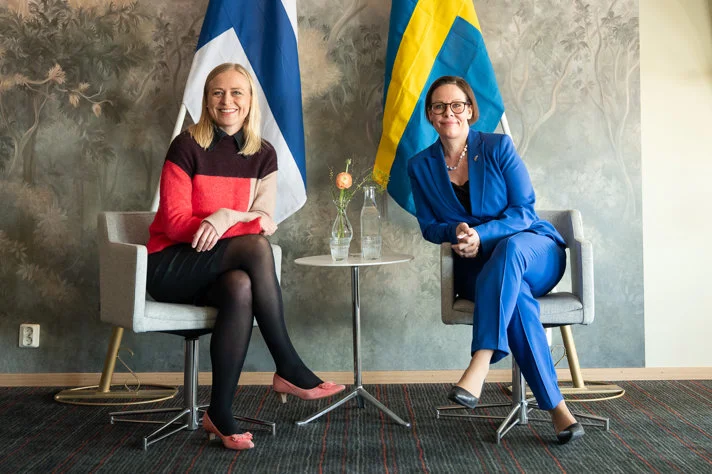
Minister for Foreign Affairs Maria Malmer Stenergard and Finland’s Minister for Foreign Affairs Elina Valtonen (Source: Anders G Warne/Swedish Government Offices)
Sweden and Finland are pushing the EU to toughen sanctions on Russian Arctic shipping, calling for bans on insurance and port repairs for vessels carrying oil, gas and coal. The proposal targets overlooked maritime services seen as vital to keeping Russia’s Arctic energy exports afloat.

Sweden’s and Finland’s foreign ministers jointly called on the European Union to sharply expand sanctions against Russian shipping, urging a comprehensive ban on vessels transporting oil, gas and coal to EU ports.
The proposal includes prohibitions on insurance and more importantly port repair services they say are critical to sustaining Moscow’s exports.
Speaking at a joint appearance, the ministers said existing measures have failed to fully disrupt Russia’s maritime energy trade. Russia continues to use specialised tankers and LNG carriers, particularly in the Arctic, which remain dependent on Western services to stay operational.
“The pressure on Russia has to be increased,” Swedish Foreign Minister Maria Malmer Stenergard said at an annual security conference in the town of Sälen, in western Sweden.
Stenergard proposed that the EU’s next sanctions package should include a total ban on European companies providing services to Russian ships carrying oil, gas and coal.
The pressure on Russia has to be increased
“No transport, no reloading of goods between ships, no insurance and no port repairs,” she continued.
Finnish Foreign Affairs Minister Elina Valtonen said such measures were necessary regardless of how the war in Ukraine evolves.
“We believe that the Russian threat is a long-term one. That means we need to keep up the pressure regardless of a possible ceasefire or peace agreement,” Valtonen said.
The remarks came during the three-day Rikskonferensen security conference, which brings together Nordic and European policymakers to discuss defence and regional security.
Sanctions continue to have gaps
While the EU has imposed successive rounds of sanctions on Russian energy exports since 2022, gaps remain in enforcement, particularly in maritime services.
Also read (The text continues)
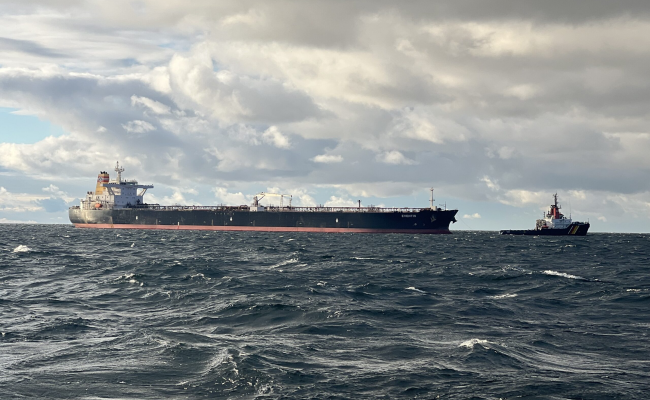
Russian-owned or Russian-linked vessels are often still able to obtain Western protection and indemnity (P&I) insurance, either through legitimate coverage or via opaque intermediaries, shipping and insurance sources say.
One such intermediary cited by industry sources is Ro Marine AS, an Oslo-based insurance provider that has been linked in media and regulatory reports to issuing questionable or false insurance certificates.
The company has reportedly provided documentation to dozens of vessels involved in transporting Russian oil and gas, allowing them to access ports and transit routes that would otherwise be closed to uninsured ships.
Norwegian authorities have previously said they are reviewing compliance and oversight in the maritime insurance sector.
The ministers argued that closing these insurance loopholes would significantly constrain Russia’s so-called shadow fleet, which relies on continued access to liability cover to operate internationally.
The Russian threat is a long-term one
Equally important, they said, is cutting off access to European shipyards that have continued to service Russia’s Arctic fleet.
Russia’s specialised ice-class vessels, particularly Arc7 LNG carriers, require regular dry-docking and technical maintenance that cannot easily be replicated at domestic yards.
Russia’s Arctic shipping operations have historically relied on EU-based facilities, including Damen Shiprepair in Brest and Denmark’s Fayard AS.
Damen Shiprepair ceased providing services to Russian vessels in 2025, industry sources say, tightening options for the Yamal LNG vessel operators. Fayard, however, has increased its work on Russian-linked vessels.
In 2025, the Odense-based yard provided dry-dock services and repairs to five Arc7 LNG carriers serving the Yamal LNG project, according to shipping data and industry sources.
Also read (the text continues)
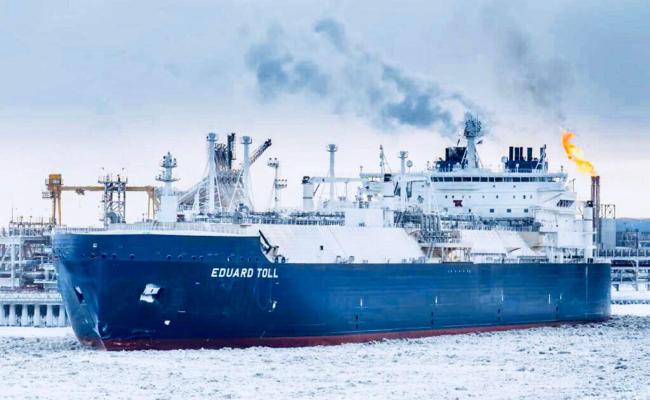
Based on standard maintenance intervals, Fayard could be servicing up to 10 such vessels in 2026 if no additional restrictions are imposed.
Analysts say a coordinated EU ban on port repairs would be particularly damaging, as the loss of Damen has already narrowed Russia’s options. Without access to European yards, Arctic LNG carriers could face extended downtime, safety risks, or lengthy detours to reach Asian yards.
EU could follow UK example
The United Kingdom has already announced a ban on maritime services for Russian energy shipping, scheduled to take effect in 2026. A similar, bloc-wide measure across the EU would represent a major escalation, potentially disrupting Russia’s Arctic LNG operations at a critical moment.
Sweden and Finland, both of which joined NATO in response to Russia’s invasion of Ukraine, have taken increasingly hawkish positions on sanctions enforcement.
Their proposal is likely to gain traction among northern and eastern EU member states, though resistance is expected from countries with significant maritime and insurance industries.
Sweden was one of the first member states to call for a ban on Russian LNG transshipment and imports, a measure which ultimately found support with other member states and in Brussels.
For Moscow, which has leaned heavily on Arctic oil and LNG exports to offset lost European pipeline gas sales, the loss of insurance and repair services would strike at the operational backbone of its high-latitude shipping fleet, making continued exports far more costly and uncertain.